
Dontá McGilvery reflects on the relationship between Christian faith, the pursuit of justice, and the responsibility of church leaders to remember the sacrifices that shaped America’s ongoing journey toward equality. As the nation approaches its 250th anniversary, he challenges congregational leaders to move beyond historical remembrance and cultivate faithful communities committed to justice, civic responsibility, and the dignity of every person.
For generations, Christians have reflected on the meaning of Christ’s life, death, and resurrection through different theological lenses. Some have emphasized Christ’s sacrificial offering, while others have highlighted reconciliation between God and humanity, victory over sin and death, or the restoration of creation. Yet across these traditions remains a shared conviction: in Christ, God acted decisively to redeem humanity and reveal the depth of divine love. This divine act of love becomes the foundation for how Christians understand both their relationship with God and their responsibility toward one another.
Christians rightly celebrate the saving work of Jesus. His life, death, and resurrection represent the foundation of Christian hope. The grace offered through Christ cannot be measured, replaced, or compared to any human sacrifice. However, the story of Jesus also raises an important question for the church: How should people of faith respond to the sacrifices of those who have suffered and given of themselves so that others might experience greater freedom, dignity, and justice? While human sacrifice cannot accomplish what Christ accomplished, it can reveal the depth of human commitment to values that reflect God’s desire for justice and flourishing.
Throughout human history, individuals and communities have endured tremendous hardship because they believed a more just world was possible. Generations of people have labored, marched, organized, prayed, and sometimes given their lives seeking a nation that more fully reflected its ideals of liberty and equality. Their witness forces us to ask an important question: What responsibility do we bear when the freedoms secured through such courage are challenged, weakened, or forgotten? Remembering their efforts is not merely an act of historical reflection but an act of moral and spiritual responsibility.
As the United States approaches its 250th anniversary, Christians should wrestle seriously with that question. The issue before us is not whether human sacrifice can save us—it cannot. The question is whether we will honor the sacrifices of those who came before us by becoming faithful stewards of the justice they pursued. One way we answer that question is by examining the stories of those whose courage helped shape the nation’s ongoing journey toward equality and freedom. That story begins before the nation’s founding.
In 1770, Crispus Attucks, a Black man of African and Native ancestry, was among the five men killed in the Boston Massacre. His death became a catalyst for the American Revolution and forever connected Black Americans to the nation’s struggle for freedom. From America’s earliest days, Black lives and sacrifices were intertwined with the promise and pursuit of liberty. His story reminds us that the pursuit of justice has always involved ordinary people who were willing to stand for principles greater than themselves.
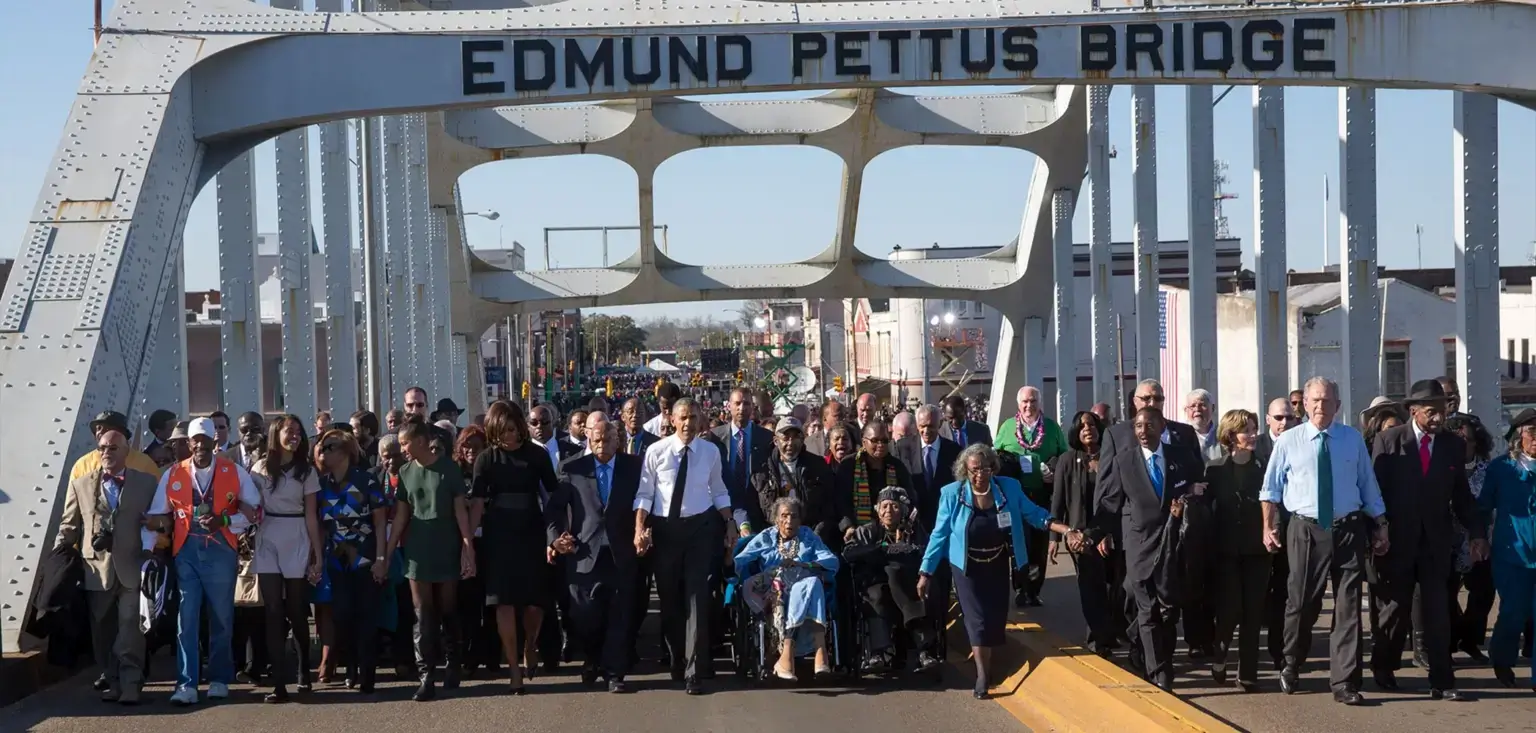
Nearly two centuries later, that struggle continued on the Edmund Pettus Bridge in Selma, Alabama. On March 7, 1965, hundreds of ordinary citizens marched demanding something many Americans now take for granted: the right to vote. Men, women, clergy, students, and community leaders were beaten, tear-gassed, and brutalized in what became known as Bloody Sunday. Among those present were future Congressman John Lewis and civil rights activist Joanne Bland. Their courage, along with the sacrifices of countless others, helped lead to the passage of the Voting Rights Act of 1965.
But the Voting Rights Act was not purchased through one day of courage. It was purchased through years of sacrifice. Jimmy Lee Jackson was killed while protecting his family. The Rev. James Reeb, a White Unitarian Universalist minister, died after being attacked for supporting voting rights. Viola Liuzzo, a White mother of five, was murdered while transporting civil rights marchers. Addie Mae Collins, Denise McNair, Carole Robertson, and Cynthia Wesley lost their lives in the bombing of 16th Street Baptist Church because hatred refused to recognize the image of God in Black children.
During Freedom Summer, James Chaney, Andrew Goodman, and Michael Schwerner were murdered while helping register Black voters in Mississippi. Black and White Americans, people of faith and people of conscience, stood together because they believed equal access to the vote was worth sacrificing for. Their witness reminds us that justice is never self-sustaining. Rights secured through sacrifice require leaders willing to protect, teach, and strengthen them.
This is where the church’s leadership responsibility emerges. Faithful church leadership requires more than remembering history during anniversaries or commemorations. Going a step further requires forming people who understand the relationship between faith, justice, and public responsibility.
Church leaders can begin by embracing three commitments:
1. Church leaders must become teachers of memory. A congregation cannot value what it does not understand. Pastors and ministry leaders must help communities remember that the pursuit of justice has always been part of the church’s witness.
2. Church leaders must cultivate faithful civic engagement. The church does not exist to promote political parties. However, the church does exist to form disciples who love their neighbors and seek the common good. Civic participation is one way Christians demonstrate that every person bears the image of God.
3. Church leaders must create spaces where people of different backgrounds pursue justice together. The movement for voting rights was strengthened because people crossed racial, denominational, and generational lines. The church today must recover that same spirit of courageous cooperation.
Micah reminds us that the Lord requires us to “act justly, love mercy, and walk humbly with your God” (Micah 6:8). Justice is not merely something we discuss; it is something we practice. Acts 17:26 declares that God “made from one blood every nation of men to dwell on all the face of the earth.” Every voter, every neighbor, and every citizen bears the breath of God. When we protect human dignity and encourage civic participation, we affirm that sacred truth.
One practical way Christians can serve is through Faith United to Save Democracy (FUSD). Through its Poll Chaplain and Peacekeeper programs, clergy and faith leaders are trained to provide a pastoral presence during elections, helping promote peaceful participation and voter protection in a nonpartisan manner.
Christians have an opportunity to honor both the blood of Jesus and the sacrifices of those who labored for a more just society as we approach our nation’s 250th anniversary. We do so by refusing indifference, remembering the cost of freedom, and leading communities toward faithful participation and peaceful engagement. The blood shed throughout our nation’s history should not be forgotten. More importantly, its witness should not be ignored. If Christ’s blood calls us toward reconciliation with God and one another, then the sacrifices of those who fought for justice call us toward responsibility. May the church once again lead with courage, stand with conviction, and help build a society that reflects the truth that we are one people created by one God and made from one blood.
Author’s Note: Faith leaders interested in becoming Poll Chaplains or Peacekeepers can learn more about upcoming trainings through Faith United to Save Democracy and register for the next online Poll Chaplain training on July 13 from 7–8:30 p.m. Eastern at TurnoutSunday.com.
We love to hear from our readers! If you have any comments, suggestions, or questions about this article, please leave a voice message directly from your computer, tablet, or smartphone via Speakpipe. You may also email lewiscenter@wesleyseminary.edu or leave a comment on Facebook, Instagram, YouTube, and Bluesky.
Related Resources
- Prophets, Not Chaplains by Kendal L. McBroom
- Christian Nationalism and the Crisis of Church Unity by Caleb Campbell
- Why Are So Many Christians So Cruel? by Lovett H. Weems Jr.
- What Does Religious Freedom Mean Today? by Lovett H. Weems Jr.
If you would like to share this article in your newsletter or other publication, please review our reprint guidelines.
Photo by Lawrence Jackson was originally posted at whitehouse.gov on March 8, 2015. Available from Wikipedia and the Internet Archive.