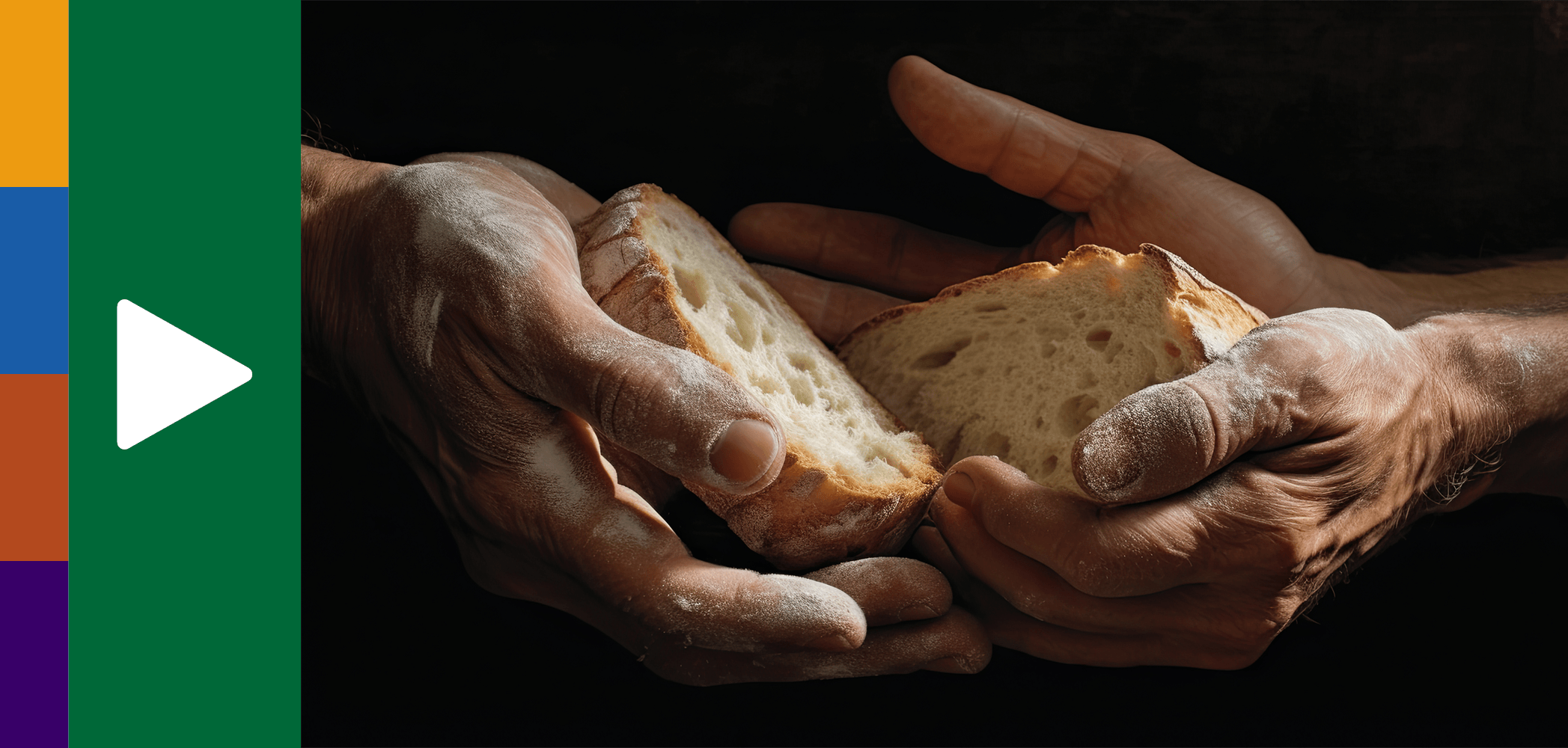



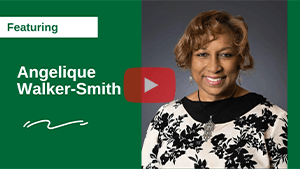
How can churches move from charity toward advocacy? In this episode, Angelique Walker-Smith draws from her work with Bread for the World to discuss the church’s responsibility to address hunger and poverty through both direct service and systemic change. She notes that moving beyond charity models and embracing advocacy is a core expression of Christian discipleship.
Listen on Apple Podcasts | YouTube Music | Spotify
Watch on YouTube
- Transcript—Click or Tap to Read
-
Announcer: Leading Ideas Talks is brought to you by the Lewis Center for Leadership of Wesley Theological Seminary in Washington, DC. Subscribe free to our weekly e-newsletter, Leading Ideas, at churchleadership.com/leadingideas.
Leading Ideas Talks is also brought to you by Healing Fractured Communities, a book written by alumni of the Lewis Center Community Leadership Fellows program. Each chapter paints a picture of the work of healing fractures like racism, education inequality, and poverty. Each chapter also includes takeaways to inspire healing in your community plus questions for reflection. All proceeds support the Dr. Lovett H. Weems Jr. Scholarship Fund. Learn more and order now at churchleadership.com/books.
Jonathan Page: Well, hey there, friends. My name is Jonathan Page. I’m the director of the Lewis Center for Church Leadership at Wesley Theological Seminary, and it is my joy to welcome you to another episode of the Leading Ideas Talks podcast. I am overjoyed today to be joined by the Reverend Dr. Angelique Walker-Smith. Dr. Walker-Smith serves as the strategist for Pan-African Orthodox and Ecumenical Faith Engagement at Bread for the World. She brings extensive global, national, and local experience as a faith and public engagement thought leader, a journalist, speaker, broadcaster, scholar, preacher, author.
She is also elected to be one of the eight regional presidents of the World Council of Churches from North America. She has served as an ecumenical representative for the National Baptist Convention, USA. She’s the president of historic black churches at Christian Churches together USA and has served in governor’s roles with the National Council of Churches. Her educational background is incredible. She is incredible, and we are rich blessed to be joined today by the Reverend Dr. Angelique Walker-Smith, it is good to be with you.
Angelique Walker-Smith: Thank you so much for having me.
Jonathan Page: Well, we are excited to hear more about you and more about your work. You know, I’m interested Reverend Walker-Smith in, in thinking about the work that you’re doing with Bread for the World and the work that you’re doing with the World Council of Churches, would you talk a little bit about sort of how you maintain this sort of both and approach in those in those spaces? You know, you’ve got those, those different roles. Uh, how do you offer as a leader attention to each of those individually and maybe how do you see those having collaboration together?
Angelique Walker-Smith: Well, thank you so much for having me, and thank you for the question. Let me just say first and foremost, I have two very distinctive roles relative to the two organizations. At Bread for the World. I am a staff member, a team player, and so that is where I’m at, you know, and the shall we say, in the workplace. So that’s where I’m at Bread for the World, but I hold a governance role. Relative to World Council of Churches and the presidencies of world Council of Churches is honorary, but it also is representative of the regions from where we come from.
So, we really do give voice from what we understand to be the case in our regions relative to the global context. Of the world relative to the ecclesial space, but the ecclesial space also engaged in diaconia work that is the diaconate. Also mission in terms of social justice advocacy, but very important faith in order theological with the biblical and the scriptural mandates of the church, the church and the church.
They’re very distinct roles. Uh, the Happy News is, but also the complicated news is that we know that when we speak of the global, there’s much intersectionality. And so there is convergence with some of the issues that both are addressing. Of course, bread for the World. We have an advocacy role. We’re not the bread for the world in Germany, which has both an advocacy role, but also a development role. Also they do publications at bread for the World in Germany, but the bread for the world in the United States, we are laser focused on advocacy. How do we bring the voices of the faith community and particularly churches, although we work with interfaith partners and we work with other partners within the public and Phil philanthropic space.
How do we represent those voices of moral agency within the US Congress? And then also with other government related agencies and branches because we do believe that the issue of hunger and the issues of poverty related have everything to do with the moral fiber of who we are as a people. So for us, that means at Bread for the World, that means both the domestic and the global policies that we are responsible for as people who live in the United States. Now as person representing North America context in the global space of World Council of Churches. You can imagine there is much conversion there relative to these issues, but we are policy driven and we’re very clear that we’re taking very seriously the scriptures that say about the least of us and quote the least of us. But more importantly, making sure that all of the voices are represented, quote, those who are living on the margins, as well as those of us who are more in the center of our communities.
Jonathan Page: So, there is so much to unpack from what you just shared and, and such a rich response. I’m, I’m thinking immediately about some of your work thinking about sort of the nature of hunger and the role of the faith community in ending hunger. I’mwondering if you might give some insight, how, how might church leaders shift a congregational mindset? Away from the idea of quote unquote feeding the poor and more coming to a place of advocating for systemic change as it relates to hunger related issues.
Angelique Walker-Smith: Well, thank you so much. I mean, as we know as people of faith of the Christian orientation and the Christian discipleship model, everything comes from scripture first. And I believe the scriptures are very clear. Uh, that we must not only speak to flesh and blood, but the principalities and powers. There are scriptures that are very clear about that, and so there has to be a balance. Urgencies absolutely do matter. Food pantries absolutely do matter. We must speak to the urgencies of people.
Jesus fed the 5,000, but at the same time, the very presence of Jesus was speaking to the systems. His very, that’s why he was crucified, right? Because he said, and he knew, and we knew he was the savior. And he had come to show a different way for us to reorder, reimagine our communities. He broke customs, but he also, by his very presence called into question those governance and policies that marginalized women and children and others, I mean. That what his very presence did that because he is and was then Lord of Lord and king of kings. And so, when we take that very seriously, we understand if we are Jesus followers, we too are called to have that careful balance. We must be a part of the disciples who are with Jesus to feed the 5,000, but we must also have a presence in the places where the principalities and powers make decisions about the same people that we feed every day in our wonderful food pantry ministries. So, we, if you are a Jesus follower, and I think that’s what the Christian faith ultimately is about, then we are called to do the same. So that’s number one, the Bible, and then how we understand a theological human hermeneutic that goes with how we understand the Bible. All of that propels us to action.
Jonathan Page: Yes.
Angelique Walker-Smith: And so, in this quote, modern or some people say postmodern or post denominational, an age, we are called to do the same. In this context, the principles of the faith are everlasting. They’re not just temporal to the time of the public ministry of Jesus, but in this moment. So, as we are feeding and uh, in the food pantry ministry. We also are a part of the communities to which we exist, and many of us have just paid our taxes on the 15th of April or getting ready to, maybe some of us ask for an extension. Sure. But the point is that is the common treasury of the place that we live in.
It is the common treasury. You go to any business or corporation; they have stakeholders and people listen to the stakeholders. Paying into the treasury and making voice into where you put your resources, time, talent, and treasure. It matters. Your voice matters. You are a part of that. And if you don’t exercise your voice within that, you’ve abdicated your voice, you’ve abdicated your stake holding, and therefore others will speak for you.
But as Christians, as believers, we understand. We bring a unique moral voice to the conversation. So, any policies that particularly relate, at least in the case of Bread for the World, around making sure that all of God’s children have what they rightfully deserve, which is Food on the Table. Example after Example is not only honorable but is an obligation of the Christian faith.
Jonathan Page: Amen. Amen. And, and I love what you’ve just offered, is using sort of the scriptural framework as then the impetus for action. And, and one thing that I think we hear a lot at the Lewis Center about is, is the nature of church leadership in 2026. As being as we’re church leaders are often being called into what have historically been considered political spaces and being asked to offer theological interpretation.
Now, this is, this is long been the work of the church. We might be more explicit about it now than we were at other times, but I’m, I’m wondering if you have any wisdom kind of thinking about that scriptural framing. When it come, whether it’s hunger, whether it’s climate justice, the, the many different sort of touch points that, that your ministry offers, how might clergy leaders think about interpreting for their, their congregational context and then within their community context, these sort of what, what could be considered political issues really is theological issues and a core element of what it means to practice a Jubilee theology, a uh, to practice congregational vitality.
Angelique Walker-Smith: Yeah. As I was just stating, I think everything begins an end with the Bible and with scripture and devotional life. Uh, and I, I do believe that bread for the world does offer a very important model of how to do that. We begin with prayer. And the devotional life. That’s the beginning and end for us. We begin there and then we ask the question, what does it mean to act? Okay, pray, act. If they go together. It’s one thing to pray and of course, be in a meditational space. The Lord has to lead us in everything. But it’s another thing when we are present with God’s people in the places where decisions are being made with and for the people.
Yeah, that’s where Jesus was. I mean, God didn’t have to come in the flesh because God is God, but God came in the flesh, Emmanuel God with us, and that’s our charge as well as Christian people, is to show that God is with you. Hmm. And God wants every blessing. That’s what the beatitudes are about, the broken hearted, those who are lamenting, those who are dealing with conflict. That’s what the Beatitudes are talking about. You know, Jesus’ message, that is his sermon that you know is, is we are called present with the people and for the people. And so, I believe that bringing these realities together in our work. Absolutely matters. How are they going to know? The Bible talks about having signs and wonders of the kingdom. We are the signs and wonders of the kingdom and so is creation. You know, the, we’re in this season now, quote, earth Day that is coming up and I’ve been very involved in issues around the environment and climate because it’s directly related, unfortunately, to the hunger issue. Climate change is one of the major impulses of why we have more hunger than we would ever, you know.
I mean, imagine, so there’s a direct tie in relatively to the issue that you’ve put together, but so it’s the pray action. And this is what we saw in Jesus’ ministry, right? He was in retreat and then he went with the people. He went to pray even before he went to the cross, he was in the, I just preached about this last Sunday. He was in the Garden of Gethsemane. Mm-hmm. His agony in retreat and then. They came in his retreat. Imagine the soldiers came while Jesus was praying in the garden. And arrested him.
Jonathan Page: Mm-hmm.
Angelique Walker-Smith: I mean, I’m just saying there is this direct engagement and, and, and quite frankly, in the, in the Christian life, we’re always in the presence of the soldiers who come metaphorically and try to disturb what it is the father has for us. But we must be vigilant as Jesus was. This is an important part of the resurrection story, the agony and the assault. Oh, but then the great glory, so we, we must be a resurrection people and live in the tension.
Jonathan Page: Well, I so appreciate that and I, I love the way that you’ve, you’ve really given us that perspective of, of sort of that incarnation existence where you’re present with people and then you’re also fully present to yourself and the full, in the full ways that God’s working in and through you. And, so I think as, as those two pieces are kind of becoming a lived existence, there was a word you mentioned a little bit earlier that I think is so important that’s intersection. Excuse me, intersectionality and just the, the ways in which historically in, in the US context, we have centered certain populations.
In the Christian context, we have sometimes centered certain populations and marginalized to others. I guess one thing that I’m, I’m a little bit curious about from your perspective. You know, we’re. One thing that I think we could name about our existence at in the US and maybe a little bit globally as well, is that we’re increasingly a digital society and we’re a fractured society. So how, how might you recommend leaders. Sort of lean into that space of intersectionality within that digitally digital and fractured framework to create community that truly is intersectional.
Angelique Walker-Smith: So, let me just say I’m older and I’ve lived through the.com age. Look, I began on a typewriter. I mean, I’m better, right? Okay. So, every season I’ve had to change if I’m going to be, uh. Anywhere effective you’ve got, you’ve got, you’ve got to change. And my principle has been since day one, ’cause I actually studied journalism and telecommunications in my undergraduate education and they warned us, imagine. Back in my day, they warned us that the satellites were coming. The dot-com was coming. AI was already happening even when I was in college. Okay, sure. They kid State actually taught me some of these things. So that was the good news about going to get a liberal arts education at Kid State University. They said these things are coming. I had to take a class around futurism and communications.
So, what they told us, I’m a sweet 18-year-old, 19-year-old, you know, and you know, you’re like, oh, this is so exciting. Oh, you know, and you know, I came from Ohio with John Glenn as, you know, the astronaut. You know, you know, so I’m a big Buckeye. I am like, I’m all in. So, I actually went into this with welcome arms, and I was taught at that age, just like in the church, you must use every tool that you have. To, first of all, spread the gospel. I learned that in church. But then when I got to school, I learned that it was not the tool, it’s the person.
Jonathan Page: Mm-hmm.
Angelique Walker-Smith: With the tool that has to be held accountable.
Jonathan Page: Mm-hmm.
Angelique Walker-Smith: So, from the telephone to the computer and to AI, it is not the tool. We don’t need to fear as back then the telephone. I remember when my granny got a telephone out in the rural areas of Alabama on our homeland. Look, I was a little girl, and it went all throughout the whole family network. Some of us in the north, some of us in the south. And we said, what’s Granny going to do now with a telephone? So, to me, AI is the telephone for now. You know? I mean, I’ve just lived long enough to see that there was initial fear, even in the country areas, the homeland areas of Alabama. I’m talking deep south. Okay,
Jonathan Page: Sure.
Angelique Walker-Smith: And people were afraid, but I’ve seen this evolution over my lifetime. I’ve learned that we have to figure out what is the moral code for how we use these tools. One of the things one of the experiences I had that it convinced me about the cell phone, this is really kind of funny ’cause I was like, “Hmm, how is this gonna work?” You know, we are able to talk right away in our, I mean I, you know, I lived through all this and I went over to Africa ’cause I’ve done many, I’ve been to what, 38 different African countries and lived in about six of them. And I was in Latu in the mountain areas working with a girl school building latrines, pit latrines. Wow. And while I was, it was really kind of funny while I was there. Here it comes, a cell phone in the mounting, in the melting. I’m like. What is that? You, you look, I was, I was done. I got back home and my younger colleagues were always saying you know, we need to really do this.
We gotta get this, you know, and we gotta get our, do we gotta get our website address? I mean, because this is when website and all that was. And I was like, oh. ’cause I was kind of hesitant. I, it’s like, okay, ’cause we’re still testing some things. Remember I’m living through the evolution of this stuff. And I get back, I’m like, look after lasso too in the mouth. Look, I’m there. Let’s go, let’s go. If girls in a Catholic girls’ school we’re building pit latrines, have a cell phone, what’s my problem? Yeah. You know, so evolution of tools is a gift. But the moral, and this is why the church is so important, we must give guidance of how we use these tools for the glory of God and also for the glory of all the people.
Jonathan Page: Yeah. And do you think there, is there any role. And, and I don’t know this, this could be a yes or no question, and although I hope we’ll go deeper than that is there any role with those, the emerging tools of AI as we look at sort of the ways that our communities are, are structured can any of those tools help the church to foster a greater sense of intersectionality? Or is that more a work that’s, that’s to be done sort of in the heart before it’s done with a tool or anything like that?
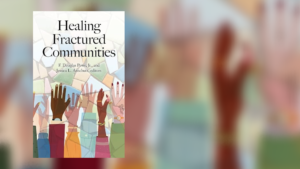
The book Healing Fractured Communities is written by alumni of the Lewis Center Community Leadership Fellows program who are pastoral leaders engaged in the work of renewal, resilience, and resistance in congregations, on college campuses, and in communities. Each chapter paints a picture of the work of healing fractures like racism, education inequality, and/or poverty. Each chapter includes takeaways to inspire healing in your community, and questions for reflection. Proceeds from the sale of the book support the Dr. Lovett H. Weems Jr. Scholarship Fund. Learn more and order now at churchleadership.com/books.
Angelique Walker-Smith: Well, I think there’s two things about AI number one has been with us for decades. Sure. People seem to think, “Oh, now we’ve got AI.” Well, that’s just not true. Sure. We, you know, the technology for AI has been primarily with our aerospace programs. Sure. People think, oh, we made it to the moon and Yeah. That, that happened. But what was important about that is we had all this new technology that influenced the.com. Period. Right. And has and is influencing the AI, that all goes back to your public dollars. Yeah. The money we pay on the 15th, we, the people paid for the technology that was a part of the aerospace programs and some other related programs that created the foundation for us to even have AI.
The way that we have it now, but we have to be clear that this is many decades that we have had AI. We just have a particular maturity. Of AI at this point anyway. In terms of how it is we approach it, again, it goes back to the creators and the users of AI, unfortunately, because of the unjust practices and approaches to our own communal experiences, that gets translated sometimes into the tools we use. That that doesn’t just disappear. Uh, so you get sometimes distortions of what it is all the people can do to benefit from the, from the tools that we develop. We need to have a more equitable model of who is making the decisions around the creation of AI and also the those who are leading us relative to the availability of AI. And that is a policy issue, but it’s also very much an ethical issue and for the, the young people in terms of its importance. They’re already doing that. Just like young people were already, when I went, just to go back to the granny story, I was already of course using the phone up north.
But when I went down south, there was this disparity around a phone. That issue hasn’t gone away, that that’s what I’m talking about in terms of the disparities and the unjust approach of being able to not only use the tools, but to have the tools in the first place. There are still rural communities today that do not have a computer. I mean, just to go back absolutely to the.com era, they don’t even have a computer and there are those who don’t even have a flip phone. So, you know, these access to tools, the creation of tools and the policies that determine who gets the tools, all has to be called into question. Once the tools are in hand, the church has also plays a role, not only around the creation of it and about the availability of it, but also how people use it properly. We are a Jesus people. We are a spirit led people. And those tools need to be used, for example, healthcare. So, when I was in Latu, they were established. I mean, well, a number of places now. They’re using the cell phone as a tool to be able to. Healthcare. Yeah. To provide Teladoc kinds of opportunities for those in the very most remote areas.
So, this is a blessed thing to do as opposed to some other ways in which these tools can be used to not only. Pit humanity against each other in a humanity against creation. But to enhance our communities and the church, the churches have a role in pointing to how those practices and how those policies are shaped to ensure the equitable life of all of God’s children.
Jonathan Page: Amen. Amen. I’m immediately thinking about it. I want to say it’s ki guard. There’s a philosopher who says that we that we use that which is finite and we enjoy that, which is infinite.
Angelique Walker-Smith: Yeah.
Jonathan Page: And I think so much of the work of the church as you’re describing it is learning to enjoy people and use tools. Not the flip of that, which sometimes we can be guilty of, and, and can create some challenge. I want to just pivot our conversation a little bit to talk about your work with the World Council of Churches and thinking about global leadership. You know, you’re, you’re able to lead on this relatively massive scale, and yet so much of, so many of the people who are listening to this podcast are folks who are working in local community content. How might you invite persons who are in local churches to adopt a global perspective in their leadership?
Angelique Walker-Smith: So, let me pivot also to Bread for the World. Yeah. Because we really offer some wonderful, practical tools to do this. Of course, of course. And then I’ll pivot back to WCC, but let’s start there. So, right now, if I may say so. Okay, here it is. Here’s my commercial. For the benefit of this conversation, you can participate with prayer and action around ending hunger and poverty by participating in our offering of letters. Our offering of letters offers an opportunity, first of all, to pray that. Our congressional leaders will do the right things relative to legislation that will help in hunger.
Women, infants, and children. The WIC program, the SNAP program, making sure people have supplementary nutritional food. Also, the feed, the future program, which is our global. Uh, legislation that make sure that children are able to go to school ’cause they’re being fed just like here with the programs we have with our children. Look, you can, you can write a letter with about 10 people and send it into your congressional leader. Let Brad know because we’re mobilizing a common voice and say, we believe the Lord wants all to be fed. And you can cite illustrations of where you live to make that known. So that’s, it is local and then it becomes national and it also becomes global just by doing what Paul did.
Oh, and some other people too in the scripture by simply writing a letter. Yeah. And that tool simply says, says a few things. This is my Christian perspective, but it also says I live here. I see what I see. I am who I am and I want you to know that in this letter that will be blessed. By the Lord is sent to you to know what we as Christian people believe. So, for me, I love this tool because it is able to convey in a, in a very Christian way, a way to say all of God’s children matter. So let me just take that from my moment, of saying this is a wonderful way to do the things together and, and to come to our advocacy summit in June on the 19th. It’s beautiful. June in Washington, D.C. at the Museum of the Bible. Hello. Uh, we’re all about it, so I’m happy to give more information about that. So that’s one concrete tool that I really want to offer in terms of how we put these things together, but even more than this bread for the world. As well as world council or member organizations.
Right. We know membership does matter. Mm-hmm. In other words, saying, I’m standing up, I’m standing up around ending hunger and poverty. I’m standing up for all of the people and, and I really think that’s what it really goes back to in either context. That there are not some that should be fed or not be fed. There are some who should be treated more equitably than others. No, I think the Lord actually teaches us, us something fundamentally different at the World Council of Churches level. Again, at the bread level, because we are member oriented, that means we are accountable to the local. Mm-hmm. Because all of our, whether they’re national or global expressions of our confessional identities.
You know, the World Federation of uh, the Lutheran World Federation, for example, has congregations at the local level. That’s who they are. They also have national expressions, and the Lutherans is the Evangelical Lutheran Church of America or Missouri Senate, whatever it is. So we all carry these multiple identities at the local level, and whether we are denomination linked or not, the Bible says that there is the one church. People really need to get this, everyone wants to talk about this quote post denominational moment That does not get you out of this, this, this challenge. It does not, not if you’re the church. Big C. Mm-hmm.
We know this of course from our, our training in our background. The churches make up the church. So whoever you are, whether you’re with a denomination or not, you have a responsibility to relationships. There’s a scripture that says, well, love God. Thy neighbor as thyself. It is the quote, the great it is, the great commandment. And then we have the great commission, don’t we? Right? Mm-hmm. Go through all of the world after the resurrection, and Matthew is very clear. You don’t keep it to yourself. It’s not just about you. It’s about. The world and, and so these are basic biblical principles going back to the Bible that inform how it is we engage the local, with the global. I will add also that we need to think around this term. That was kind of cute about two decades ago, glocal, we used, you need to think Glocally.
Think about everything in your, just in your mindset. Everything you do locally has global implications. Now, I’ve just cited one of those ways, and that goes back to those letters, okay? Your congressional leader, no matter what stripe they’re wearing in the political space, are representing you. Now you can abdicate your voice around how you’re represented, but you are still in this democracy represented by whoever is wearing the stripe at that time to the national conversation, which has global import. That is very important and that’s why I think the offering of letters are such a critical tool because you are building a relationship with those. You’re building a relationship with those persons who are representing you.
And that’s why we have to be also accountable to our, you know, where we have this opportunity to live our voices. So, yeah, it, it all ties together. Moreover, we have people in our communities. Look, let me just give you a quick example. My daughter who grew up in a kind of global context. My next-door neighbor in Indiana is from Eritrea and Ethiopian. No kidding. The next-door neighbor. So, okay. Like me and my Eritrean, Ethiopian sister, mom, sister, dad, look, we were together. Next door in the neighborhood. I just celebrated her wedding this weekend, so I’m, I’m all in right here in this example right now. Oh man. We were in Ethiopia, I mean, and Eritrea and you know, it, it was just a big thing like four days. Right. Uh, I was only there for like a day, but anyway but the point is here, my example is your example. Now they may not be right next-door folk who are not, you know, if you will, born in this part of this country.
Although some are born in the next generation somewhere. Somewhere in your community. There are people who have just come to our country and all of us have a heritage to the, to a great extent, except for our indigenous community, have a heritage that immigrated. Into the US context and, and we don’t always say that, but we need to say that I’m very clear that I am the child of African peoples. I didn’t say just African American. I said African peoples. I’m very clear that in Alabama, in those homelands I was just talking about with my granny, my people came in through the mouth of the Alabama River. Through Montgomery and were sent east and west on the black belt. One is still one of the most impoverished areas in this country, and my people landed to work on plantations in the eastern part of Alabama. In the black belt, I am African as well as a person of African descent. This country. So, there’s a personal story and there is a new story that continues on the old story, and I think we need to be more confessional about that. We need to say more of who we are and whose we are through Christ Jesus.
As I say, that story is personal. And it is also communal, and we have to understand that therefore, we are already global. You know, we, we want to domesticate things. Oh, I’m, I’m just here in North America. I’m just in the United States. This part of the world is especially North America context. Look, the, we are quote, the globalized within our regions, but we don’t always say that. We’re not confessional about that. That’s a good thing. That’s a beautiful thing, and we need to talk about that. And also recognize our indigenous communities that have been here for a very, very long time before a lot of us got here.
Jonathan Page: Amen. Amen. Well, there, there’s just so much there and, and thank you so much for, for that, just a very, very thoughtful response. I, I’m curious the, the, the place where, where I just, I have some curiosity is as we’re thinking about that glocal kind of approach, is there any distinction in the role of clergy and laity and how that gets embodied in a, in a, in a church setting?
Angelique Walker-Smith: Well, thank you for that. So, all of us are accountable.
Jonathan Page: Yeah.
Angelique Walker-Smith: If, if we Absolutely, absolutely. If we say we love Jesus, if we believe in the gifts of the spirit and we know who created all of the universes and the galaxies, if we’re clear about the Creator Jesus and the Holy Spirit, all of us are held accountable that that, that is, if we really believe the gospel now there are those of us who are called who have been set aside to provide leadership in some ways. Now, it’s not just clergy. I mean, we have different, we have missionaries, we have evangelists, we have teachers, we have all kinds of roles. The Bible talks about all these things in the New Testament. There are different roles and responsibilities.
One body, but different roles and responsibilities. Yes. Clergy has a role. The clergy has a role, first and foremost, to be trained accordingly. To interpret scripture. I go back, right back to scripture. That’s one of the reasons why, you know, I know I did the church school thing. We all did that, you know, but then I went to seminary. I, you know, I was blessed. I’m one of those privileged people who did have an opportunity to go to seminary and to do doctoral studies following. Now, I don’t know that it requires all of that to be clergy. But the point is the Bible says study and show thy self approved. That, that, that’s just right there in the scriptures.
Sure. So, all of us are called to do that. Clergy especially are called to that, a kind of accountability to be wise. Exercise wisdom. Also to be knowledgeable, you are supposed to know about how to approach scripture. Okay. Not everybody does the Greek or the Hebrew, but you ought to know something about one verse not being the tell all of the entire chapter. I mean, you know, it’s things like that. We pick and choose. We, you know, we try to defend with what no clergy is supposed to know. That scripture happens in context. That there’s a hermeneutic to approaching scripture, that there is an exegetical process. Okay? It’s a deep dive, I get it. But you ought to be able to be able to consider the different inputs that create the text in order to present the text and then teach it, and then to say, oh, what does it have to do today?
And then you get to preach it. So the clergy has a role of being able to play that critical role, I believe, particularly as clergy. Now, I think lay people also are accountable to some of that as well, but someone has to provide some leadership in doing that. And I think clergy absolutely are in that role and that lay leaders are also part of the team. And then there are the other roles that I’ve named, and I think all of those roles. Are ordained, they’re consecrated. It’s not just, you do this for me, or, you know, you play this role, or Isn’t this great? I’m getting, no, these are consecrated roles that we are called to in scripture. Hmm.
Jonathan Page: Thank you for that. I’m thinking a little bit about some of, some of what you’ve learned in, in your travels and, and kind of being in this, in this global space. You know, when we look at, at the church of, of what we might call the Church of the West our data shows that there’s plateauing, that there’s, there’s some that, that the rise of Christianity, it’s, it’s shifting a little bit in, in the west, meanwhile in Africa and Asia, it’s exploding. You know, the, the growth is, is unreal. And so, I’m wondering kind of with the seat that you hold, what’s one thing you think American church leaders might be blind to regarding the global church and, and how can we better position ourselves to learn from our siblings in the global south?
Angelique Walker-Smith: I think the key word here is humility. Humility. When you see the rise of those who are professing the faith in context outside of the North American context. We already know the, the, the stats and we know that in African Latin America, this is all happening. Here’s, here’s the, here’s the big news and the good news. Africa is us. Latin America is us.
Jonathan Page: Yeah.
Angelique Walker-Smith: And that’s why Jesus came too. He wanted to talk about the we Once we really understand that we are part of the we, the us. What happens in Latin America is our story. What happens in Africa is our story. What happens over here is their story. See, we, we want to often succumb to this divide, divisive us and they, and that needs to cease. That’s what Acts is all about. Yeah. Remember Acts the spirit came and what they shared everything in common that, that, that’s why this Holy Spirit really matters. But, but here’s the thing. Jesus did it in his public ministry. I mean, he broke all the customs.
Why is he talking to a Samaritan woman? He knows That’s where the Samaritans go. I mean, you know. Right. What is, why is he crossing these boundaries? There’s story after story because Jesus came to show us the “we,” not the “us and the they.” He was a Jewish man who was keeping company with those who were absolutely were not Jewish, and then in Matthew says, go throughout the world.
I mean, these are all biblical ethical principles for us to understand. We. Not us and not they. The sooner we get outta that mentality, I think the sooner we can walk closer to Christ. And I think that’s what is what’s so revolutionary about the gospel. The gospel wants us to be the “we,” and that’s why there’s such an emphasis on the neighbor and then what we last. What Love God, love neighbor as thyself.
Jonathan Page: Sure. Amen. Well, I think that’s really helpful and it, it, it brings me back to some of our conversation earlier about sort of how, how you play into this sort of what, what have been framed as political issues, but are often just moral, ethical issues. Mm-hmm. How, how does that posture of humility or that posture of listening how can that impact a congregational leader in how they can, how they can deal with division in their local setting?
Angelique Walker-Smith: I think one of the first things is, is have dinner together. Hmm. I mean, I really think it’s simple. Table fellowship. Look, I just had some wonderful Ethiopian food for the last couple days here on the weekend, enjoying. Fellowship and I wasn’t going in there. I’m Reverend Dr. No, look, I am the sister mom in the neighborhood that grew our children up together. I’m just a mother and you know what? Motherhood is consecrated, you know, so I’m going into that context as a mother eating food keeping company with the women and the bride. To say, let’s have some fellowship and sisterhood here today.
Not going in, trying to, oh, thus say the Lord, you know? No, no, just let’s do some food. This is good. Yeah. But I do think it’s as simple as that. It’s as simple as saying, how can I have fellowship with you? How can I pray with you? When I was doing ministry with women in prison for. Many years, I won’t say how many, but it was quite a few ministering to women on death row, solitary confinement, disciplinary and administrative segregation in solitary to confinement. I did that for many years. That was my ministry as well. After the first year, after going in as a good Baptist telling folk about the good news and scripture and all that, after first year, I finally learned that’s not working. I mean. So what I mean that was kinda like people would listen to you ’cause you know, you clergy and you’re the chaplain, you’re going in, you’re representing your local church and all this. They don’t really care about that.
Jonathan Page: Mm-hmm.
Angelique Walker-Smith: You know what they cared about? They cared that I sat there in the cell by the cell and listened to their stories and what with them when they told me about domestic violence or told me about their family stories and just listen. And pray with them. Hold their hand across the cell bars and say, it’s not Angelique. You see here I’m just representing what the gospel says. Be present with the people and, and cry together and talk together and pray together. And it was transformative. That’s what I mean by humility. We think we have all the answers. We’ve been trained. We have these tools. I’ve been a deacon forever or this, the look.
People want to know, do you care about their humanity? Creation wants to know, are you going to protect life? That’s humility. And I’m not saying I’m perfect. Look, I’m still trying to learn a whole lot in my older ages, but that’s part of the disposition too. My mother said be a student for life. Yeah,
Jonathan Page: That’s beautiful. I remember my, the, the first lecture that I attended in seminary, in our orientation, the speaker was the Dr. Sam Wells, who’s a vicar in the Church of England. And he said that “You’re about to waste three years of your life at this seminary because the two greatest gifts for ministry, this place will never teach you and you already have. And it’s your presence and your touch. That’s there’ll never, there’ll never be anything more important than showing up and holding somebody’s hand.” And, and that’s, well, it’s, it’s a beautiful word. It’s a beautiful word through and through. And, and maybe that’s a good, a good point for us to pivot on and, and just to, to be able to offer gratitude to, to Reverend Dr. Angelique Walker Smith for this wonderful conversation and just and the, and the incredible work that you’re doing to advocate for. For genuine change for, for policy and, to create a more just and, and equitable world. So, I’m grateful for that.
Reverend Dr. Walker-Smith, we always give our guests the last word on these podcasts. I wonder if there’s any last bit of wisdom or thought that you’d want to share with our audience before we wrap up
Angelique Walker-Smith: Just show love. Just love on people. Uh, be humble with people. You know, I always tell folks, you know especially younger, come along. Just know when to not say anything. And go and do the work and be encouraged in the Lord. ’cause the Lord really is with you.
Jonathan Page: Amen. Best of all, as God is with us. That is it.
Angelique Walker-Smith: Emmanuel. Emmanuel.
Jonathan Page: Amen. Amen. It feels like Christmas even though we’re in the East. It’s always Christmas. That’s right. Well Reverend Dr. Angelique Walker-Smith, we are so grateful for you. So grateful for this time today and really appreciate you and many blessings on your continued work.
Angelique Walker-Smith: I’m so grateful for the opportunity. God bless you. Thank you.
Jonathan Page: Alright, be well.
Angelique Walker-Smith: Bye now.
Announcer: Don’t forget to subscribe to our free weekly e-newsletter, Leading Ideas, to be notified when new episodes are published. Visit churchleadership.com/leadingideas.
We love to hear from our readers! If you have any comments, suggestions, or questions about this Leading Ideas Talks episode, please leave a voice message directly from your computer, tablet, or smartphone via Speakpipe. You may also email lewiscenter@wesleyseminary.edu or leave a comment on Facebook, Instagram, YouTube, and Bluesky.
Related Resources
- A Layperson’s Deep Gladness Meets a Literal Deep Hunger by Kellen Roggenbuck
- Bread For The World, a Christian advocacy organization urging U.S. decision makers to do all they can to pursue a world without hunger
- Community Led By The Spirit by Lewis A. Parks
-
Launching Social Ventures that Transform Communities featuring Jaleesa Hall — Watch the Leading Ideas Talks podcast video | Listen to the podcast audio version | Read the in-depth interview
If you would like to share this article in your newsletter or other publication, please review our reprint guidelines.