
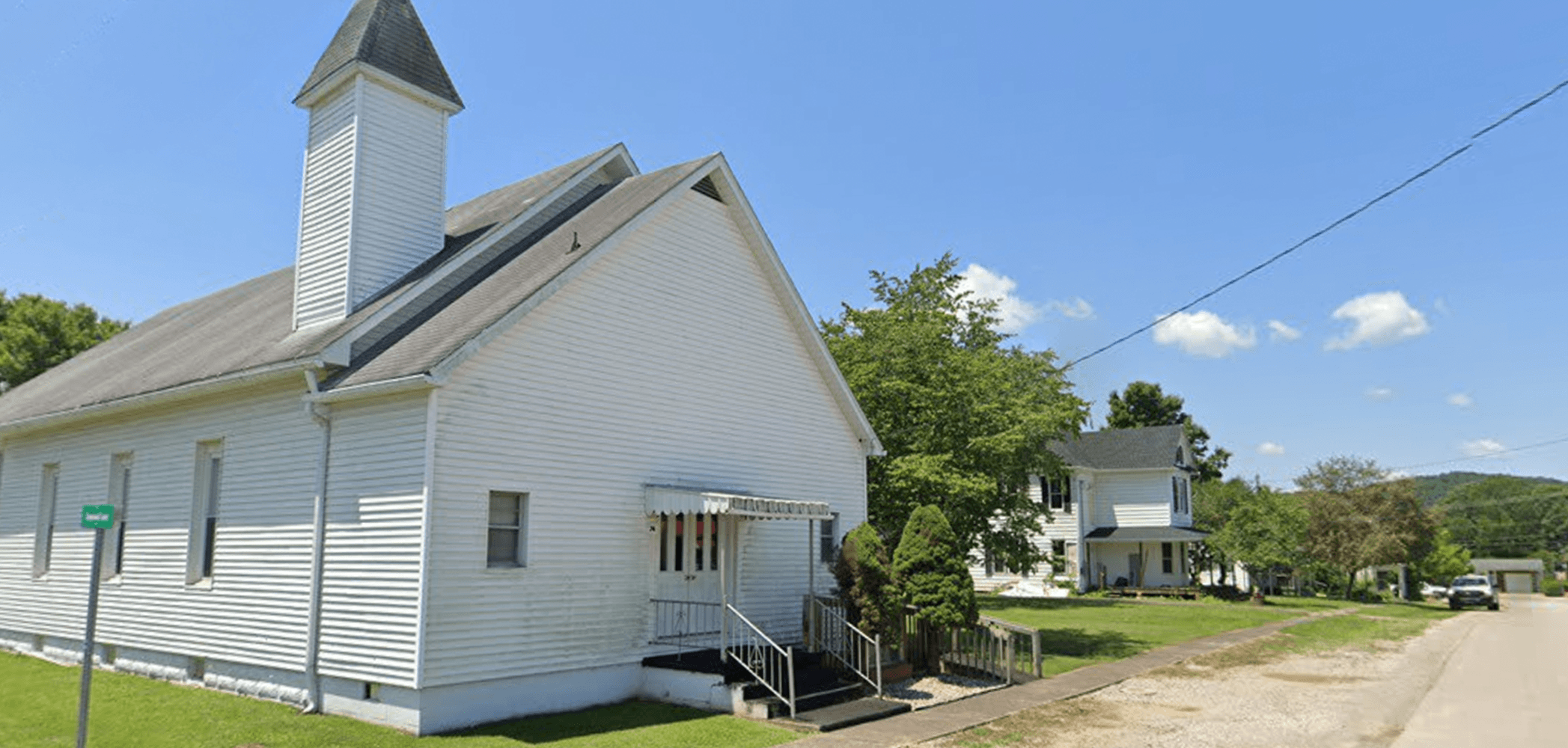
Church leaders are facing huge demographic shifts, leading to smaller denominations, fewer resources, and leaner institutions. Allen T. Stanton gives us three lessons we can learn from small-membership congregations about how to flourish in a shifting landscape.
It sounds sensational, but over the next two decades, mainline churches are going to be unrecognizable from how we know them today. While we may be tempted to continue fighting the trend of decline through new missional strategies and church health report cards, we should be realistic about what the future holds, and how best to position ourselves for the work ahead. Small-membership churches can help us answer those questions.
The reality facing congregations is that demographics simply do not support a reversal of decline. As church data guru Ryan Burge points out, mainline churches are dominated by baby boomers, and there simply aren’t enough adults in the generations after to replace them. Baby boomers, at their largest, made up 45% of the adult U.S. population. Millennials never broke 30%. Meanwhile, in The United Methodist Church, The Episcopal Church, and the Presbyterian Church (USA), there are 10 retirees for every young adult in the pew. Based on those demographics alone, and assuming every current adult in The United Methodist Church lives to be 85, our membership will drop by 30% over the next 15 years. In 22 years, the UMC will have lost about half of its membership.
There is no going backwards. Short of another Great Awakening, there is no reversing the decline. While some churches will grow, the overwhelming number of congregations, Annual Conferences, and denominational agencies will see a decline that happens slowly, then all at once.
But rather than abandon hope—which should never be placed in the solvency of the institution—pastors and church leaders should focus on those essential traits that make the church vibrant, vital, and missional. How do we make disciples and transform communities when resources are scarce, when numbers are few, and our institutions are thin? For that, our small membership churches have three lessons to teach us about flourishing.
1. Leadership is relational.
In 2025, I co-facilitated a cohort of small churches from across the United States to learn more about what contributed to flourishing small churches. We expected that we could identify a clear template around what it meant to be a “good” leader of a small church. There wasn’t one.
Instead, we found that strong leaders shared a commitment to mutuality and interdependence. As the pastor became more embedded in the rhythms of the community, the laity bolstered their weaknesses, while amplifying their strengths. This represented a radical change from what we look at as the “professional leader.” Instead, informal conversations substituted for committee meetings, worship was a shared function of the church, and pastoral care was a responsibility taken up by the entire community. As we shared in our report, the theme that emerged was that the “church is not dependent on one person.”
In the next iteration of American religion, we will need to become more comfortable with a reality that demythologizes the notion of a strong central leader and instead focus on the communal realities of God’s Kingdom.
2. Formation is not a program.
We often highlight churches that have an ever-expanding plethora of programs. In small churches, that level of programming leads to burnout, as pastors and laity share the burdens of ensuring the church remains functional. It’s hard to run a giant event when your finance chair is also the choir director, and neither is paid.
Yet, formation is constantly happening within small membership churches. There is an expectation that, as you join into the life of the small membership church, you will be impacted and changed by the relationships around you. When we asked the laity and pastors in our cohort how a person will be different from having participated in the congregation, their answers were never about program participation; rather, they were about life together. A new member would feel seen, be more active in the community outside of church, and have played an impact on someone else’s faith journey. Missions become organic as the church responds to needs as they are noticed, or as individuals take up new projects within the community because their faith leads them to it.
As churches begin adjusting to a reality with fewer resources, small churches remind us that large budgets and ongoing programs are not the only route to a deep sense of spiritual formation. When a community is centered on learning to follow Christ together, the formation becomes part of the rhythm of the community.
3. You can’t be all things.
A startling statistic: 46% of people participate in more than one congregation, and that number is expected to rise. A person might worship at their “home church” on Sunday morning, send their kid to youth group at another church, and then volunteer for a charity at a third. In many ways, this defies our logical assumptions about how church operates, in which we try to create new ways to attract and retain members.
Rather than thinking about our congregations as a singular basket that should be recruiting new members, we should be reminded by a lesson that small churches already teach us: sometimes, you don’t have capacity to be all things to all people. Instead, the church becomes a knot within the larger fabric of the community net. They have their home church, but their needs are nurtured by a plethora of communities.
All of the data tells us that it is unlikely that we will ever return to the sort of denominational robustness of the 1980s or 1990s. While we can grieve these changes, we should also embrace the possibilities they offer. Being smaller does not mean that we can’t flourish. We can, and we will. And the small membership churches, which have been flourishing for generations, can teach us how.
We love to hear from our readers! If you have any comments, suggestions, or questions about this article, please leave a voice message directly from your computer, tablet, or smartphone via Speakpipe. You may also email lewiscenter@wesleyseminary.edu or leave a comment on Facebook, Instagram, YouTube, and Bluesky.
 Learn more about the strengths of small and rural congregations plus other topics in an upcoming Leading Ideas Talks episode. Church Renewal in a Changing World featuring Lovett H. Weems Jr. and Allen T. Stanton will be available on August 5.
Related Resources
- The Gift of Small featuring Allen T. Stanton — Watch the Leading Ideas Talks podcast video | Listen to the podcast audio version | Read the in-depth interview
- 5 Ways Forward for Very Small Congregations by Lovett H. Weems Jr.
- Fresh Hope for Rural Churches by Jennie Birkholz
- Four Traits that Make Small Churches Vital, Formational Communities by Allen T. Stanton
If you would like to share this article in your newsletter or other publication, please review our reprint guidelines.
Image from Google Maps