




What does sustainable leadership look like when ministry leaders are navigating constant demands, anxiety, and competing expectations? In this episode, Jonathan Page is joined by Margaret Marcuson, the author of Sustainable Ministry: How to Lead (and When to Nap). Together, they explore how clergy can lead with greater clarity, manage relationships and anxiety, establish healthy boundaries, and create space for rest and renewal.
Listen on Apple Podcasts | YouTube Music | Spotify
Watch on YouTube

- Transcript—Click or Tap to Read
-
Transcripts are auto-generated based on published audio and then reviewed for accuracy.
Narrator: What does sustainable leadership look like when ministry leaders are navigating constant demands, anxiety, and competing expectations? In this episode, Jonathan Page is joined by Margaret Marquesson, the author of “Sustainable Ministry: How to Lead and When to Nap.” Together, they explore how clergy can lead with greater clarity, manage relationships and anxiety, establish healthy boundaries, and create space for rest and renewal.
Narrator: Please like and subscribe to this channel and click the bell icon to get updates for new videos.
Jonathan Page: Well, welcome back to another episode of Leading Ideas Talks. My name is Jonathan Page. I’m the director of the Lewis Center for Church Leadership. And, uh, today I am delighted to be joined by Margaret Marquesson.
Jonathan Page: Uh, I, I’m thinking if you have spent, if you’re listening to this and if you’ve spent any time in community leadership or ministry, you know that it can feel heavy. Uh, there are endless expectations, constant friction, uh, [00:01:00] and sometimes there’s a quiet, creeping feeling of burnout. We’re told to work harder, do more, and fix everything.
Jonathan Page: But we’re wondering today, what if the secret to deeper influence isn’t doing more, but learning how to differentiate yourself, manage your own internal anxiety, and maybe even take a nap? Our guest today has spent over two decades helping leaders do exactly that. She’s an American Baptist minister who served a local parish for 13 years, a faculty member for the Leadership and Ministry Family Systems workshops, and a coach to leaders across more than 20 denominations.
Jonathan Page: She’s the author of “Leaders Who Last,” “Money and Your Ministry,” and is out now with an essential timely book called “Sustainable Ministry: How to Lead and When to Nap.” Please welcome to Leading Ideas Talk, Margaret Marquesson. Margaret, it’s good to be with you.
Margaret Marcuson: It’s great to be here.
Jonathan Page: Well, uh, hoping we can dive right in, Margaret. And I’m wondering, uh, just as we think about some of your work and, and where, where your head is at these days, [00:02:00] uh, ministry contexts feel like they’re getting harder, not easier. Um, what in your mind can leaders be doing right now to really make a difference within their contexts, uh, in these increasingly challenging ministry spaces?
Margaret Marcuson: I do want to a- acknowledge just how hard it is. And it, it’s been hard in the past and over the last few years through the pandemic and all, it’s just gotten harder and harder. And I wanna acknowledge the work that, that all of you do and the efforts that you’ve been making. I, I do think in hard times it’s particularly important to, to be clear about what your call is, what you’re responsible for, and what you’re not responsible for.
Margaret Marcuson: And you can look around, you can see needs all around you, anxious people everywhere that want your attention and, and counsel, a- and you can’t do it all. So there’s discernment involved [00:03:00] in what is my call at this time in this place.
Jonathan Page: I think that’s, that’s really helpful and, and really being able to balance between some of those, like, external demands, you know, that, that can feel like they’re pressing in on you and, and having sort of your own internal understanding of sort of where your giftedness is and what your role is. Um, I, I guess I wonder, do you have any wisdom to share about sort of how leaders can, can do that work of discernment about what is it that is uniquely mine to do?
Margaret Marcuson: First of all, I would just wanna say one thing. You talked about the external demands, and then most of us who go into ministry have plenty of internal demands.
Jonathan Page: Sure.
Margaret Marcuson: And desire, feel, you know, feeling of obligation. We come, we’re c- we have a sense of call and we feel committed to the work and, and yet sometimes w- that those internal demands lead us to overcommit or to feel over responsible.
Jonathan Page: Of course. [00:04:00]
Margaret Marcuson: A couple of things are important. First of all is prayer.
Having a, some kind of spiritual practice that works to, for you, that helps you slow down and have a way to discern within yourself what God might be, uh, laying, laying on you at this time. And, and not- And discernment is always a partnership. It can be useful to have somebody outside, a spiritual director or a coach.
Margaret Marcuson: I do, I coach a lot of clergy, and help to do some of that help of discernment. And of course, it, if you’re in a congregation or whatever the ministry setting is, there, there’s a conversation with others about what, uh, what, what you’re committing to, what, what makes sense at this time, and what you m- might need to say no to for good or not now, ’cause I think sequence is really important in, in, uh, carrying out the work. [00:05:00]
Jonathan Page: Yeah, and, and what an important reminder that a no right now doesn’t have to be a no forever. There’s, there’s sort of a, there’s a difference between setting a boundary and, like, slacking off or doing something like that. Uh, uh, I wonder, Margaret, uh, so, so your new book, uh, Sustainable Ministry: How to Lead and When to Nap. What does it look like for people to actually take that kind of pause or, or even just finding a day off when, uh, leaders are often participating in systems that demand constant attention?
Margaret Marcuson: Well, we’re, we’re not biologically wired to work all the time. There’s, the Sa- Sabbath is in the Bible for a reason because to do the best work, you need rest. And I would also [00:06:00] say that work expands to fill the time allotted. And for many clergy, there’s not a set end time for the day. One of the, the benefits of being… It’s a benefit and a challenge. A- as a solo pastor, senior pastor, you have more control over your time than a lot of other people do. So you can make some choices and say, “Okay, well, I’m, gonna stop work at 5:00 today. Don’t have an evening meeting.” And things come up, might be an emergency, but y- there’s not a daily emergency in most settings.
Margaret Marcuson: And if you have a, a boss, as some clergy and a judicatory staff do, or other institutions, uh, there may be a conversation that needs to be had about, about realistic expectations. Those, those aren’t always easy. Um, but, but it, it’s in everybody’s best interest for people to have a sustainable pace of work.
Jonathan Page: [00:07:00] Yeah, absolutely. And, and that idea of expectations management feels like it’s really key within that because, uh, especially for, for folks who are listening to this who may be a part of mainline denominations who are, uh, sort of working through this idea of metrics and sort of, okay, what are… what is it that you’re responsible for?
Margaret Marcuson: What is it you’re accountable to? Um, I, I guess in, in, you know, there’s some degree where, uh, folks don’t have any control over that, right? If you’re, if you’re asked to count your average worship attendance, you have to count your average worship attendance. But are there other ways, kind of thinking about it from more of a spiritual discipline perspective, uh, that, that leaders can be thinking about how to organize around what matters most, uh, and really to the factors that folks should be really paying attention to?
Margaret Marcuson: Yeah. For, for a time, I did quarterly planning sessions for clergy, and I would invite them to think about what their, what their purpose was for this particular quarter and, and then [00:08:00] discern what activities make sense to carry out that purpose. And if you, if you are in a, a, a system where there’s a lot of accountability, then maybe that’s part of the conversation quarterly to say, “What, what are, what are my m- most important responsibilities for this quarter?”
Margaret Marcuson: But I do it for myself, and I, I come up with a theme a- and that it helps me take it a little bit less seriously. But every day and every week, I think about what am I doing to, to carry this purpose forward? And people have found that to be helpful.
Jonathan Page: Yeah, I think that’s really good. And, and I guess it, it makes a lot of sense if you’re dealing with rational people. One of the heaviest weights sometimes is the gap between what people want and what is possible. So I guess w- what would you recommend leaders do when people’s expectations don’t really match reality?
Margaret Marcuson: Well, one of the things you can always do, uh, uh, and this is critical for leadership, is continue to cultivate your relationships.: So you need that [00:09:00] clarity about what your purpose is and what, what you are to be about. But you also need to Continue to connect with people, even the people that, that might feel disappointed in you right now. So if you think about those internal pressures that, that I was talking about earlier, clergy f- often find it very hard to disappoint people, even when it’s necessary.
Margaret Marcuson: A- and you have to manage that. You can’t be disappointing people all the time, or y- you’re gonna lose your job, or they’ll, they’re gonna be on, on the phone with a conference saying, you know, for Methodists, “So I want, we want another pastor.” So it is managing… I th- I, I forget, somebody talks about disappointing people at a, at a rate they c- they can handle.
Margaret Marcuson: If you are well connected with people, if you’re not avoiding them ’cause you know they’re upset with you, it, it’s gonna be easier for you to, [00:10:00] to, to, to stay on track. Part of the track is attending to relationships, uh, and not taking it personally when those disappointments come up.
Margaret Marcuson: You know, if you have a principled decision that you’ve made, uh, and, and not, not feel guilty.
Jonathan Page: That in and of itself can be challenging because that there’s so much, I feel like culturally, especially in the US, that says when we let people down, there’s almost this expectation that shame should be a part of the conversation.
Um, do, do you have any strategies for folks who may be dealing with that sense of, of shame or that sense of guilt- Yeah … when it comes to disappointing folks?
Margaret Marcuson: Sometimes I say, “If you make a decision like this, ‘Okay, this is what I’m gonna do. This is what I’m not gonna do,’ and you feel guilty, you’re, you… It might be a sign you’re on the right track.”
Margaret Marcuson: So to get a little bit used to that. Uh, and then attend to, [00:11:00] um, you know, stick to the basics. If somebody’s in the hospital, especially if they’re a critic Visit them. Sure Connect with people around matters that might not have anything to do with church. I, I, I always found that, uh, when I was living in, serving a church in Massachusetts, like, getting interested in Red Sox baseball at that time was, was a really a great way to connect, particularly with the men in my church, and it wasn’t even about church, but it, it, it really helped in those relationships.
Jonathan Page: Yeah. Those relational inroads are, are key. Even if I wouldn’t, I wouldn’t choose Red Sox baseball personally, but I’m glad that worked in, I mean, the Massachusetts context, I can certainly see why it would.
Uh, so, so when we think about sort of the risks of relational connection, uh, you know, you, you do a lot of work in family systems theory, and so one of the risks that tends to come up is emotional triangulation. Uh, so I guess, what’s your [00:12:00] best advice for recognizing and effectively managing triangles so leaders don’t get trapped in the crossfire?
Margaret Marcuson: Yeah. Good, good question. One thing I want, do wanna say about triangles is that they are not bad in and of themselves. This is how human beings work in relationship. You know, look at Adam and Eve in the Garden and God, right?
Jonathan Page: Although that one didn’t work out quite so well.
Margaret Marcuson: Yeah, it was… Well, sometimes, our human triangles don’t work out so well either. Uh, uh, so the, the, the trick is to, to be in a triangle without being caught. So, and the way to do that is to attend to the relationships you are a part of. So, um, so you ha- if it’s you, if you’re A and there’s B and C, you have a relationship with B and you have a relationship with C.
Margaret Marcuson: You are not part of the relationship between B and C. [00:13:00] So the stress comes in relationship, in triangles, when you’re, you’re trying to, to control relationships that you don’t have, you’re not part of. Right. So somebody comes to you to complain about, about Suzy Q, and they want you to go to Suzy Q and fix them.
Margaret Marcuson: And it, it doesn’t mean you have… It’s tricky. You don’t, it doesn’t mean you have no responsibility, but maybe part of your work is to talk to, to, to, uh, you know, just to, uh, let’s, let’s just say Sally S. You talk to Sally, like, “What,” you know, “what’s going on with you and Susie? What’s going on in you?” In- instead of immediately saying, “I gotta fix this,” and you feel that stress, uh, for, uh, for their relationship And in addition, I would say put it on paper.
Margaret Marcuson: There’s something about drawing those triangles out on paper and saying, “Oh, that’s why [00:14:00] I’m stressed.” It gets it out of your head and gets you a little, a little distance.
Jonathan Page: As you’re saying that, I, I just a follow-up. I’m curious, uh, is that something that you do primarily for yourself, or is that something you recommend sharing with the people that you’re in those relationships with, those drawings of the triangles?
Margaret Marcuson: It, well, that’s an interesting question. Um, it, it depends on the person. Some people are, are able to hear it. I, I think it would be work better with people who were, uh, a little more emotionally mature and be, be, be able to, uh, reflect. Although I did find that sharing it with my admin helped her.
Margaret Marcuson: Okay. ‘Cause, you know, pastors and admins are, are in a triangle with pretty much everybody in the congregation, right?
Jonathan Page: Um, so pivoting slightly, um, one of, one point of discussion for you often is sort of this idea of over-functioning and [00:15:00] under-functioning.
So how do those behaviors impact leadership, and especially how do they feed off of one another as you interact with staffs or people within your congregation?
Margaret Marcuson: The important thing to remember about over-functioning and under-functioning is it’s recipr- reciprocal. It, it, it’s a balance between two.
Margaret Marcuson: Over-functioners usually complain about the under-functioners. “If they would only step up and do their part, then we wouldn’t have this problem, and I wouldn’t have to work so hard.” But it takes, takes two to get it going, and so the work is for over-functioners to step down a little bit, and that feels bad for those of us who were, grew up in a responsible position in our families.
Margaret Marcuson: Feels wrong. Um, and there’s can be a gap before under-functioners step up, and sometimes they never do. Um- I do wanna say that [00:16:00] most pastors are chronic over-functioners. Not all, right? But many. Many. However, there are also areas in which pastors frequently under-function, sometimes in relation to things like staff, staff supervision.
Margaret Marcuson: Don’t wanna have the hard conversations, so you let things go. And also, another area that pastors sometimes under-function is in relation to money. Uh, some, it, it can, it can work the other way. Sometimes pastors over, or if they have a financial background, they might end up taking too much responsibility.
Margaret Marcuson: So it’s not like I’m, you, you can’t say, “I’m an over-functioner.” It depends. I’m, I’m an under-functioner in relation to stuff. I’m always saying to my husband, “Could you, could you fix this for me?”
Jonathan Page: It’s not a one-size-fits-all.
Margaret Marcuson: It’s relationship specific or content specific.
Jonathan Page: Is there a way, you know, I’m, I’m thinking about our earlier conversation about sort of disappointment management. Uh, let’s think specifically about over-functioners. Is, is there a, a way to sort of give yourself permission to let a shoe drop, or even just to return responsibility for something to the larger system instead of feeling like, “Oh, I have to own this and do this all”?
Margaret Marcuson: Yes, there is a way, and it does require some internal, you know, some self-management. Uh, a- and it’s– sometimes you can and sometimes you can’t. There are things, as I think of myself as a recovering over-functioner with frequent relapses, and, uh, I s- I still, uh, r- remind my husband of things and I say, “Oh, I can’t…
Margaret Marcuson: I just can’t not say it.” A- and you have to know the stakes can be high in certain cases to let the shoe drop, and, and you might [00:18:00] decide, “Right now I’m not willing to pay that price, and, and I’m, I’m working over here, but right now I just need to keep doing this for now.” That, that’s a reasonable choice. Uh, the, the work is to, to make those choices thoughtfully and not automatically.
Margaret Marcuson: You don’t, don’t… You don’t assume if there’s a problem, it’s your responsibility to fix it, or if there are balls being dropped, that you need to rush in and pick them up.
Jonathan Page: Gosh, what a, what an interesting lift that is for a leader, especially a busy leader, to sort of retrain your, your automatic response system internally to saying, “No, I need to, I need to actually give this some thought before I make a decision or take action.”
Margaret Marcuson: Yes, so I do recommend, and I try to do this myself, if someone asks you to do something or, uh, to an opportunity, even one that you think is great, don’t say yes right away. Say, “Let me check my schedule,” or, “I’ll have to think about that. [00:19:00] I’ll get back to you,” or, “I’ll get back to you by tomorrow.”
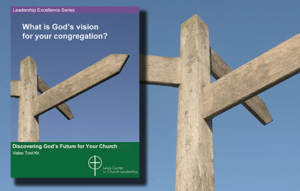
Discovering God’s Future for Your Church is a turnkey tool kit to help your congregation discern and implement God’s vision for its future. The resource guides your church in discovering clues to your vision in your history and culture, your current congregational strengths and weaknesses, and the needs of your surrounding community. Learn more and watch an introductory video now.
Margaret Marcuson: So you, so you’re short-circuiting that compulsion that so many of us have, like it, it’s instilled almost from birth- Mm … that this is my responsibility. That’s really good.
Jonathan Page: So you just speaking the word birth makes me think a little bit about family, and again, coming back to, to sort of family systems theory. Uh, why is it important for leaders to reflect on their family stories? And, and how can digging into sort of those, uh, family of origin dynamics make a tangible difference to your present day work?
Margaret Marcuson: Well, we all learn about relationships in the families we grow up in, whatever the configuration. That’s where we learn those very first lessons, and they’re embedded in our brain.
Margaret Marcuson: And there are strengths and challenges in every single [00:20:00] family. So we learned some lessons that help serve us well and others that, that don’t serve us so well. This is, it’s, this is not a one, one-and-done process. I think I’m on the lifetime plan, and I, I keep learning new things about myself and about my family.
Margaret Marcuson: It’s, oh, that’s, that’s why that- And it, it, uh, I was talking earlier about being able to, to make choices to, to not just jump in, to not have the automatic response. So we n- learn those automatic responses in our families. S- so spending some time, maybe time over a number of years looking at those patterns c- can… and being curious about family. Being curious and less judgmental about family helps us to be curious and less judgmental, uh, in our, in our, uh, congregations.
Jonathan Page: Is there a way to sort of bring out [00:21:00] that, uh, mentality or that storytelling with the people you’re working with? Like, with whether that’s a committee member or a, a s- a teammate on your staff is sort of it- you can… I’m, I’m sure what I hear you describe, you can rec- certainly recognize that in yourself. But as you recognize some of those things unfolding for others, is there… Or, or does that become part of that over-functioning that we just talked about?
Margaret Marcuson: Well, y- you can begin by loo- by noticing for yourself what people tell you about their own family story.
Margaret Marcuson: This is one of the, the blessings of congregational ministry. So if you’re in a corporate office, you’re not, people are not gonna be telling you about their family history, right? So in pastoral care, you have this, this wonderful opportunity not just to be present for that person, but to learn more about them and how they’re likely to, to function in the congregation.
Margaret Marcuson: Um, you, when you do, uh… I, I started doing family diagrams or [00:22:00] genograms when I did in, in, when I did premarital counseling. And if it was someone in the congregation that, that, that information is gold, not just for, for coaching them at that critical time in their life But, but for the future as well. Uh, many years ago I interviewed Ed Bacon, who was a student of Edwin Friedman and an Episcopal priest, All Saints Pasadena.
Margaret Marcuson: Uh, and he, he said that he would go around the table at the finance committee and have them tell their story about their family and money. I thought that was fascinating.
Jonathan Page: That really is. Yeah, that really is. Well, and I, I wonder, um, that, that feels to me like it would, it would create an intimacy in a moment about something, a, a subject matter that feels like it is intended to be cold or intended to be sort of cut and dry, when often it isn’t.
Margaret Marcuson: Yeah, that’s right. And, and, uh, y- i- if, if nothing else, it tells you where those people are coming from, and you [00:23:00] might be- feel less like beating your head against the table.
Jonathan Page: Well, uh, y- since you mentioned money, uh, you- you’ve written about money and, and money is, uh, very notorious for, uh, triggering some intense systemic panic. Um, why do you think it is that money is such a tough topic in congregations? And are there ways that pastors can lead more effectively in relation to money in congregational life without catching the financial anxiety of the room?
Margaret Marcuson: Well, I’ll, I’ll, I’ll qualify that a little bit. So catch it less.
Margaret Marcuson: If anxiety is high in your congregation, it, it, you’re probably not going to avoid it. But you can tr- dial it down a little bit. Uh, so I think money is such an anxiety producing issue because it’s, it’s sort of that biological survival instinct kicks in. So we need money to survive, to [00:24:00] buy food and survive.
Margaret Marcuson: And our congregations need money to, uh, to have a future. And so the, uh, when, when, so when money is scarce or even when people think it’s scarce or that it might be scarce, some of those, uh, those automatic processes kick in.
Jonathan Page: Is it important for leaders to have conviction when it comes to financial management And, and how does that, how, if it is, how would that conviction be a part of mitigating the spaces of fear that are, that are present sometimes within congregations?
Margaret Marcuson: I do think it’s important for clergy to have principles on which they base their leadership in this area and in others. And I, one, one principle is that, of mine is that it’s important for the clergy leader to be involved in conversations about money and stewardship.
Margaret Marcuson: Some churches are less open to that. Uh, sometimes [00:25:00] it’s for women and sometimes it’s for any pastor, right? I’ve heard about, of church trustees who, who met and didn’t invite their w- their female pastor to the meeting. Didn’t even tell, tell her they were meeting. So, so that won’t work. I do this sometimes when, when I do a, a, a, uh, a session on money, just have people take two minutes and write down some of their money principles, and then, and then share one or two of them.
Margaret Marcuson: Everybody, nobody has any trouble coming up with them, uh, among, among pastoral leaders. Everybody knows. But you can, you can remind yourself of what, what’s most important to you in this, in this area. And, and you can invite others to, to think that through as well. Uh, another piece of this is, gets back to the, the family systems and family story, is that every congregation has a story around money.
Margaret Marcuson: And for pastors to, to be curious about that [00:26:00] story and learn more. Uh, if there was some sort of money trauma, embezzlement, something like that in the past, you wanna know about it. How was the… How did, how was the church funded at the beginning? Was it a, a split from another church, or a new church start, or, uh, you know, h- is it, um, yeah, 200, 250 years old? Part of the westward expansion? So that story is, those, those stories are still present, even if nobody even remembers them, as part of the DNA of the congregation. And if you’re researching the history of your congregation, around money or anything else, you’ll be curious. You’ll be more neutral. You’ll be less likely to be caught up in, in the anxiety, ’cause you’re, you’re in research mode.
Margaret Marcuson: Uh, that’s an underrated mode for, for congregational life.
Jonathan Page: It’s a, it’s a great point. Well, and I love, you know, uh, you’ve mentioned in a couple of spaces in this conversation, Margaret, about the importance of story. [00:27:00] Uh, and, and so much of leadership is storytelling. You know, and it’s, it’s both the receiving of story and the giving of story. And, and the more that we’re able to lean in on, on sort of the understanding of our own story, the connection with the larger biblical story, you know, there’s, there’s a lot of that story management that feels like it’s a part of this, this bigger picture that you, that you’re painting for us.
Margaret Marcuson: Yeah, I think that’s absolutely right.
And I studied with, a s- a, a little bit with Angelo Valeo, who’s a, a neuropsychologist. Uh- Mm … a- and he said that story gets at the inner part of the brain, and that’s where- Yeah … motivation is. And that’s why it’s so important for leaders to tell stories. And of course, l- you know, and listen to stories as well.
Jonathan Page: Sure. Sure. No, I love that. That’s, that’s great. And anything, anytime we can talk about motivation, I’m, I’m- Yeah. … a pretty big fan of that. I think that’s a, that’s a huge, uh, so often [00:28:00] under-resourced- Yes … part of our, our leadership life.
Margaret Marcuson: Yeah, and I will say, this is tricky. So your goal is not to motivate others. Hmm. So I’m not sure that you can motivate somebody else That you can, you can tell the story, you can define yourself, you can invite, you can request. But motivation has to come from within others. So you can waste a lot of energy. Now, this is the line from Edwin Friedman.
Margaret Marcuson: We’re always trying to put insight into unmotivated people, and he said- that was just a complete waste of time and energy.
Jonathan Page: Yeah. Yeah. It’s, it’s absolutely true. Absolutely true. Uh, Margaret, uh, you know, you opened today talking about prayer, and so as we’re kinda nearing the end of our conversation, I, I wanna come back to that idea of prayer and, and just what, what is the importance of prayer for leadership from a systems perspective?
So, [00:29:00] uh, is it, is it really kind of prayer as a circumstance management tool? Is it a, an internal self-regulation tool? Um, or is it something greater than that? I wonder if, uh, yeah, I wonder if you’d just expand on that for me.
Margaret Marcuson: Yeah. I would say yes. Yes to all three. So circumstance management.
Margaret Marcuson: So something comes up and y- your brain goes crazy If you have a regular spiritual practice, you’ll have a, a, a place to, to take that. I mean, you, you know, even if you don’t have a spiritual practice, you have a place to take it ’cause you c- you can always bring it to prayer. Um, a- and it’s a way, I, I mentioned relationships earlier.
Margaret Marcuson: You can pray for the people who are driving you crazy. So I say you don’t have to, you don’t have to say anything except their name And s- I, I believe that if a regular practice like that can help soften your heart toward that person, uh, and, [00:30:00] um, over time. And the research on people who have a meditative practice shows th- th- that they do have…
Margaret Marcuson: They are more self-regulated. They are less reactive over time. And I, I have to be honest and say, so I, I practice five minutes of meditative prayer a day. Once in a while, it’s just one. I would say one minute’s exponentially better than no minutes. So I don’t have a massive m- meditative practice. But I, I, I know, uh, that y- you meet people who are– they’re just so present and, and calm, these people with this, this deep practice over many years.
Margaret Marcuson: Uh, but you can be way short of that and still be more able to regulate yourself Uh, and you know, of course it has a, a much larger purpose. So if you’re doing work that you pr- hope and [00:31:00] pray is part of God’s work in the world, then y- you, you wanna have, uh, work, work on your own sense of how you’re gonna relate to, to that God or, or that wider, um, purpose, um, every single day.
Jonathan Page: Well, and I have to imagine, like, I remember when I was doing clinical pastoral education, uh, there was this real emphasis on being a non-anxious presence. And, and I have to imagine that that’s a, that’s a big part of what our prayer life can produce, is this idea that no matter what the circumstances, no matter how overwhelming things can get, uh, and, and maybe this speaks to the importance of naps and, and those sort of spaces for spiritual reflection, is it’s a reminder that the, the God who guides us into these spaces doesn’t leave us in those spaces and, and the circumstances aren’t too big for, for where God is in that.
Margaret Marcuson: Yeah. And, and I would say you have enough time and energy [00:32:00] to do everything that God truly wants you to do. A- and it may, may- may be that y- you are taking on more than you’re actually called to do if you’re exhausted all the time. Now, there are these short, these times in, uh, in, in life and in ministry where things are very intense, the beginning of the pandemic or, or a family crisis or something like that.
Margaret Marcuson: Uh, but, but it’s hard to sustain that for a, a long time. And, and naps really, I, I didn’t say much about naps earlier, but, but something goes on i- in, in your brain when you sleep. Things get reorganized. You gain new perspective. Maybe you have a dream, or maybe you wake up with a sense of, “Oh, I see what I can do now.”
Margaret Marcuson: And if you’re exhausted all the time, it’s hard to make good choices and be a thoughtful leader.
Jonathan Page: It’s, it’s so true. So true. And, and for us to be able to bring the best of who we are, uh, requires that, that sense of grounding and [00:33:00] centering and, and just that state of being. Uh, you know, the, the old line of we are created to be human beings not human doings, and, uh, and that’s, but that’s hard because oftentimes it feels like we get rewarded in congregations, even sometimes by fellow leaders, the more that we do.
Margaret Marcuson: Yeah. That’s right. Overfunctioners get awards.
Jonathan Page: Yep. Yeah. And that’s, but, but hard to get awards when you’re, if you’re, if you’re burnt out- Yes … and not able to do anything at all. So, uh, Margaret, this has been just such a great conversation. We always love to give our guests the, the last word. Uh, is there a, an idea or thought or something, whether we’ve covered it or not, that you’d wanna leave folks with as we, uh, as we wrap up and transition into what’s ahead?
Margaret Marcuson: Oh, take a nap. I love it.
Jonathan Page: Uh, this is a reminder for me. I am, uh, if, if my spouse were here, she would say, uh, “Jonathan’s a notoriously bad napper.” Uh, so this is, this is… I’m [00:34:00] taking this as a personal challenge, and, and really appreciative, uh, of, of you and your work and your time. Uh, Margaret, again, is, uh, the author of Sustainable Ministry: How to Lead and When to Nap, uh, along with other resources.
Jonathan Page: Margaret, this is just such a rich conversation, and we’re really grateful, uh, for your presence here on the Leading Ideas Talks podcast. Thanks so much.
Margaret Marcuson: It’s been a pleasure. Thank you.
Narrator: Thanks for joining us for Leading Ideas Talks. Subscribe free to our weekly e-newsletter, Leading Ideas at Church Leadership. Please like and subscribe to this channel and click the bell icon to get updates for new videos.
Announcer: Don’t forget to subscribe to our free weekly e-newsletter, Leading Ideas, to be notified when new episodes are published. Visit churchleadership.com/leadingideas.
We love to hear from our readers! If you have any comments, suggestions, or questions about this article, please leave a voice message directly from your computer, tablet, or smartphone via Speakpipe. You may also email lewiscenter@wesleyseminary.edu or leave a comment on Facebook, Instagram, YouTube, and Bluesky.
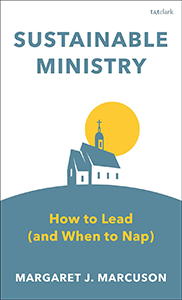 Sustainable Ministry: How to Lead (and When to Nap) (Bloomsbury, 2026) by Margaret J. Marcuson is available from the publisher, Cokesbury, and Amazon.
Related Resources
- How to Know When you Need to Ask for Help by Jessica Anschutz
- Clergy Health and Wellness in the Post-Pandemic Era featuring Allison Norton — Watch the Leading Ideas Talks podcast video | Listen to the podcast audio version | Read the in-depth interview
- Keep your Bucket full of Energy and Compassion by Alan T. Baker
- Protect, Sustain, Grow, Best Practices for Handling Your Church’s Money, a video tool kit resource from the Lewis Center
If you would like to share this article in your newsletter or other publication, please review our reprint guidelines.