
A five-hour wait on an airport tarmac might not seem like a leadership lesson, but unexpected disruptions have a way of revealing what matters most. Reflecting on his experience during the nationwide ground stop, Jonathan Page draws connections to the work of church leadership, offering four reminders for leading well when plans change and uncertainty takes hold.
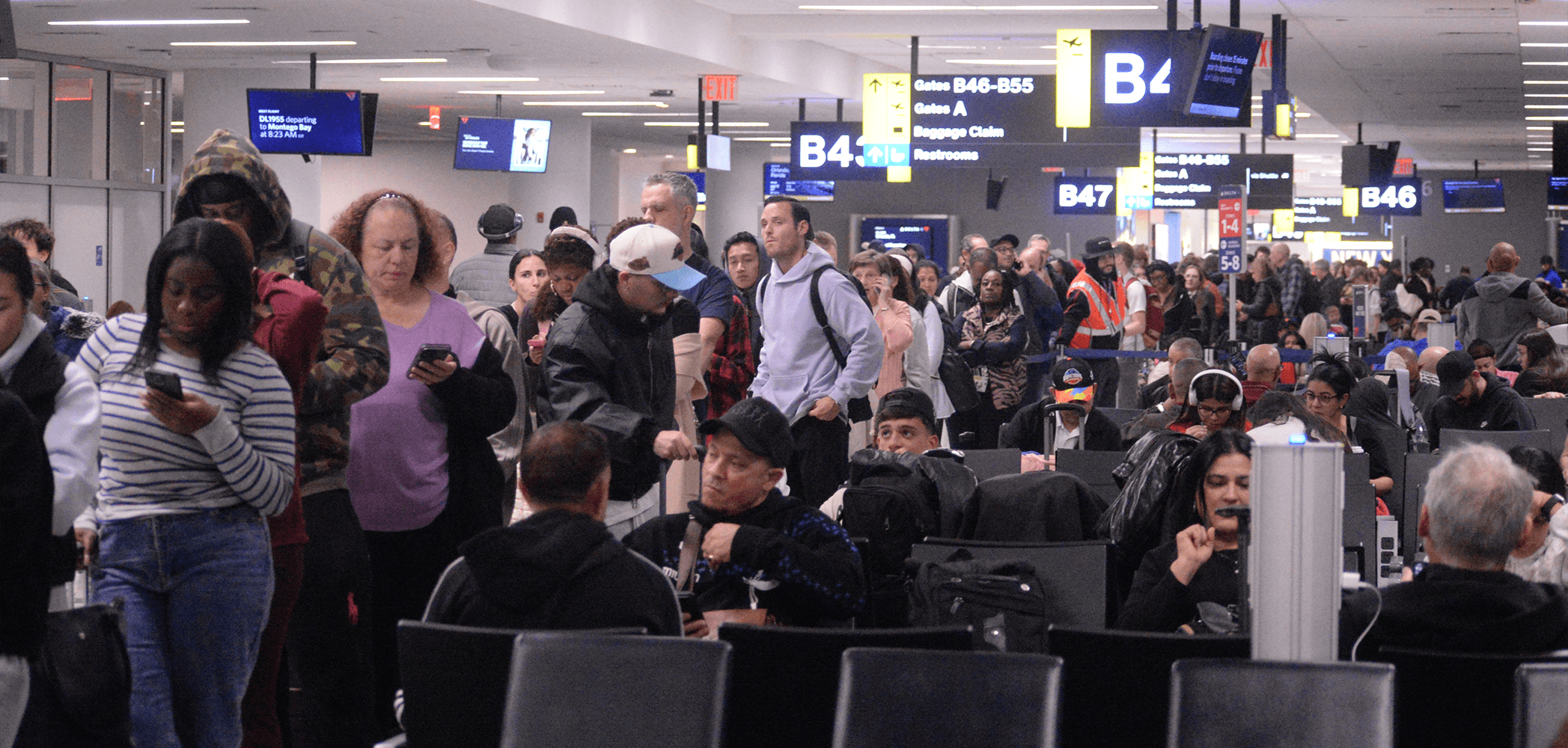
On November 13, a nationwide ground stop was issued in the United States. It was estimated that 1.5 million travelers were impacted by this order, which held planes for hours on a Friday afternoon. One of those travelers was me, spending over five hours on the Chicago O’Hare tarmac and experiencing a 30-hour delay in my return home from a conference. As my seatmate said while we were on the tarmac, “It sure is odd to watch the news and know you’re in it.”
Thankfully, most of the impact of this ground stop appears to be inconvenience, not injury or peril. Still, the timeliness of this event has me wondering: Is there anything church leaders learn from a widescale event like this? I think there might be a few:
1. Adaptability is a gift you can thank yourself for later.
So often, delays in travel bring out the demons within our better selves. Interruptions to plans, shifts in schedules, and unforced moments of error can expose the deepest areas of dissatisfaction in our souls. On Friday (and Saturday), there was very little of this kind of behavior. From my observations, people seemed to understand that this was happening to everybody everywhere all at once. Whether it was the scale of the event or that it was heading into a weekend, there was a remarkable lack of panic and stress. People, amazingly, were fairly adaptable.
This is an important lesson for leaders. I find that when I make plans, it is easy for me to fall in love with them as they are. The preparations and structures that I construct have taken time, energy, and insight, so I tend to want them to be as they are presented. A mentor once told me, “The best gift you can give your people is to keep your plans as solid as Jell-O.” Admittedly, at the time I had no idea what she meant—and, frankly, the more I came to understand it, the more I thought she was wrong.
Over time, however, I think I see more of what she meant. If you are too keen on having things the way you designed or planned for them, you risk missing out on how that work can be amplified by other leaders and teams. In moments of unexpected challenge, staying flexible to meet the moment means you are postured for a better sense of patience and progress. Rigidity, especially when times are tough, can sink you into a deficit, both in your leadership and your spirit.
How might you embody a looser, more Jell-O-like leadership in your context, believing that adaptability can carry you further than rigidity?
2. Clarity is fuel for alignment.
There were many people with megaphones during the ground stop. I mean this figuratively for the most part (although at one point a gate agent did board our plane with an actual megaphone). Communication needed to happen from the leadership on the plane, from the airline, from the FAA, and from national leadership. If you were tracking the news, you can make your own judgement about the efficacy of communication on those public platforms; however, the situation on the plane and within the airline offered two different images of communication.
The plane’s captain was sure to speak to passengers from the cockpit once every 20-30 minutes to give an update on what they knew, even if it was to say there was no update at all. This consistent, clear form of communication gave passengers a sense of trust in the captain’s leadership and assurance that everything possible was being done to resolve the situation. The airline was a little less communicative—only reaching out after the crisis had calmed somewhat—and was virtually impossible to reach by phone or other forms of messaging.
What can leaders take from this? Frequent, succinct, honest communication in challenging times eases tension and builds trust. Infrequent, meandering messages that ignore the circumstances or pass off accountability only heighten anxieties and reduce the belief that leaders are capable of handling what is before them.
If you are facing a hard situation as a leader, make sure you are mindful of what you are saying and how that will impact those who are shepherded by your leadership. Don’t feel as if you have to be an ever-flowing fountain of unedited information. But make sure you are in touch with your whole population on a regular basis, telling the truth when you communicate even when you cannot share everything.
3. Collaboration is more efficient than independence.
One of the most effective forms of leadership I saw throughout the ground stop came from the crew of flight attendants on the airplane. These leaders took time every 15-20 minutes to huddle together, then disperse to different sections of the aircraft to check in on passengers, offer water and the occasional snack, and troubleshoot around missed connections and shifting travel plans.
There is something here to be said about the gift of presence in times of trial, which is a very real element of leadership. Being out in front of people—or better yet, sharing in the hardship those around you are facing—speaks volumes compared to hiding behind a door or a title.
That said, the big takeaway for me was watching how this collaboration impacted the kind of leadership the flight attendants were able to offer. If one person wasn’t sure how to help a passenger, they would call another in. During those huddles, the flight attendants developed clear plans that offered passengers relief and comfort—plans shaped by many voices working together rather than one voice standing out.
This collaborative form of leadership created a better experience for everyone involved, including (I imagine) the flight attendants themselves. Too often, leaders in the church can see collaboration as “yet another meeting,” or even as something that can slow down the inertia of mission. I would point out that collaboration doesn’t interrupt the work of the church; instead, it offers a greater spirit of efficiency and connection that can sustain the work of the church much more than any kind of solo, heroic leadership could.
4. Kindness can sustain a weary soul.
Over the hours of delays and shifts, the biggest standout was just how kind people were to one another. I didn’t encounter a single staff person with the airline who was sour or short. I was able to make some new acquaintances on the plane and in a variety of waiting areas. During a time that could have been fraught with tension and angst, people chose to see each other from the kindest perspective possible. This made an undesirable situation more bearable and, one might argue, more fruitful too.
For leaders, especially those leading in the church, I think this is a reminder to always look for the best in people and situations we face. Remembering that every person you encounter is a beloved child of God is a good start to framing a more hopeful evaluation of whatever you may be navigating. Sometimes, you will know the crisis that an individual, family, or community is going through; other times, that may be harder to discern or see.
So, in every moment, begin by believing the best in those around you. See possibilities, even when it is more convenient or obvious to focus on problems. Remember that smiling releases endorphins and lowers your blood pressure. Finding an occasion to laugh—from building up, not tearing down—can interrupt even the hardest of moments.
Your kindness can be a true form of leadership. It can show a path forward when it appears there is no other way. It can be a light in an otherwise dim situation. It can be a balm to the weariest of travelers along life’s way.
The events of November 13 were a “once in a decade” kind of widespread, national moment. The moments of crisis you may experience as a leader may not match the level or impact of this, though they may go deeper and more intimate than something at this scale ever could. Remember that adaptability, clarity, collaboration, and kindness can go a long way on the journey of leadership. They don’t eliminate the crisis moments, but practicing these elements well can sustain your soul and your organization through challenges, no matter what the scale might be.
We love to hear from our readers! If you have any comments, suggestions, or questions about this article, please leave a voice message directly from your computer, tablet, or smartphone via Speakpipe. You may also email lewiscenter@wesleyseminary.edu or leave a comment on Facebook, Instagram, YouTube, and Bluesky.
Related Resources
- Communicating in a Crisis by Mike Bonem
- 4 Practices to Help Small Church Stay Nimble and Open to Change by Allen T. Stanton
- 5 Disciplines of Teams that Thrive by Ryan T. Hartwig and Warren Bird
- Helping after Natural Disasters by Annette Spence
If you would like to share this article in your newsletter or other publication, please review our reprint guidelines.
Photo credit: Passengers at a crowded gate JFK Airport wait in line to refund or rebook their flights during the 2026 FAA ground stop. Photo by Sashimi-b on Wikipedia. CC BY-SA 4.0