
In the wake of natural disasters, well-intentioned donations and self-deploying can inadvertently hinder relief efforts. Annette Spence shares how to effectively support recovery initiatives while avoiding six common pitfalls in disaster response.
When relief efforts began for Hurricane Katrina in 2005, people from all over the nation sent clothes to a crippled New Orleans—an unbelievable avalanche of used clothing. The Rev. Dave Henderson, Holston’s current disaster-response coordinator, remembers what happened later, when the unrequested clothing became too much for volunteers to sort, clean, distribute or store. Acres of damp, molding, unusable clothing were bulldozed into piles and burned.
Following Hurricane Helene, a pastor in the Western North Carolina Conference complained that people sent unrequested items to a mission center in the flooded town of Spruce Pine, North Carolina. When people asked how they could help after Hurricane Helene, mission leaders in Holston Conference tried to be clear about immediate needs. In addition to prayer and financial donations, Holston’s mission headquarters asked for flood buckets, hygiene kits, water, and contractor-grade trash bags. However, there are few things that almost every relief worker will tell you they DON’T need:
1. Don’t donate anything that wasn’t requested.
Please don’t donate those cans of corn or old pillows on the chance they’ll be needed. Please don’t donate your unused prescription medications. (That actually happened at a church in Greeneville, Tennessee). Not only will volunteers have to use valuable time to deal with unwanted donations, receiving too much of any one item is problematic, too. “Having too many donations with no place to store them and nowhere for them to go can quickly become its own disaster,” said the Rev. Beth Tipton, disaster-response coordinator in Holston’s Appalachian District. “Do good but do no harm.” Reach out to and then follow instructions issued by relief workers in their respective sites. The needs will likely change and be more specific as the relief effort progresses.
2. Don’t accept every donation.
This message is for churches and others on the receiving side: especially in times of crisis, it’s OK to say “no, thank you” to donations that you don’t need or want. “A lot of people see this as an opportunity to clean out their old clothes or expired food,” says Henderson. “Most churches are too nice to turn away donations. We’re trying to get them to understand, they don’t have to accept that stuff.”
3. Don’t buy the cheapest supplies.
Church members are doing impressive work in assembling cleaning kits (also known as flood buckets) and delivering them to their district offices or other donation centers in Holston Conference, Kirk Lowe of Project Crossroads said. The detergents, brushes, wipes, gloves, and other requested cleaning kit ingredients in the five-gallon buckets are not always easy to find. They’re also expensive, costing a total of $75 or more.
With that said, try not to select the cheapest items that won’t hold up in the hard work of cleaning up after a flood. “Think about what you would want to use to clean up your house if it had gotten flooded or damaged,” said Lowe. “Heavy-duty trash bags, sturdy brushes, good-quality gloves would all be important to not only keep you safe in your cleanup but make sure that the supplies can be put to good use.”
4. Don’t self-deploy.
It might be tempting to load up a truck and dash off to places where you hope your help is needed, without knowing for sure. After every disaster, relief personnel beg people not to do this. “Showing up without a plan can only add to the chaos during the immediate aftermath,” Lowe says. Make sure you are partnering with an agency that has a local presence and can help identify the needs. If you want to participate on a future mission team to help flood survivors, contact your pastor, who should contact the disaster-response coordinator in your United Methodist conference.
In western North Carolina, Rev. Dana McKim also points out that well-intentioned, would-be volunteers who go to flooded areas without an invitation or plan are clogging already treacherous roadways. They’re also taking away resources (hotels, food, water, toilets, gas) from survivors in need.
5. Don’t spread rumors.
The nation is besieged by false information spread largely through social media. Rumors and baseless claims can impede the work of agencies (such as Federal Emergency Management Agency) and mission workers who are trying to help others. “Perpetuating those lies and fake posts just make things worse for our victims,” McKim says. Christians have a responsibility to avoid the sharing of rumors and misinformation.
Bishop Ken Carter of the Western North Carolina Conference mentioned social-media activity when he advised United Methodists to stay focused on the mission and follow their spiritual disciplines. “If I could just be very honest, I would encourage you not to do a lot of doomscrolling, endlessly,” he said.
6. Don’t give up.
The devastation caused by natural disasters will require a recovery process of several years. United Methodists are needed for the long haul to provide steady support for neighbors in devastated communities, mission leaders say. Don’t give up while waiting on the needs list to change. Try not to get discouraged or tired when the recovery effort drags on for years. “I know wanting to help and having to wait is hard,” said the Rev. Mike Sluder, Holston connectional ministries director. He urged people to be patient and to keep the flood buckets, water, and other requested items coming. “Thank you for what you are doing to help.”
This article was originally published after Hurricane Helene on October 9, 2024, by the Holston Conference of the United Methodist Church and is reprinted here with permission.
Related Resources
- Does Your Church Need a Disaster Ministry Plan? by Jamie D. Aten and David M. Boan
- Remembering 9/11: Leadership During a Disaster featuring Terry Bradfield — Watch the Leading Ideas Talks podcast video | Listen to the podcast audio version | Read the in-depth interview
- Rebuilding Communities with Hope featuring Glorymar Rivera Báez — Watch the Leading Ideas Talks podcast video | Listen to the podcast audio version | Read the in-depth interview
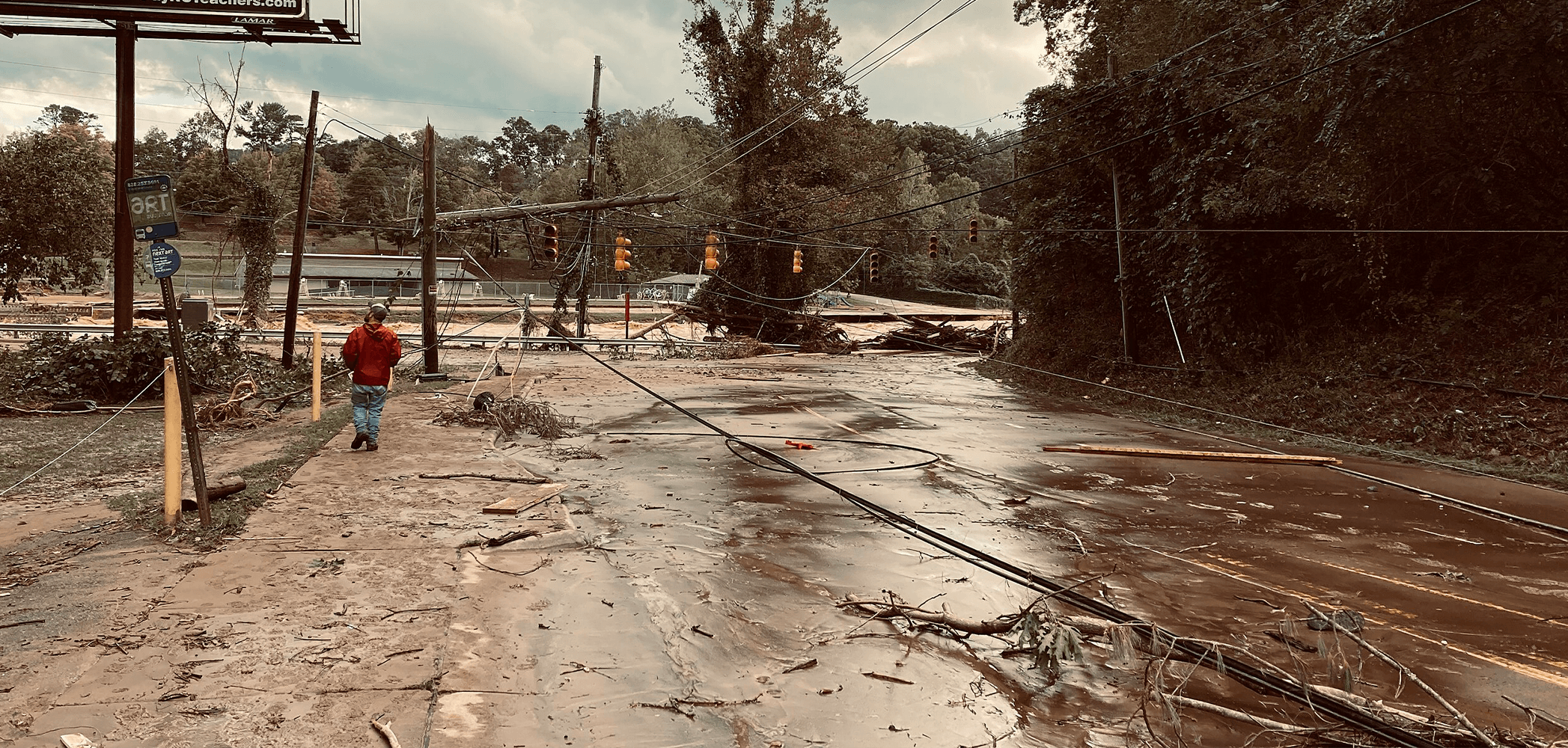
Photo of devastation in Asheville, North Carolina, after Hurricane Helene by Bill McMannis via Wikimedia Commons