
As the United States approaches its 250th anniversary, Kendal McBroom challenges church leaders to reconsider the relationship between faith, patriotism, and prophetic witness. At a time when many churches feel pressure to stay silent or safe, he asks what it means for pastors and congregations to choose justice over comfort and discipleship over nationalism.
This year, the United States of America is set to acknowledge its semiquincentennial. I deliberately use the word “acknowledge” over and above “celebrate,” due to the current state of our social landscape and reality. Immigration enforcement agents are given complete immunity to carry out harm on human beings under the guise of ensuring safe borders. Our legislative branch has abdicated its responsibility of serving the people and currently serves the interests of a racist, sexist, and nationalist executive branch. And, atop all of this, the judicial branch, specifically the Supreme Court, has effectively ruled that the 1965 Voting Rights Act is no longer needed to protect and ensure access to the ballot by all eligible voters. Asking people to celebrate this occasion feels akin to the biblical story of Babylon asking ancient Israel to sing the songs of Zion: “how can we sing the Lord’s song in a strange land?”
We have been taught in so many ways that America is without reproach. To be a good citizen is to be a good American Christian, and vice versa. The two identities have been so thoroughly fused in our cultural imagination that questioning one feels like betraying the other. Dissent gets coded as disloyalty. Prophetic witness gets mistaken for unpatriotism. And the church, the institution that ought to be the first to speak truth to power, has too often traded its prophetic mantle for a seat at the empire’s table.
The lie at the center of American civil religion is this: that the nation’s founding ideals and the Kingdom of God are one and the same. This is the theological error we call American exceptionalism, the belief that the United States occupies a providential, morally superior position among the nations of the earth. It is the heresy that wraps the flag around the cross and calls it discipleship. American exceptionalism was never neutral theology. It was always a tool of empire, providing spiritual sanction for the theft of Indigenous lands, the enslavement of African peoples, and the slow suffocation of democratic possibility for anyone who did not fit the narrow image of the “true American.” When we teach our children that America is uniquely blessed by God without teaching them what that blessing cost, we are not doing theology. We are doing propaganda.
Nowhere is this more visible today than in the systematic dismantling of voting rights. This has been a deliberate, generational project. It began with Shelby County v. Holder in 2013, when the Court gutted the preclearance provision that required states with histories of discrimination to obtain federal approval before changing their voting laws, declaring that the conditions which necessitated the Act no longer existed. Within hours of that ruling, states began enacting the very restrictions the preclearance provision had been designed to prevent.
The Court was not finished. On April 29, 2026, the Supreme Court issued its 6-to-3 decision in Louisiana v. Callais, eviscerating Section 2 of the Voting Rights Act, the provision used for decades to challenge maps that dilute the political power of communities of color. The case arose from Louisiana’s redistricting, where Black residents make up nearly a third of the population yet were confined for decades to a single majority-Black congressional district. When a federal court ordered a second such district, white voters sued to overturn it as a racial gerrymander, and the conservative majority obliged. Writing for the majority, Justice Alito held that states may now use partisan intent as a shield against charges of racial discrimination, even when the two are inextricably intertwined. Justice Kagan said it plainly in dissent: today’s decision renders Section 2 all but a dead letter.
The consequences are already unfolding. Several southern states have initiated redistricting, claiming their existing majority-minority districts are now unconstitutional. A third of the Congressional Black Caucus could disappear. This is not a hypothetical. It is happening now, in this semiquincentennial year, as the nation prepares to celebrate liberty and justice for all.
John Wesley did not build the Methodist movement to produce chaplains of empire. He built it to transform the social order. This moment calls for prophets, not chaplains. The chaplain blesses the status quo and calls it providence. The prophet names the injustice and refuses to be silent.
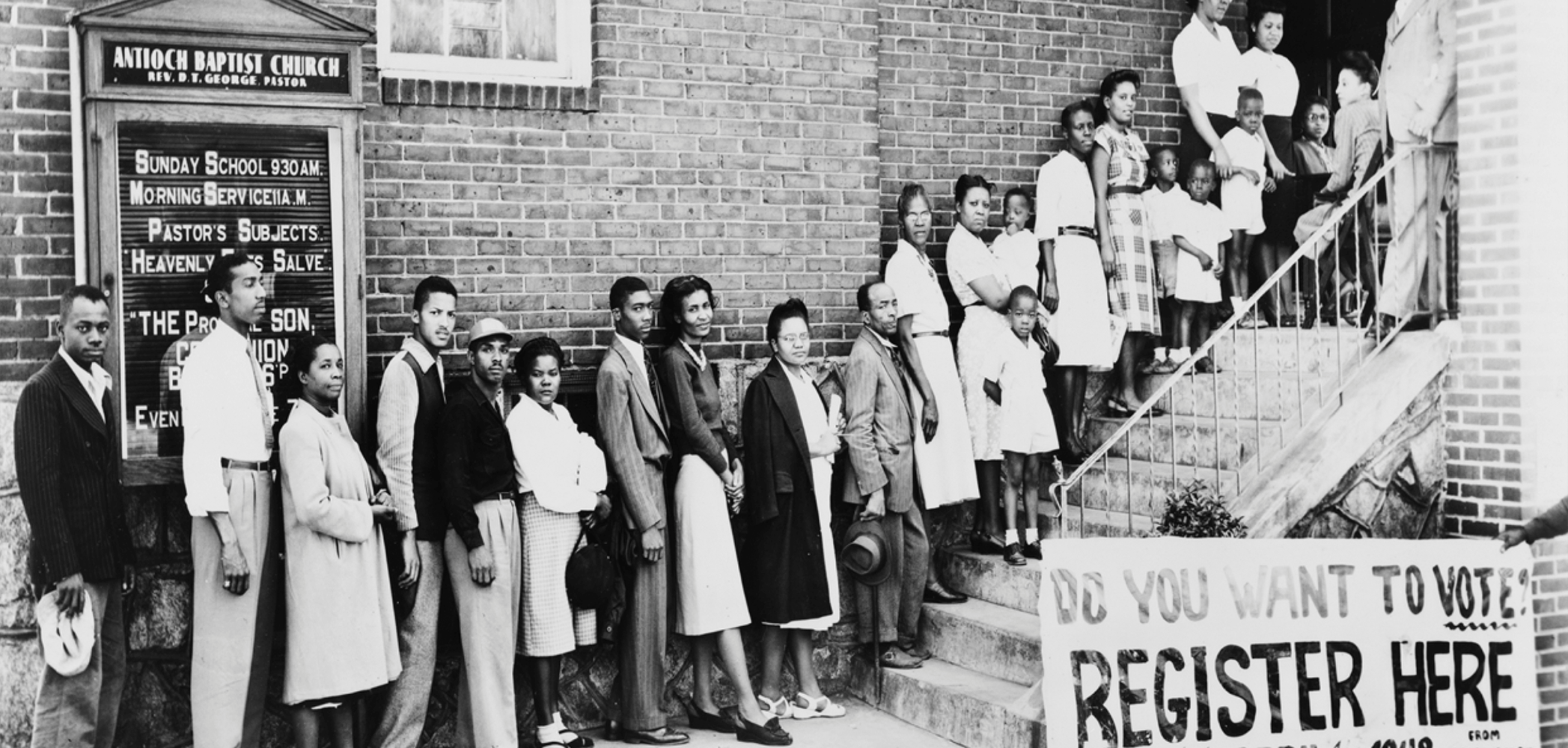
Local pastors are uniquely positioned to act. Register voters from the sanctuary steps. Host civic education forums. Advocate for the John Lewis Voting Rights Act. Partner with civil rights organizations to challenge voter suppression wherever it emerges. Preach the tradition of the freedom churches. And when asked to choose between loyalty to the flag and loyalty to the God of justice, remember that Psalm 137 was not written by people who had forgotten Zion. It was written by people who refused to let the actions of Babylon dictate their faith.
As such, the church’s calling is not to celebrate an empire. Rather, it is to bear witness to the one whose Kingdom is not of this world, but whose justice must be enacted in it.
Related Resources
- Martin Luther King Jr.’s 4 Key Principles of Prophetic Witness by Tony Hunt
- Prophetic Preaching and Leadership by Tony Hunt
- 4 Characteristics of Citizens of the Kingdom of God Who Inhabit the Political World by Miranda Zapor Cruz
- Church and Society, a General Board of the United Methodist Church dedicated to the work of living faith, seeking justice, and pursuing peace
If you would like to share this article in your newsletter or other publication, please review our reprint guidelines.
Photo courtesy the Library of Congress from the NAACP Records