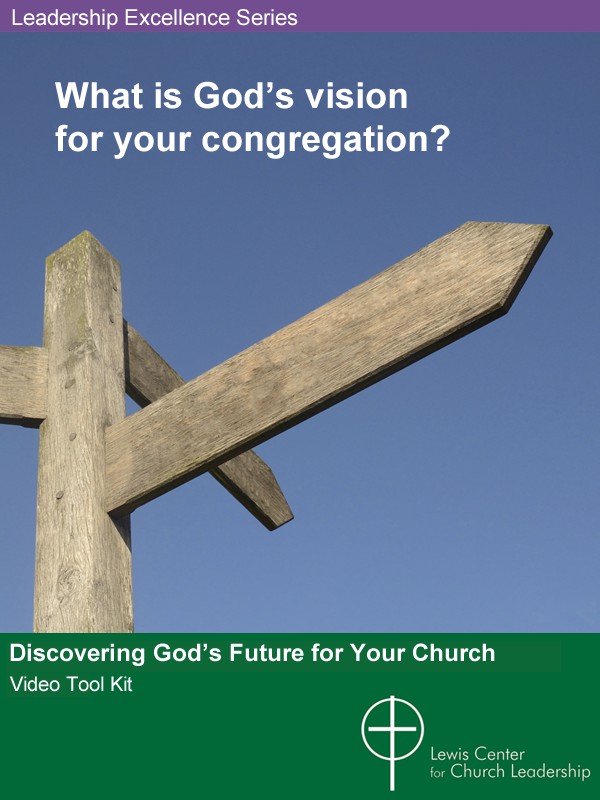


What kind of reputation does your church have in the community? Laura Heikes suggests the answer may have less to do with your worship service or programs and more to do with how you show up in the life of your neighborhood. Drawing on examples of churches turning overlooked resources into opportunities for hospitality, she offers a simple framework for discovering what God has already placed in your hands and the impact it can have on ministry.
What is your church known for?
Not by those within your congregation, but by those outside it: your community. “That church on the corner.” “The church with the pumpkins.” “That old white church.” “That Black congregation.” “That Hispanic church.” “That [denomination] church.”
In recent years, people of faith have had to contend with public images of Christians as harsh, judgmental, and even hateful. While a local congregation may not have the power to change much on the national level, every church can shape how it is known locally. Such renewal can begin simply, not with a huge new program or worship service, but taking time to see what God has already placed in your hands.
One of the best practices I’ve discovered is to tap into overlooked resources, congregational interests, and the community around you. Start by getting curious. Ask:
- What do you already have?
- Who is already here?
- Where has God placed you?
Walk the church and open doors. What resources are sitting unused? Take note of what excites folks in your church. What passions exist within your congregation? Walk the neighborhood around your church. Who are your neighbors? What are their passions and hopes? Do you see or hear about any needs?
When God called Moses, God began with a simple question: “What is that in your hand?” (Exodus 4:2). Renewal begins with the resources and skills which are already present.
Reframe a “problem” as an opportunity.
One church I served sat on a parade route and had a wide, shaded lawn that people from the community loved to fill during local events. Several times a year, our front lawn overflowed with neighbors. The church saw it as a nuisance, and in some ways, it was. People left trash on the lawn and in the parking lot; neighbors tried to come inside to use the bathrooms, which interrupted those trying to work inside the building; the crowds were loud and disruptive.
But flip the “problem” on its head, and you get an opportunity: people who never came to our church—or any church—were on our property several times a year. They might not know much about Jesus, but we could become an introduction. Especially if we stopped seeing them as an annoyance and started seeing them as neighbors worthy of hospitality.
On one walk around the church, I opened a closet in the gym and noticed a giant helium tank. It was full. And completely unused. From talking to those in the congregation, many expressed a longing to help the church grow. They just didn’t know how to do it. So, we tried something simple.
With the Fourth of July parade approaching, we bought red, white, and blue balloons printed with smiley faces and the message: “God loves you and so do we!” It cost less than $100. The morning of the parade, volunteers inflated balloons and carried huge bunches of them out to the front lawn, which, as usual, was on the parade route. The delight, especially for a free gift, was contagious. Soon, children and adults all along Main Street were carrying balloons with a message of love, and people were pointing toward our church and talking about the kindness.
In addition to the balloon team, a second group opened the church bathrooms and put out signs that read, “Come use our restrooms.” They greeted people, answered questions, and simply practiced the welcoming love of Jesus.
The community parades that had been a nuisance became one of the church’s favorite ministry opportunities. The church began marking parade days on the calendar with excitement instead of dread. Small acts of hospitality reshaped both the church’s witness and the congregation’s imagination for ministry.
Yes, people still tracked mud inside. But even when neighbors never entered worship, we were able to plant seeds of love and welcome.
Look for needs nearby.
Another church I served had a different set of resources and opportunities. That town was home to an Air Force base that trained intelligence officers. Most of the airmen and women stationed at the base were young adults who would only remain in the community for a few years.
Within the church, members cared deeply about and for those serving in the military. Many were at a stage of life where they had large homes, space at the table, and the warmth to care for others, especially members of the armed forces. In a conversation with the Air Force chaplain, I learned that most service members would not be able to travel home for Thanksgiving because they didn’t have enough leave. The chaplain shared that 80 young adults would love a Thanksgiving meal if someone had room for them at the table.
So, I asked the congregation—not to host a giant meal, but to welcome two or three young officers to their family’s table. The sign-up list filled within days and developed a waiting list. Every single service member had a place to go for Thanksgiving. And something deeper happened.
Several young adults built relationships with church members that helped them feel brave enough to attend our newly-launched casual worship service. Others joined in service projects, which felt like a natural entry point to them. From those relationships grew a vibrant young adult group. The first officers began to invite their friends and it grew quickly. The next year, church members opened their homes at Thanksgiving, and other churches joined the effort—which meant we happily had to share. What began as a simple meal became a ministry of belonging.
Start small and pay attention.
Churches become known for love through concrete acts of hospitality repeated over time: balloons on a parade route, open bathrooms, a seat at the Thanksgiving table. Most churches already possess untapped resources for ministry: space, relationships, passions, location, and people eager to serve.
Start by paying attention. What resources do you already hold? What passions already exist within your congregation? Why has God placed your church exactly where it is? And how might you leverage those gifts in service to your neighbors?
Think small. Think meaningful. Think about how to embody love, hospitality, and kindness in tangible ways. Those are often the very things that change the story—both for our churches and for the neighbors God has placed right outside our doors.
We love to hear from our readers! If you have any comments, suggestions, or questions about this article, please leave a voice message directly from your computer, tablet, or smartphone via Speakpipe. You may also email lewiscenter@wesleyseminary.edu or leave a comment on Facebook, Instagram, YouTube, and Bluesky.
 Related Resources
- 50 Ways to Take Church to the Community, a free Lewis Center resource
- Taking Church to the Community, a video tool kit resource from the Lewis Center
- 3 Characteristics of Genuine Christian Hospitality by Philip J. Brooks
- Moving from a Mindset of Scarcity to Abundance featuring Mahogany Thomas — Watch the Leading Ideas Talks podcast video | Listen to the podcast audio version | Read the in-depth interview
If you would like to share this article in your newsletter or other publication, please review our reprint guidelines.