


Difficult people are part of every congregation, but Margaret Marcuson, author of Sustainable Ministry: How to Lead (and When to Nap), argues that leaders make a mistake when they treat a challenging individual as the problem. She offers practical ways for church leaders to step back, examine their own responses, address unhealthy patterns, and build relationships rather than simply reacting to difficult people.
My dad used to ask me, “What is it you do, anyway?”
Often, I answered, “I help pastors handle their biggest ministry challenges.”
Then he would ask, “What are the biggest challenges pastors face today?” And he would stop and look at me and say, “People, right?”
I always said, “Yes, Dad. You’re right.” By then, his memory wasn’t great. Yet he still remembered that reality from his years as a congregational leader.
All church leaders have at least one person who pushes their emotional buttons. The way people are difficult varies. One person doesn’t do what they say they will. Someone else disagrees with every idea that comes up. Another person criticizes you to others.
It’s easy to think, if only they would go away, everything would be so much easier. You ruminate about this person or that leader. You stress about what to do. You talk about them to others: “What should we do about Susan?” Whether it’s a staff person, a leader or a person in the pews, you focus on that individual.
It’s not just about one person
However, problems are never simply in one person. Difficult people are a symptom for the whole group. They aren’t causing the problem. When you have a cold, the runny nose or the sneezing is a symptom of the real problem. You have a virus in your body. In the same way, difficult people are not the problem in themselves. They are symptoms of deeper issues in the organization. You can’t solve the problem simply by getting rid of the person. Often, another similar individual shows up. Or someone else who’s already there starts behaving badly. There’s an opening.
Jesus said when a demon leaves, it may come back bringing seven friends, because the house is “empty, swept and put in order.” (Matthew 12:43-45) There has to be something positive to put in place. Otherwise, there is still room for the dysfunction.
Churches often tolerate problem people because no one will take a stand with them. They tiptoe around bad behavior. They won’t fire anyone, even from a volunteer position. They won’t say certain ways of behaving are unacceptable. A culture of niceness prevails which allows not-so-nice behavior to flourish.
What about you?
Consider this: you, too, may be part of the problem. You become reactive to their behavior. You complain about them to others. You don’t take a calm stand with them: “No, you can’t do that here.” Taking this kind of stand is difficult for many. I find it hard myself. However, leaders who can’t take stands won’t get far.
What’s a leader to do? Find a way to step back and not simply react. Here are a few ways to do this:
- Assess what’s going on at church at this moment. Often individuals carry anxiety for the whole congregation. When anxiety goes up, it’s predictable that someone will act out. Nowadays, anxiety is high for everyone.
- Look for something to appreciate about the person who is driving you crazy. Write it down.
- Reflect on your part in it. Larry Mathews, a mentor of mine, used to repeat the old saying, “It takes two to tango.” How are you vulnerable to this individual? Someone who replicates a difficult pattern from your family of origin may be harder for you to deal with. If you’re extra-stressed right now, you’ll be more reactive to others.
- Be clear about your own goals. Focus on goals that you have control over. What do you want to do? How do you want to be? Think more about your goals than you do about this individual.
- And finally, connect, connect, connect. It’s not just about your ministry ideas, no matter how brilliant they are. You don’t even have to talk about ministry all the time. Family, sports, music. All are ways to connect, even with those tough folks. It’s about relationships.
We love to hear from our readers! If you have any comments, suggestions, or questions about this article, please leave a voice message directly from your computer, tablet, or smartphone via Speakpipe. You may also email lewiscenter@wesleyseminary.edu or leave a comment on Facebook, Instagram, YouTube, and Bluesky.
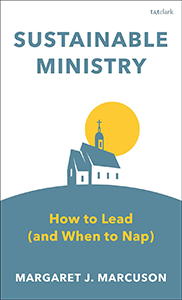 Sustainable Ministry: How to Lead (and When to Nap) (Bloomsbury, 2026) by Margaret J. Marcuson is available from the publisher, Cokesbury, and Amazon.
Related Resources
- Leaders Learn to Work with Difficult People by Ann A. Michel
- Learning to Underreact by Dan Hotchkiss
- 5 Ground Rules for Candid Conversations by Tom Berlin
- 10 Essential Ways Leaders Build Relationships with Their Team Members by Dan Reiland
If you would like to share this article in your newsletter or other publication, please review our reprint guidelines.