
Church leaders have a responsibility to advocate for children’s well-being and inspire their congregations to do the same. Through the 2026 National Observance of Children’s Sabbaths, Trevor Beauford challenges faith communities to listen to children, advocate for their needs, and take meaningful action to address the challenges they face.
It is hard to be 10 years old in America right now. Children cannot vote, write policy, or control the systems around them, yet they live every day with the consequences of decisions about education, health care, housing, food access, community safety, and economic opportunity. The challenges are not abstract headlines. They are the lived realities of children in our neighborhoods, schools, and congregations.
Every time I lead training or sit in conversation with faith leaders, the realities facing children become clearer. Across our nation, children are navigating hunger, anxiety, violence, isolation, poverty, educational challenges, and uncertainty about the future. Federal survey data show that more than 5.3 million adolescents had a diagnosed mental or behavioral health condition in 2023. These are burdens no child should carry alone.
Across faith traditions, justice for children is not an adjacent concern. It is a defining commitment that demands prophetic witnesses and concrete action. Children are not simply recipients of ministry. They are our neighbors and image-bearers of God, fully human and deserving of dignity, compassion, and respect (Pinedo et al., 2022). That conviction lies at the heart of the National Observance of Children’s Sabbaths®, a multifaith movement that brings communities together through worship, learning, advocacy, and action on behalf of children.
This year, October 16–18, 2026, congregations are invited to devote a few intentional moments, or an entire worship experience, to children’s voices, hopes, concerns, and realities. At its core, Children’s Sabbaths asks a simple question: What do children need from us right now?
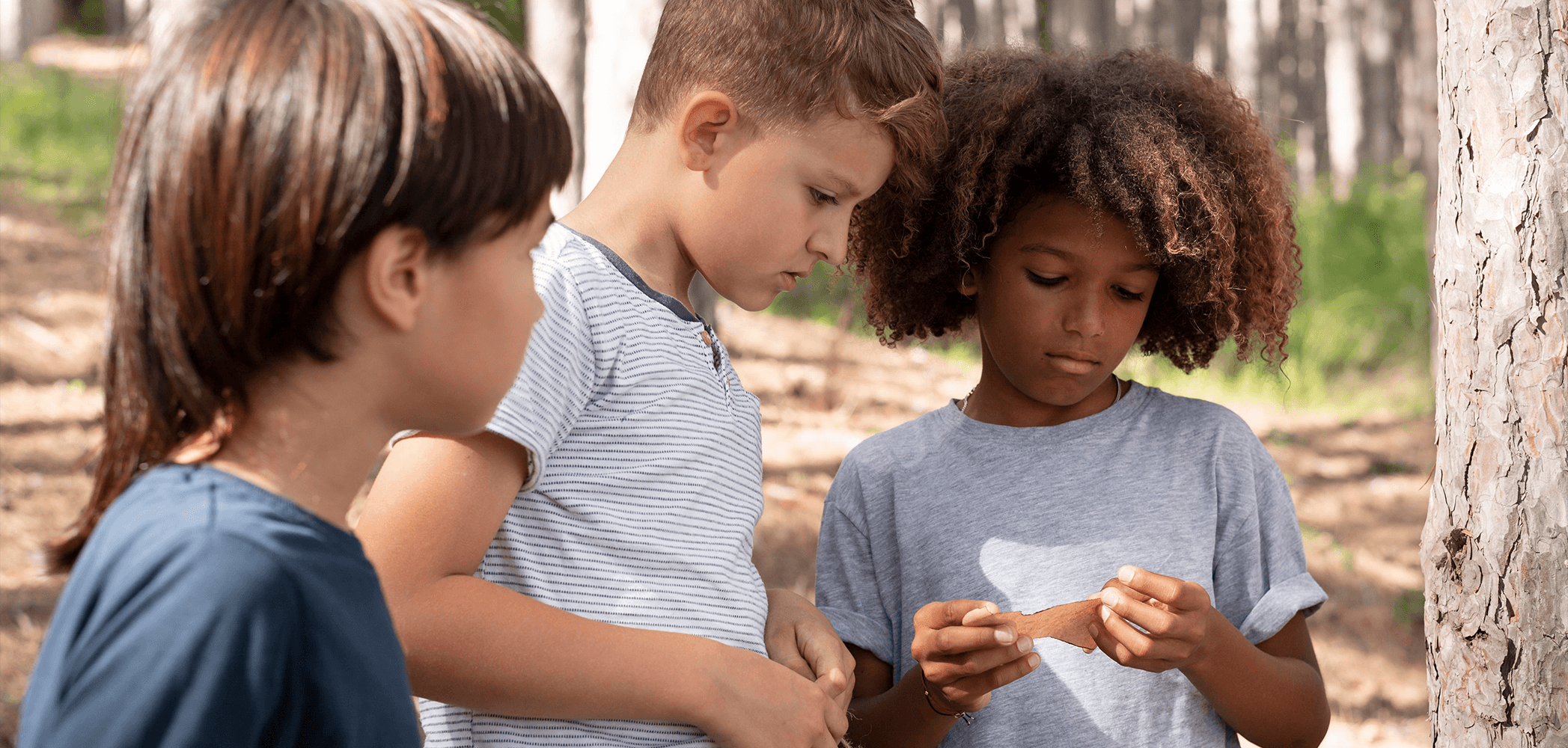
Too often, adults answer that question without first listening. Children’s Sabbaths challenge us to create safe opportunities for children to share through conversation, storytelling, art, and reflection. Children possess wisdom about their own lives. Our responsibility is to listen carefully, believe what they tell us, and allow their insights to shape our response.
And then we must act.
Children’s Sabbaths is not simply another Children’s Day. It is not an opportunity for children to read Scripture, sing, or participate in a program while adults applaud. Children’s Sabbaths center children’s voices, not merely children’s activities. Through worship, preaching, education, advocacy, and organizing, congregations can move from hearing children to standing with them. Child-centered ministry requires us to understand that this work is not simply what adults do for children. The presence and perspectives of children should influence adults and call our communities beyond indifference toward relationships and shared responsibility (Flanagan & Hall, 2014).
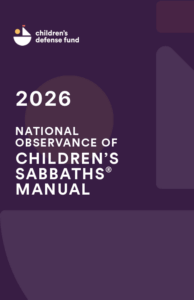
Children’s Defense Fund’s 2026 Children’s Sabbaths Manual supports that work with worship resources, multifaith materials, organizing tools, advocacy opportunities, and strategies for centering children’s voices. It is not a rigid script. It is a flexible toolkit to help each faith community connect its sacred traditions to the needs of children and take at least one concrete action. Download the Manual.
Charity is necessary. Spiritual nurture is essential. Children need communities that pray with them, mentor them, feed them, teach them, protect them, and remind them that they are deeply loved. But this moment calls us beyond compassion alone and into acts of justice. Children need more than our care for the consequences of broken systems; they need our courage to help change them. Authentic advocacy requires both speaking truth to those with power and helping communities develop their own voice in the political and policy processes that shape their lives (Myers, 2008).
Every congregation can answer this call to justice through five practical steps:
- Listen to children and families. Ask what children are experiencing, what makes them feel safe and supported, and what they want adults to help change.
- Choose one concrete action. Host a voter-registration check, organize a Read Aloud for Democracy, engage decision-makers, respond to a local concern affecting children, or select another action that fits your community.
- Connect worship to action. Do not preach people into conviction and then send them home without somewhere to put that conviction.
- Follow up. Share what happened, document participation, thank those involved, and name the congregation’s next commitment. Tag us at @childrendefender1973
Another way churches can respond this year is through nonpartisan voter engagement. Rights are Children’s Rights.
Children cannot cast a ballot, but they live with the consequences of democratic decisions. This campaign is about ensuring communities can participate fully in decisions affecting children and helping eligible voters connect their voices and collective power to the public choices shaping children’s lives.
Ultimately, all of these actions point back to a foundational faith commitment.
The Hebrew word shalom means more than peace. It points to wholeness, well-being, flourishing, and right relationship with God and one another. Children’s Sabbaths helps us, through worship and concrete action, center that vision for children and challenges us to ask: What must we do to fight with them for their well-being? Not simply how we pray for children. Not simply how we care for children. But how we use our faith, voices, institutions, and collective power to help create conditions where every child can flourish.
Start where you are. Listen to children. Gather a small team and choose one concrete action. Follow up, share what happened, and decide what comes next. The goal is not a perfect weekend program, but a community committed to children throughout the year.
Because loving children is not enough. We must also be willing to fight for the world they deserve.
We love to hear from our readers! If you have any comments, suggestions, or questions about this article, please leave a voice message directly from your computer, tablet, or smartphone via Speakpipe. You may also email lewiscenter@wesleyseminary.edu or leave a comment on Facebook, Instagram, YouTube, and Bluesky.
 Related Resources
- Children’s Defense Fund’s 2026 Children’s Sabbaths Manual
- Vote for Children campaign
- Good Youth Ministry featuring Kristin Franke — Watch the Leading Ideas Talks podcast video | Listen to the podcast audio version | Read the transcript
- Creating a Safe Space for Holy Work with Children by Tanya Campen
- Community Transformation and Justice Require More than Preaching by Kevin Slayton
If you would like to share this article in your newsletter or other publication, please review our reprint guidelines.