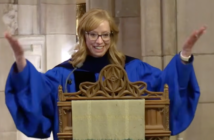


Allen T. Stanton says the goal of volunteers in church isn’t more programs—it’s discipleship. He gives three questions to ask to help leaders and their congregations flourish.
When I work with pastors, a key concern is how to mobilize their congregants to be more engaged in the life of the church. How do you get volunteers to lead new missions? How do you get them to take ownership of new ideas?
When I work with pastors, a key concern is how to mobilize their congregants to be more engaged in the life of the church. How do you get volunteers to lead new missions? How do you get them to take ownership of new ideas?
The biggest frustration I hear is that the people of the church aren’t doing enough. I remember once attending a continuing education retreat, where one pastor complained about parishioners being on a “cruise ship,” rather than on a journey of discipleship. Clever puns aside, getting laity engaged in the life of the church is important.
One of the perks of being a pastor in extension ministry is that I’ve sat on both sides of this coin. I’ve been a pastor, earnestly trying to get my church members to be more involved; I’ve been a person in the pews, dodging the signup sheet on the way out of church.
As we think about how best to equip our congregants for service in the church, there are three questions that we need to ask as we encourage members to join that work.
1. How does serving help their journey of discipleship?
Churches are supposed to do good work, and service to our communities is an essential part of our core identity. We have a responsibility to feed the hungry, heal the sick, and care for our neighbors.
Where we go awry is when church leadership equates increased programs with success in mission. Ultimately, our mission is to make disciples of Jesus Christ, helping them to pattern their lives after the Gospel. Which means that we do not ask people to volunteer so the church can do more; we ask them to be engaged so that the people in our congregations can do more.
What we do in the church offers a live example of how we can be living out our faith in our daily lives. The work of the church may be through a program that we do. It may also be in the way members of the congregation are taught to serve the community outside of the congregation. The church is not a sole provider; the church is meant to be a place where we learn what it means to live out our ethical responsibilities in every other facet of our life: as a business owner, elected official, voter, consumer, or even just a family member.
2. Does the work make sense for my congregation?
One of the challenges of mobilizing laity is understanding how the size of a church will influence how people engage in a congregation. One place we can find guidance for that is in non-profit management studies. Studies show that volunteers engage differently depending on the size of an organization.
In larger organizations, volunteers tend to be episodic. Staff plan events, and volunteers help in specific programs: the food pantry, a Habitat for Humanity build, or a day of service. In smaller organizations, volunteers make the organization run: they manage the budget, do repairs, and work in the office. As a result, they are more emotionally invested.
We see that in the church. When I was on staff at a large church, staffers planned the bulk of the week and handed out assignments to the volunteers. As the pastor of a small church, the volunteers took over all the planning work a staff might have done.
Where a larger church might have staff support to handle logistics of a major initiative, the smaller church might need significantly more volunteer hours to do the same work. When we recruit volunteers, we should honestly consider what work our volunteers can do, and what will be required of them.
3. Am I asking too much?
Upon joining the church, people covenant to support the congregation through prayer, presence, gifts, service, and witness. But that vow is not for the benefit of the church alone. It is a covenant, wherein the church promises to provide space and resources for formation, and the people vow to participate in that formation.
On occasion, I hear pastors lament about not being able to get people more involved. Once, a pastor lamented, “Everyone in my church is a busybody, with no time for the church.” So, we mapped out exactly where people were spending their time. The people of their congregation were caring for grandchildren, volunteering at other non-profits, working, and caring for their family.
As a pastor, it is easy to get frustrated and wish that everyone had the same commitment level as we do. But where we clergy have made church our career, our congregants have not.
When we fall into the trap of treating congregants as resources to be consumed for our own projects, we start shifting the work of congregations as work for the church. That, in turn, risks forming people in unhelpful ways. Or, in the worst case, can lead to burnout and disengagement. Instead, we are meant to ask people to work with and through the church.
I travel for work, and I safeguard certain rituals with my young kids. Every Saturday, you can find my youngest and me having breakfast at a local diner. Being a committed parent is, in my view, a core part of my discipleship. Would the church be serving that well by asking me to participate in another committee during that time?
The Role of the Church Volunteer
Every church member should contribute to the life of the church. But that does not mean that we demand how and when they participate. Our conversations about being involved should begin from a place of formation, from an opportunity for growth, joy, and cheerful giving. Too often, we approach volunteer recruitment from a place of guilt or need, prioritizing the organization above the people being shaped by it. When we start with the mission of the church—to make disciples of Jesus Christ for the transformation of the world—we can promote flourishing for both our congregations and the people who comprise them.
We love to hear from our readers! If you have any comments, suggestions, or questions about this article, please leave a voice message directly from your computer, tablet, or smartphone via Speakpipe. You may also email lewiscenter@wesleyseminary.edu or leave a comment on Facebook, Instagram, YouTube, and Bluesky.
 Related Resources
- Increasing Active Engagement, a video tool kit resource from the Lewis Center
- 4 Practices to Help Small Church Stay Nimble and Open to Change by Allen T. Stanton
- 50 Ways to Increase Active Engagement, a free Lewis Center resource
- When Volunteers Aren’t Working Out by Lory Beth Huffman
- Avoiding Lay Ministry Burnout by Marty Cauley
If you would like to share this article in your newsletter or other publication, please review our reprint guidelines.