
Reflecting on the recent gathering of United Methodist leaders in Calgary, Canada, Jonathan Page identifies four key lessons for leading the church into the future: prioritizing younger and historically marginalized voices, turning vision into actionable strategy, leading from possibility rather than problems, and keeping Jesus at the center of the church’s mission.
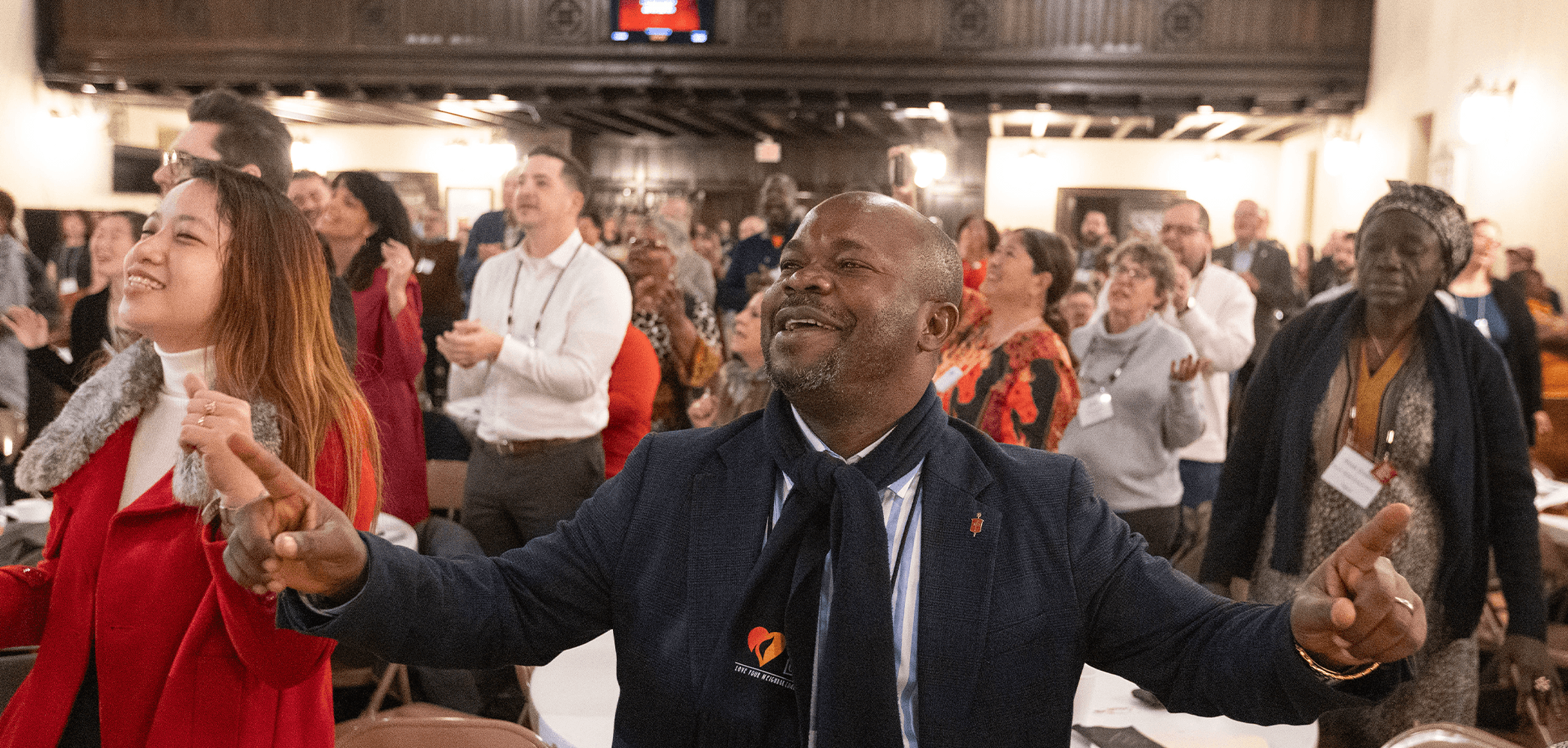
Last week, hundreds of United Methodist leaders met in Calgary for a gathering convened by the United Methodist Council of Bishops. According to Resource UMC, “The purpose of the Leadership Gathering is to gather hope, vision and imagination for the future of The United Methodist Church from across the connection. The Gathering does not make decisions. It offers reflection for the wider church.”
Over the course of several days, the selected representatives heard presentations, met in groups together, and considered the future of United Methodism around the world. You can read more about the specific outcomes of the gathering on UM News.
So, what does this mean for leaders in local churches, especially in the United Methodist connection? Here are four takeaways to consider:
1. Prioritizing the voices of young people is a fruitful practice.
It was estimated that, of the 294 expected participants in the Leadership Gathering, nearly one third would be under the age of 35. Younger people were not just given a seat at the table in this gathering; they were asked to offer intentional reflection and leadership. This kind of inclusivity bears significance in the work of the church. Too often, young people are included either as a fulfillment of institutional requirements or to appear “younger” than organizations really are.
By creating space not just for attendance but for real integration, the church is showing a genuine interest in the perspective of young people and giving an appropriate platform for leadership. It should be noted that doing this did not exclude the voices of middle-aged or older adults—those populations still made up over 60% of the total attendance. It did, however, mean that those who have often been excluded (intentionally or otherwise) had room to impact the work.
Leaders would do well to consider how they are making intentional space like this in their local communities. As we reflect on the recent clergy age trends report, taking steps to be intentionally inclusive of younger voices is an important action that may have an impact on this data in the future.
This should also be happening beyond age categories. Paying attention to the full inclusion of historically marginalized voices elevates the capacity of gatherings—denominational, local, or otherwise—and gives platform to ideas and perspectives that would be missed. Leaders should note that, much like in this gathering, practicing this kind of inclusion doesn’t have to exclude historically privileged perspectives; instead, it makes more room for the Spirit to move amongst a whole population, not just a limited few.
2. Ideas without specificity are closer to dreams than goals.
The recommendations produced by working groups (known at the Leadership Gathering as “covenant groups”) were wide-ranging. These groups were organized by five categories: discipleship, leadership, impact, stewardship, and accountability. Each category had three sub-groups with a unique focus: innovative forms of discipleship, empowering younger generations, and amplifying global voices.
These groups did a lot of hard work and spent much time in conversation, prayer, and discernment. This should be celebrated! The recommendations shared show a desire to move past forms of institutional retention and preservation, growing into a church that can be wider reaching and more distributed in its leadership and transformational capacity than ever before.
The recommendations offered generally lacked specificity. This may have been intentional—after all, this gathering could not represent an official voice of the church—but it does pose a problem. As it was posited famously by Antoine de Saint-Exupéry, “a goal without a plan is just a wish.” Many of the recommendations come with broad reaching statements that don’t indicate any kind of plan of action. One would hope that as the Council of Bishops and the design team for the Leadership Gathering reflects on the outcomes, actionable strategies may start to emerge, especially as plans for the 2028 General Conference take shape.
This is a reminder to leaders in local churches that dreaming is not a bad thing; however, for ideas to become realities, they must be accompanied by actionable strategy that creates space for accountability, shared motivation, and transformational outcomes.
3. Structuring should work toward possibility, not problem solving.
In his book Community, Peter Block argues that the kinds of conversations we have in leadership shape the transformations we can expect within our organizations. If we want belonging, we must replace conversations of deficiency (i.e. “What is wrong with us/them?”) with conversations of possibility and generosity. As collaborative leaders, our job is not to fix the organization, but to design a space where authentic relatedness can occur.
My hope is that the Calgary gathering is a model of this kind of conversational structure. Denominations and local churches can easily slip into structures of problem solving—there are, after all, many issues to address! But this kind of activity carries with it a multitude of challenges. It creates an inherently negative leadership framework that relies too heavily on capitalist notions of success to drive action.
When possibility is the driver of conversation and action, the work ahead becomes less burdensome and individualistic. Instead, it creates space for distributed hierarchies of leadership and shared responsibility for outcomes. Much of what I observed from afar about the Calgary gathering was that the space was intended to be more about possibilities than problems. It is extremely challenging (and maybe unwise) to uninvite the critical perspective around challenges from the table; however, leaders get to choose what voices get centered in a conversation.
No matter what level you are leading at and no matter what role you may hold, know that centering possibility carries with it a generosity of space for exploration, belonging, and transformational outcomes that can change people, churches, communities, and cultures.
4. It’s either about Jesus or it’s silly.
The work of the church, before it can ever be about anything else, has to be about the proclamation of the resurrected Christ. The good news of the resurrection propels the work of the church into places of social justice, discipleship, and restoration. But without the heart of the Gospel, none of this makes a lot of sense.
In a reflection on the Leadership Gathering, Rev. Matt Miofsky highlighted this distinction: “Mainline churches like the UMC need to recover a sense of why a relationship with Jesus matters, then get better at sharing the authentic Jesus with people who are searching for something more meaningful in their lives. Our future (and yes, I believe we have a future) lies not in internal denominational reform or in meaningful service to the world (though that is important) but in relearning how to share the good news about Jesus with a world that is increasingly offered a distorted view of who he is. Our future lies in inviting people in to a relationship with Christ that will change their lives, their families, their work, what they do with their money, how they vote, what they stand for, what they resist, and how they use their gifts in the world.”
The reality is a room full of leaders can’t do this work independently. The work of sharing the good news is much more likely to happen through a local church, through disciples of Jesus in neighborhoods and communities, than it is through any larger bodies or structures.
What is happening in your local church to promote and proclaim God’s love, especially with those to whom that love may not be familiar? The word “evangelism” has become saturated with baggage in the North American church—perhaps it is time to reclaim this word and activity and center our work and our hope on that love that will not let us go.
We love to hear from our readers! If you have any comments, suggestions, or questions about this article, please leave a voice message directly from your computer, tablet, or smartphone via Speakpipe. You may also email lewiscenter@wesleyseminary.edu or leave a comment on Facebook, Instagram, and YouTube.
Related Resources
- Leadership Gathering October 20-24, 2026 from Resource UMC
- United Methodist Clergy Age Trends in 2026 by Lovett H. Weems Jr.
- What Clergy Age Trends Tell Us About Church Leadership by Jonathan Page
- Engaging Young Adults by Beth Ludlum
- Evangelism: A Witness to Love Not a Dirty Word by Doug Powe
If you would like to share this article in your newsletter or other publication, please review our reprint guidelines.