
When discipleship extends into public life, what does faithful Christian leadership look like? Kendal McBroom equips leaders with practical resources and practices to build spiritually grounded communities that engage civic life with courage, humility, and a commitment to the common good.
There is a persistent temptation within American Christianity to imagine that faith belongs primarily within the walls of the church. It is sometimes believed that our responsibility begins with Sunday worship and ends when the benediction is pronounced. Yet the biblical witness, the prophetic tradition, and our Wesleyan heritage tell another story. Christian discipleship has public consequences. If we love God, we must concern ourselves with the conditions under which our neighbors live.
The prophets understood this. Amos could not separate worship from economics. Isaiah could not separate prayer from justice. Micah summarized faithful living as doing justice, loving mercy, and walking humbly with God. Jesus announced good news to the poor, liberation to the captive, recovery of sight to the blind, and freedom for the oppressed. From beginning to end, Scripture presents a God deeply concerned about both the spiritual lives of people and the social conditions in which they live.
This conviction is central to the Wesleyan tradition. John Wesley refused to separate personal holiness from social holiness. Faith was never simply an inward experience between an individual and God. The grace that transforms the heart must eventually transform our relationships, communities, institutions, and the world.
Our United Methodist Social Principles continue this tradition by calling us to recognize the sacred worth of every person and our responsibility to participate in building societies marked by justice, peace, dignity, and the common good. The question, then, is not whether people of faith should enter the public square. The question is how we enter it faithfully.
Cultivating Spirituality
In order to be sustained in the work of advocacy and justice, we must develop a deep spirituality. Our public witness must be rooted in prayer, Scripture, worship, discernment, and Christian community. Without spiritual formation, activism can become another expression of anger, fear, and the division surrounding us. Nevertheless, when our engagement grows from communion with God, we learn to resist injustice without surrendering our humanity, to confront systems without dehumanizing people, and to pursue transformation without becoming captive to political parties or personalities.
From deep spirituality comes a commitment to curating the Beloved Community. The Beloved Community does not emerge accidentally. It must be cultivated. Churches can become laboratories for the kind of democracy and community we hope to see beyond our walls, places where people learn to listen across differences, practice solidarity, protect human dignity, and recognize that our destinies are intertwined.
Faithful Civic Engagement
Cultivating the Beloved Community means opening our churches and community spaces for nonpartisan public forums where neighbors can discuss the issues affecting their communities. It means creating opportunities for people to hear from public officials, understand local government, learn about public policy, and discern how decisions made in city halls, county councils, state legislatures, and Congress affect their neighbors.
It means contacting legislators and public officials. Letters, phone calls, meetings, legislative visits, public testimony, and advocacy days allow people of faith to carry out the concerns of their communities directly into the places where decisions are made. Advocacy becomes a ministry of presence: refusing to allow those most affected by public policy to become invisible to those who create it.
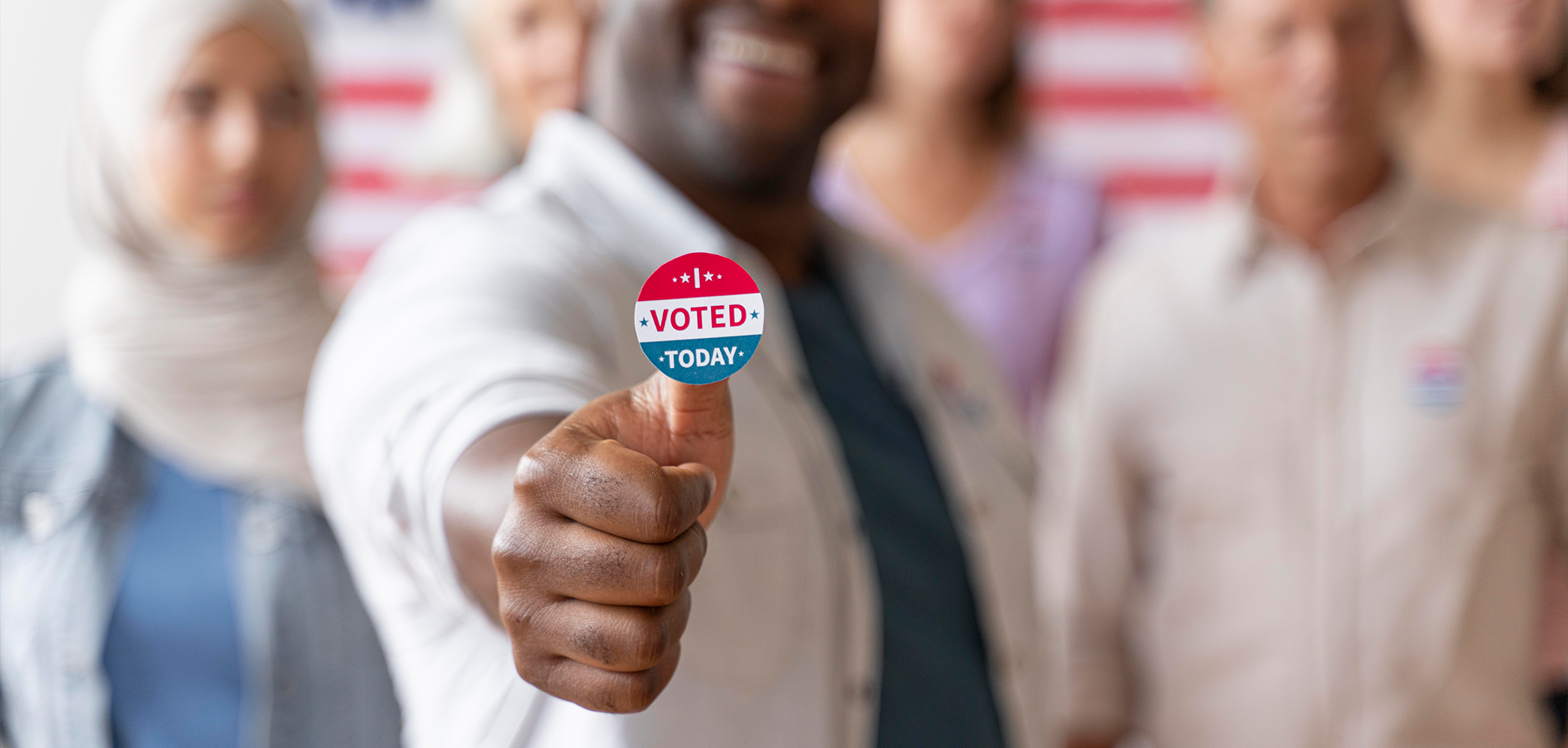
It means organizing nonpartisan voter registration and Get Out the Vote efforts. Congregations can help neighbors understand registration requirements, locate polling places, develop voting plans, access reliable election information, and overcome barriers to participation. Encouraging voting is not about telling people who to vote for. It is about affirming that their voices matter and helping ensure that every eligible voter can participate freely and fully.
It also means showing up when our neighbors go to the polls. Through ministries such as poll chaplaincy through FaithsUnited, people of faith can provide a peaceful, pastoral presence around voting sites, helping cultivate an atmosphere of dignity, de-escalation, encouragement, and care.
United Methodists can deepen this commitment through the UMC Election Observer Program, equipping people to participate responsibly in nonpartisan election observation. Election observers can help strengthen public confidence by witnessing the democratic process, identifying potential barriers to participation, and helping ensure that voters—particularly those in communities historically subjected to disenfranchisement—can exercise their rights with dignity.
Prophetic Public Witness
Finally, we must be committed to participating in voting. Voting is not the culmination of Christian civic engagement; it is one practice within a much larger vocation of public discipleship. We vote, and then we remain engaged. We organize. We advocate. We attend public meetings. We contact legislators. We accompany vulnerable communities. We observe elections. We build relationships. We hold institutions accountable. We continue working after Election Day because the work of democracy and the work of discipleship cannot be confined to a single Tuesday in November.
All of this points toward a larger Wesleyan vision of social transformation. The church does not enter the public square to acquire political power for itself. Neither do we pledge unquestioning allegiance to a candidate, political party, ideology, or nation. Our ultimate allegiance belongs to God. Precisely because of that allegiance, we cannot remain indifferent when our neighbors experience injustice, exclusion, poverty, violence, disenfranchisement, or oppression.
There is a difference between being partisan and being prophetic. Whereas partisanship asks the church to protect a political side, prophetic faith, on the other hand, asks the church to stand alongside those pushed to the margins and to speak truth wherever power threatens human dignity. Our public engagement, therefore, must flow from a continuous movement: Deep spirituality forms us. Beloved Community binds us together. Civic engagement mobilizes us. Social transformation directs us toward God’s vision of justice and flourishing.
Discipleship After Election Day
This is the public vocation of people of faith. Pray deeply. Worship faithfully. Study seriously. Build community intentionally. Host the forum. Call the legislator. Register the voter. Organize the Get Out the Vote drive. Serve as a poll chaplain. Become an election observer. Cast your ballot. And, when the election is over, keep showing up.
There is much on the line in the upcoming midterm elections. From the treatment of our immigrant siblings and communities to whether our elders and the vulnerable in our community will have what they need to survive and thrive, we must be committed to participating faithfully in the electoral process.
We encourage you to participate in some of the opportunities offered by the General Board of Church and Society such as the UMC Election Observers Program, signing on to one of our many action alerts addressing the issues affecting our communities, and utilizing one of our toolkits to cultivate courage and engagement in your local community.
Wesleyan discipleship and our faith do not ask us merely to prepare souls for another world. It calls us, by the grace of God, to participate in God’s transforming work in this one.
We love to hear from our readers! If you have any comments, suggestions, or questions about this article, please leave a voice message directly from your computer, tablet, or smartphone via Speakpipe. You may also email lewiscenter@wesleyseminary.edu or leave a comment on Facebook, Instagram, YouTube, and Bluesky.
Related Resources
- UMC Election Observer Program, an online course to equip people to serve as election observers. [Late registration is available and the program is open to all denominations.]
- The Church and Election Day by Doug Powe and Ann A. Michel
- Prophets not Chaplains by Kendal McBroom
- What Would Martin Luther King Jr. Say to the Church Today? by Tony Hunt
- From One Blood: Faith Justice and Leadership by Dontá McGilvery
If you would like to share this article in your newsletter or other publication, please review our reprint guidelines.