
Dr. Shonda Nicole Gladden, Director of Programs and Initiatives at the Lewis Center for Church Leadership, reflects on what it means when a historic first opens a door for generations to come. In response to Dr. Carla Works’ historic installation as the first woman president of Wesley Theological Seminary, Gladden traces the long legacy of women’s leadership in the church and considers the continuing work of recognizing, cultivating, and trusting the gifts God has given to the whole people of God.
A first is never merely a first.
It is a threshold crossed because someone refused to accept the limits of the world as it was. A first carries the weight of those who stood outside doors that did not open easily, those who served often without recognition, and those whose gifts were questioned before they were celebrated. A first holds memory and possibility together, carrying the witness and weight of those who made ways out of no ways while illuminating the beautiful light of futures yet unimagined.
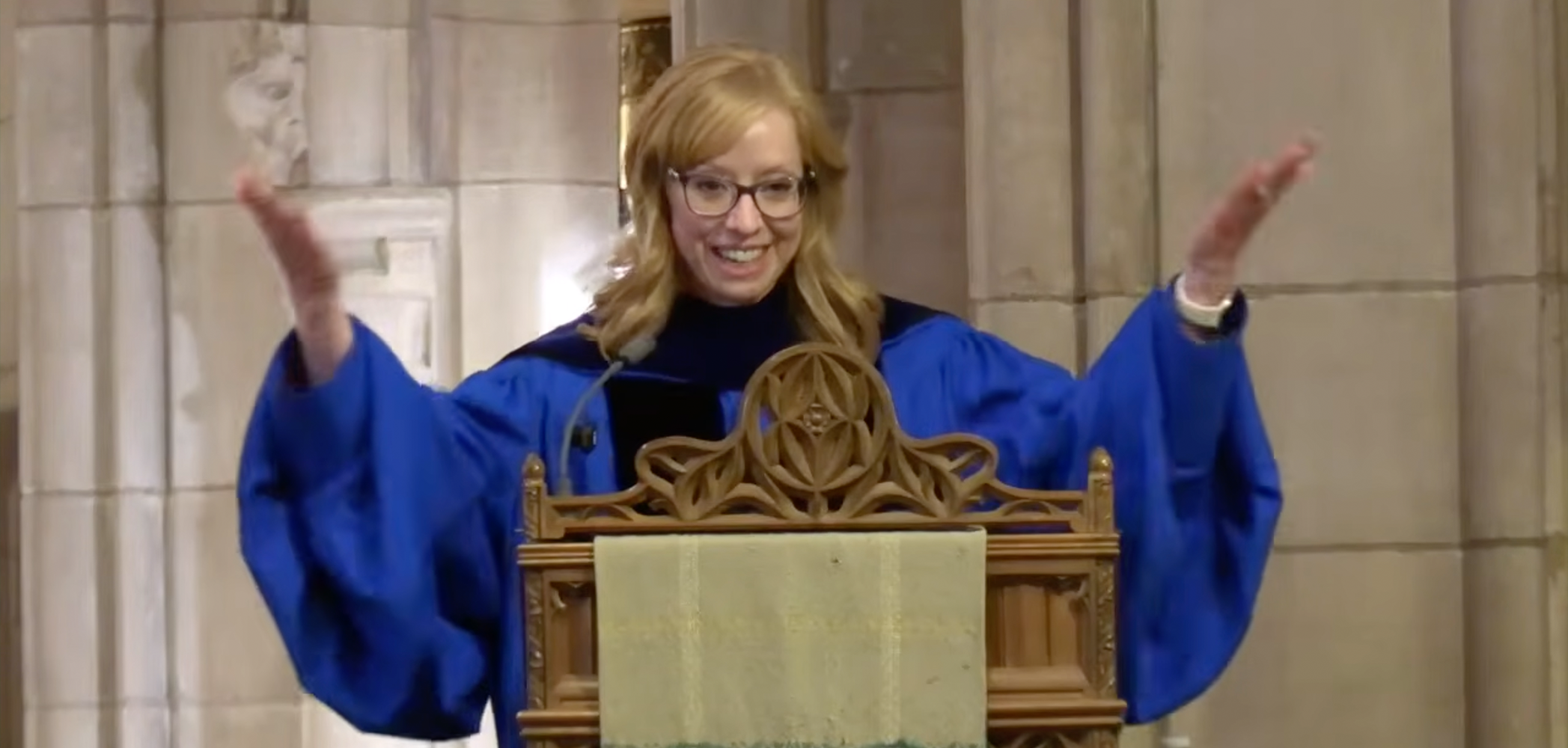
That is why the installation of Dr. Carla Works as the eleventh president of Wesley Theological Seminary, and the first woman to hold the office, is more than an institutional achievement. It is a gift. It is a gift to Wesley Theological Seminary, to its students and alumni, to the church that looks to Wesley for leadership, and to every person who needs to see that the work of theological leadership belongs to the whole people of God.
Dr. Works assumes this office with the knowledge, experience, and commitment of someone who has already given much of herself to Wesley’s mission. Having served the seminary for more than 18 years, including as dean, she knows the institution not only as an organization but as a community of calling, formation, scholarship, and service. Her presidency arrives at a moment when theological education is being asked to respond to profound change: changing patterns of congregational life, economic pressures, shifting expectations of clergy, increasing diversity among students, technological disruption, and a deep hunger for communities capable of nurturing hope.
The significance of this moment must be understood as more than representational. It is not simply that a woman has been elected president. It is that Wesley has affirmed, publicly and institutionally, that a woman’s leadership can bear the full responsibilities of vision, governance, teaching, fundraising, institutional stewardship, pastoral care, and strategic imagination.
For too long, women have been asked to demonstrate the quality of their leadership before they are granted its title. They have been expected to lead faithfully without formal authority, to sustain institutions without being entrusted to direct them, and to serve the church even where the church has not always made space for the fullness of their gifts. Women have been the organizers, teachers, preachers, administrators, scholars, missionaries, advocates, and caregivers upon whom religious communities depend. Yet the recognition of their authority has often arrived slowly.
The history of women in ministry makes clear that the church has rarely lacked gifted women. More often, it has lacked the imagination, courage, and institutional will to recognize their gifts as fully as it recognizes the gifts of men. In this light, the installation of President Works becomes an occasion for both celebration and examination. It asks Wesley to honor the women who made this moment possible and to consider what it means to form leaders for a church in which leadership must be more collaborative, more culturally responsive, more courageous, and more attentive to voices that have historically been dismissed or diminished.
The word “first” can tempt us to think of an individual achievement in isolation. But no first stands alone. Every first rests on the labor of those who preceded it, including women whose names are known and women whose ministries have gone unrecorded. President Works’ installation belongs to a lineage that includes women who taught children in Sunday school classrooms, led prayer meetings, organized mission societies, preached when invited, preached when resisted, mentored clergy, sustained congregations, and educated communities.
It also belongs to the legacy of women who led in the face of theological and institutional resistance. Jarena Lee, a pioneering preacher in the African Methodist Episcopal tradition, began preaching after Richard Allen recognized the power of her call in 1819. Though she was denied ordination during her lifetime, Jarena Lee was posthumously ordained by the African Methodist Episcopal Church in 2016 as an Itinerant Elder Honoris Causa, a long-delayed institutional recognition of a call she had embodied for decades. Julia A. J. Foote, whose evangelistic ministry preceded official institutional recognition, became the first woman ordained a deacon in the AME Zion Church in 1894 and was ordained an elder in 1900. Nannie Helen Burroughs built institutions of Black women’s education, civic formation, and faith, even though ordination was not available to her.
These women and countless others remind us that God’s call does not wait for institutional permission. The church’s task is not to manufacture vocation. Its task is to discern, nurture, and release vocation for the good of God’s people and the healing of the world.
Wesley Theological Seminary is rooted in a tradition that understands this deeply. The Wesleyan tradition has always insisted that faith must be active, communal, and connected to the transformation of the world. John Wesley’s emphasis on holiness was never merely private. It involved works of mercy, spiritual discipline, education, service among the poor, and a faith that bears fruit in public life. A seminary formed in that tradition must continually ask not only what leaders know, but whom their leadership serves. It must ask whether it is preparing leaders to preserve familiar patterns or to guide communities faithfully amid new realities.
President Works’ leadership offers an opportunity to live more fully into those questions.
Her installation represents a widening of the community’s imagination. It offers all students, regardless of their gender, a visible affirmation that their callings belong in every room where decisions are made. It offers men an invitation to understand leadership as shared stewardship rather than inherited entitlement. It offers faculty and staff a moment to consider how institutional culture can support excellence without reproducing exclusion. It offers alumni, congregations, and partners a renewed vision of Wesley as a place where theological formation serves the church as it is becoming.
This moment is also significant within theological education more broadly. The Association of Theological Schools represents more than 270 graduate theological schools in North America. Yet women remain underrepresented in the senior leadership of those schools. ATS data show that women held 19.1 percent of chief executive officer roles among 273 member schools in 2016, while women held 23.2 percent of chief academic officer roles. The percentage of women chief executives had increased dramatically from 2.8 percent in 1991, but the data also make clear that gender equity in theological-school leadership remains unfinished work.
The gift of this first, then, is not only President Works’ appointment. The gift is the invitation it extends to and through Wesley: to become an ever-widening conduit for callings that refuse to be measured by gendered conformity, respectability, or inherited assumptions about who is fit to lead. It invites the seminary to remember the women whose ministries sustained the church long before their leadership was fully recognized, and to form students who will recognize, nurture, and make room for the sacred gifts that have too often been overlooked.
A first is never merely a first.
It is promise. It is responsibility. It is remembrance.
President Works’ installation reminds us that the future of the church will not be secured by preserving old assumptions about who leads. It will be strengthened when the church cultivates every leader God calls and refuses to mistake tradition for the boundaries of the Spirit’s work.
We love to hear from our readers! If you have any comments, suggestions, or questions about this article, please leave a voice message directly from your computer, tablet, or smartphone via Speakpipe. You may also email lewiscenter@wesleyseminary.edu or leave a comment on Facebook, Instagram, YouTube, and Bluesky.
Related Resources
- Learning about Leadership from Women in the Bible featuring Carla Works — Listen to the Leading Ideas Talks podcast | Read the transcript
- To The Point: Suggestions for Churches with a Clergywoman, a free Lewis Center resource
- 5 Ways Female Leaders Undermine Themselves by Susan Beaumont
- Clergy Gender Trends Among Christian Traditions from the Religious Workforce Project