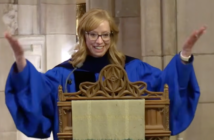


Dr. Dontá McGilvery invites churches to consider how they can help congregants move from discovering their God-given purpose to developing a concrete plan for living it out. By creating intentional spaces for discernment, planning, mentorship, and accountability, congregations can become places where people are not only called to serve the church but equipped to live faithfully into their callings beyond its walls.
The late pastor and theologian Howard Thurman preached a sermon in 1954 titled “The Dilemma of Commitment.” In it, Thurman reflected on the reality that every form of life is organized around some structure or design, and human life is no exception. Commitment, for Thurman, involves organizing one’s life around something significant enough to command our energy, attention, and resources. Yet therein lies the dilemma: human beings can commit themselves to purposes that give life or purposes that diminish it. Thurman’s challenge raises an important question for the church today: How are we helping people discern what deserves their commitment and then equipping them to live faithfully into it?
That question matters because churches spend considerable time asking congregants to commit themselves to the work of the congregation. We invite people to join ministries, attend Bible studies, serve on committees, volunteer with children, participate in outreach, and support the church financially. All of these commitments can be meaningful expressions of discipleship. But what if the church also created intentional space to ask another question: What has God uniquely placed within you, and how can we help you develop it? A committed congregation should be not only filled with people committed to the church’s ministry but also with people whom the church is helping become more committed to God’s purposes for their lives.
One way churches can begin this work is by borrowing a tool commonly used in professional development: the Individual Development Plan, or IDP. In workplaces and educational settings, an IDP helps individuals identify goals, strengths, areas for development, action steps, resources, and timelines. Churches could adapt this concept into what might be called a Ministry and Purpose Development Plan, providing interested congregants with structured opportunities to prayerfully identify their gifts, articulate short and long-term goals, name resources they need, and determine their next faithful steps. Imagine offering such a process during Sunday school, a Saturday workshop, or a four-week formation experience, where members leave inspired with an enlightened sense of calling written on paper and a plan to pursue it.
Putting that calling on paper, however, should not mean turning the church into a career development center. Some may reasonably argue that discerning God’s call is spiritual work that cannot be reduced to goals, deadlines, and worksheets. I agree. A development plan should never replace prayer, Scripture, worship, spiritual direction, or the mysterious ways God redirects our lives. Proverbs 16:9 reminds us, “The human mind plans the way, but the Lord directs the steps.” The plan, then, is not an attempt to control God’s direction; it is a tool that helps congregants faithfully respond to what they presently discern God calling them to do while remaining open to God’s redirection.
Remaining open to God’s direction also means recognizing that the resources people need may already be sitting in the pews. Congregations often include educators, entrepreneurs, artists, financial professionals, counselors, tradespeople, nonprofit leaders, healthcare professionals, retirees, and others whose expertise extends far beyond the ministries where the church typically asks them to serve. What if churches conducted a simple assessment of gifts and expertise and invited willing members to become mentors or workshop facilitators? A congregant discerning a call to start a nonprofit might be paired with someone experienced in nonprofit leadership, while an aspiring teacher, entrepreneur, artist, or community advocate might discover someone within the congregation who can help turn an emerging sense of purpose into faithful action. The church becomes a community where gifts are developed.
Developing those gifts may seem more difficult for smaller congregations with fewer people and financial resources. Yet smaller churches do not have to reproduce the programming of larger congregations to participate in this work. Churches already collaborate across congregational lines for health screenings, community outreach, Vacation Bible Schools, and other initiatives. Why not collaborate around purpose development as well? A group of churches could host an annual purpose workshop, share mentors and professional expertise, or create a joint cohort where congregants spend several weeks discerning their gifts and developing their plans. Such collaboration reminds us that the kingdom of God is larger than any individual congregation.
Thinking beyond the individual congregation also addresses another concern: What if helping people discover their purpose leads them somewhere else? A member may discern a call that does not fill a vacancy on the church’s ministry roster. Their purpose might lead them into a classroom, a neighborhood association, a theatre, a nonprofit organization, a public office, a hospital, a business, or another congregation. But perhaps that is not a failure of congregational commitment at all. Ephesians 4:11–12 describes church leaders as those who “equip the saints for the work of ministry,” suggesting that one measure of faithful leadership is about how well we prepare God’s people for the work to which they are called.
If pastors want to cultivate this kind of committed congregation, the process can begin simply. Start by creating intentional opportunities for congregants to discern their gifts and calling, then give them a practical tool for translating that discernment into goals and next steps. Identify the expertise already present within the congregation and build mentoring relationships around it. Where resources are limited, partner with neighboring churches rather than abandoning the idea.
Most importantly, revisit these plans periodically, because calling develops, circumstances change, and discernment is an ongoing spiritual practice rather than a worksheet completed once and filed away.
Perhaps this is one of the great opportunities before the church: to become known not only as a place where people come to worship, but as a place where people learn how to faithfully offer their lives to God. Imagine a congregant being able to say, “My church did not simply ask me to volunteer. My church helped me discover what God placed within me, connected me with people who could nurture it, gave me space to develop it, and walked alongside me as I put it into practice.” That kind of investment may produce ministries the pastor never imagined and callings that extend far beyond the church building. A committed congregation, then, is a congregation committed to helping people become who God is calling them to be.
We love to hear from our readers! If you have any comments, suggestions, or questions about this article, please leave a voice message directly from your computer, tablet, or smartphone via Speakpipe. You may also email lewiscenter@wesleyseminary.edu or leave a comment on Facebook, Instagram, YouTube, and Bluesky.
Related Resources
- 5 Simple Ways to Grow New Leaders by Ann A. Michel
- How to Grow the Leaders Your Church Needs to Thrive by Michael Kurtz
- Simple Strategies for Raising Up New Leaders by Kay Kotan
- 7 Steps for Making Disciples through Relational Mentoring by Ken Carter and Audrey Warren