
Dr. Dontá McGilvery reflects on the political shifts witnessed during the 2026 midterm elections and recent elections around the world. Drawing on his experience as a Poll Chaplain, he considers how churches can respond to global interconnectedness, changing demographics, and political uncertainty through spiritual discernment and a renewed commitment to loving their neighbors.
Let me begin by saying I know that many believe the church and politics do not mix. Politics, some may say, is a personal opinion, and it should not be discussed in the church at all. Despite these sayings, there are times when politics must be addressed in the church to help congregants articulate what they are seeing and experiencing, and what these experiences might mean to them. While I agree that no church or pastor should use the pulpit to persuade congregants to vote for certain candidates, the bigger question I want to address is: What do we do after the ballot results are in?
Given the political swing in the 2026 midterm elections, what should churches be saying to their congregations to help them understand what is happening? No, this article is not about red (Republicans) versus blue (Democrats), nor why one party won the people’s favor over another. Instead, this nonpartisan article offers spiritual observations about what recent elections might suggest and what the church can do in this moment of political change. As a clergy member, I had the pleasure of serving as an Arizona Co-lead for Faiths United to Save Democracy, a national nonpartisan initiative that mobilizes faith leaders to serve as Poll Chaplains and Peacekeepers. Alongside Rev. Dr. Katie Sexton, I helped recruit and train volunteers, educate voters, and serve a 14-hour Election Day shift. These experiences taught me much about voters’ hopes, joys, fears, and concerns.
Whenever we, as believers in Christ, can see and understand people’s hearts, we must respond. First Chronicles 12:32 describes the children of Issachar as those who had “understanding of the times, to know what Israel ought to do.” Their example reminds us that understanding the times should lead to thoughtful action. With that in mind, I offer three observations for pastors and congregations to consider.
A More Evident and Visible Global Interconnectedness
We cannot deny that we live in an interconnected world. Goods and products move across countries and continents through trade, and political conflict in one region can affect the cost and availability of goods elsewhere. However, interconnectedness is not only visible through trade; it also shows up in political movements around the world. In October 2026, for instance, Serbia experienced a major political shift when a student-backed movement won a parliamentary majority, securing 140 of 250 seats. Young people helped reshape the country’s political landscape through organizing and sustained civic participation.
Another example is Brazil’s recent presidential election. After trailing Flávio Bolsonaro in the first round, Luiz Inácio Lula da Silva won the runoff with approximately 51.8% of the vote. Young Brazilians helped mobilize voters through social media, public demonstrations, and community organizing. These developments show how citizens, especially younger generations, can drive political change through collective action. Moving that observation from politics to the church, what kinds of historic shifts might we experience if we demonstrated wholehearted compassion toward our neighbors for the cause of representing Jesus? Churches might begin by listening to younger members, partnering with immigrant communities, and learning how international events affect families within their congregations.
A Foretelling of the Future of Politics
While Black and Brown people have long represented much of the global population, the United States has historically maintained a non-Hispanic White majority. Demographic projections suggest that the nation may become a country without a single racial or ethnic majority around the middle of this century (2045). With that in mind, we must ask what the future of politics looks like as U.S. demographics change. Do the 2026 midterm elections offer a glimpse of what the future of American political representation might look like?
Consider the election of the nation’s first Black woman governor, first Native American woman governor, first Native American woman senator, first openly gay male senator, and first Muslim senator. Texas also elected its first Latina governor, while Florida elected its first Black governor. These historic developments reflect a growing diversity of political leadership, although demographic change does not guarantee political agreement or shared priorities. What does this information mean for the church? Congregations can begin thinking about ways to consider our neighbors through service, love, and accountability inside and outside their local communities. Perhaps your congregation already feeds the hungry and visits the sick. What if you intentionally partnered with organizations serving communities you know little about, including Indigenous communities, immigrant families, older adults, and people with disabilities?
A Need for Spiritual Renewal in Jesus’ Command to Love Our Neighbor
Expanding our service raises another question: Can the church love its neighbors without agreeing with their politics? Some congregants may believe that welcoming people with opposing political views compromises their convictions. Others may argue that the church should remain entirely silent about public affairs to preserve congregational unity. However, Jesus commands us to “love thy neighbor as thyself,” without suggesting that our neighbors must first agree with us. In the parable of the Good Samaritan, Jesus challenges the boundaries people place around whom they consider worthy of compassion.
That challenge requires more than occasional acts of charity. Churches can create opportunities for congregants to listen across differences, examine the needs of underserved communities, and develop partnerships that extend beyond familiar neighborhoods. Pastors can encourage conversations grounded in Scripture without turning worship into partisan campaigning. Congregations can also examine whether their ministries address the concerns of those most affected by economic hardship, discrimination, and social isolation. These practices make room for the church to remain faithful to its call to ministry while also demonstrating the love of Christ by responding to the world we all live in.
Perhaps the church’s greatest opportunity following a political swing is not to celebrate which candidate won or lost. Rather, it is to demonstrate that Christian love remains steadfast even when political power changes hands. Our congregations have the opportunity to reflect loving kindness, peacekeeping, and sacred accountability not just now, but for years to come. If congregations take this time and observe the political wave taking place around the world, we can help our neighbors put their trust in the hands of a loving God. Such a congregation would offer the world something election results alone could never provide: a living witness of reconciliation, compassion, and shared humanity. Collectively, we know political leadership swings with the pendulum, but Jesus’ command remains. The church’s responsibility is not simply to understand the times, but to demonstrate through its actions what love requires in them.
We love to hear from our readers! If you have any comments, suggestions, or questions about this article, please leave a voice message directly from your computer, tablet, or smartphone via Speakpipe. You may also email lewiscenter@wesleyseminary.edu or leave a comment on Facebook, Instagram, YouTube, and Bluesky.
Related Resources
- How to Preach Politics in an Election Season by Allen T. Stanton
- Preaching Our Principles—Not Our Politics by David R. Brubaker
- From One Blood: Faith, Justice, and Leadership by Dontá McGilvery
- Faiths United to Save Democracy, a nonpartisan, interfaith, multi-racial, and intergenerational effort to overcome the unprecedented assault on democracy with the dramatic increase in voter restriction laws
If you would like to share this article in your newsletter or other publication, please review our reprint guidelines.
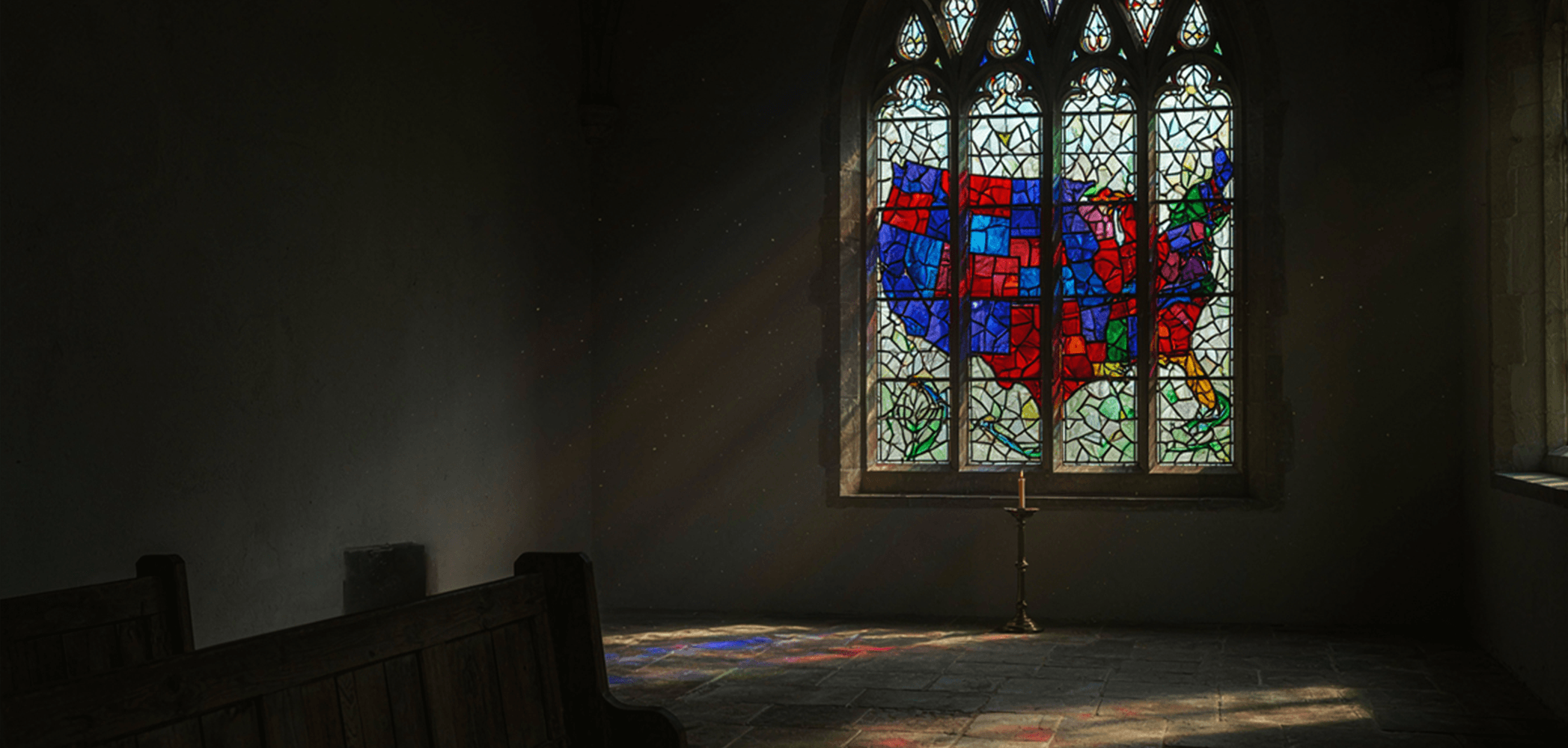
Image created on magnific.com