
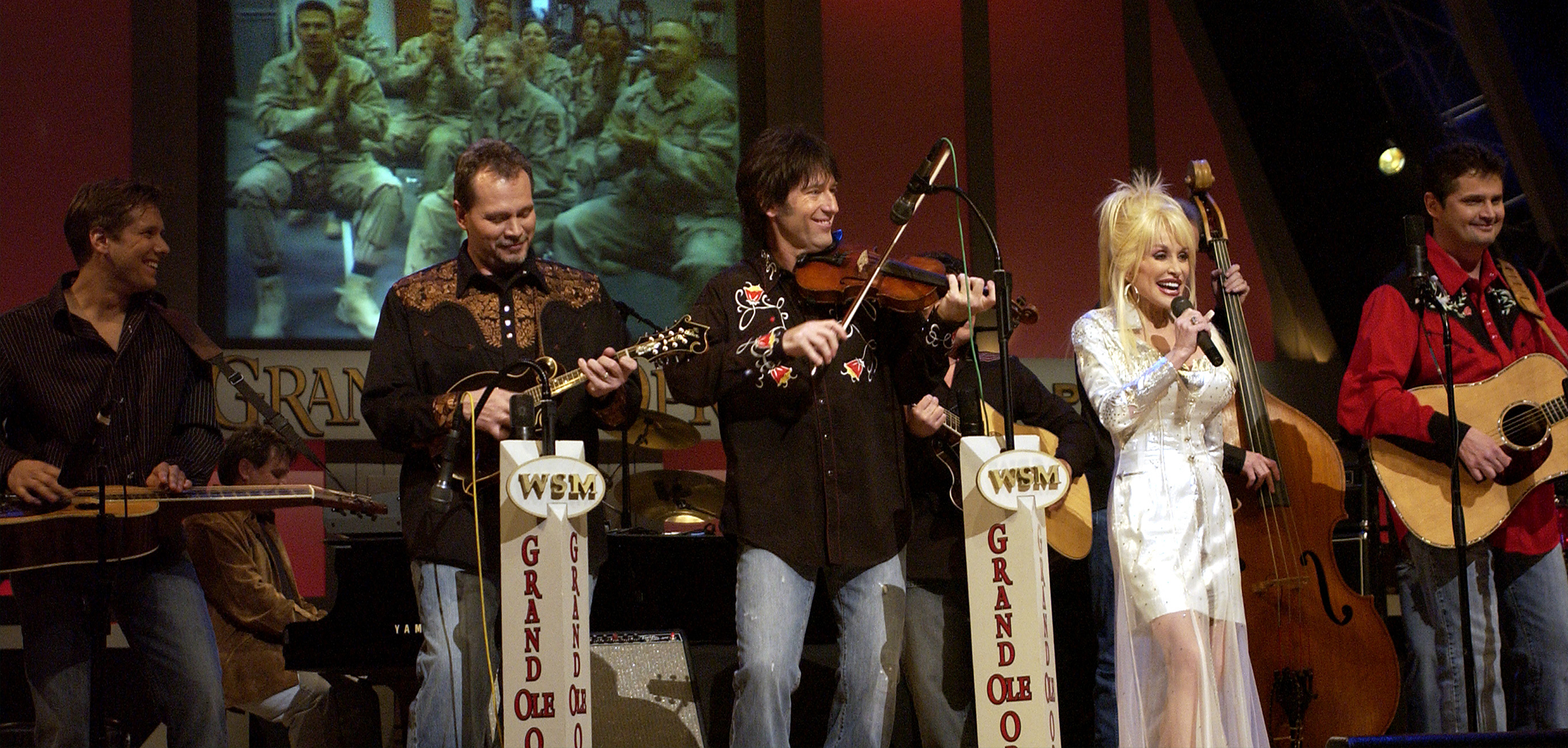
Dolly Parton was beloved by audiences across the political and ideological spectrum, having built an enduring legacy of philanthropy and service. Allen T. Stanton reflects on what Dolly Parton’s life can teach pastors about leadership in a polarized culture.
In 2018, my family moved from North Carolina to Tennessee. At a rest area off I-40, somewhere, Dolly Parton’s rendition of “Rocky Top” piped through the loudspeakers on what seemed like a never-ending repeat. I knew of Dolly Parton, of course: I had played “Jolene” on the guitar and watched Steel Magnolias with my sister and her friends. My kid was enrolled in Dolly Parton’s Imagination Library.
But in Tennessee, I learned, Parton was not just that singer with big hair and rhinestones: Dolly Parton was an institution. Her career launched in Nashville, her philanthropy helped Tennesseans, and she lived her life in Nashville. Dolly Parton is woven into the fabric of the state.
Within our current culture, it is a bit of an oddity that a country singer from Appalachia is being mourned by so many people. Somehow, Dolly Parton found respect from an audience that included every sort of person, from drag performers to Trump voters. Or, as Parton herself once said, “I have as many Republican fans as I do Democrats. I don’t want to offend anybody; I have a right to myself.” She was offered the Presidential Medal of Freedom twice by President Trump and once by President Biden. She declined all three times.
In hyper-partisan culture, that sort of broad appeal is usually a basis for criticism. Our culture insists that people make their positions known. After all, leadership is often understood as having and using a voice. The challenge with that view of outspoken leadership is that it can morph from “leaders should have a voice” to “leaders provoke divisiveness.”
One cannot say that Dolly Parton was not a leader. Her list of accomplishments is long and public. If her legacy means anything, then we should consider what of her leadership we can emulate. At its core, I think Dolly Parton’s mass appeal came because she carried an almost pastoral presence.
In December of 2020, I sat at home with a three-month-old and a three-year-old. It was a stressful time as we tried to navigate the intricacies of COVID with a young family. Parton made a now famous appearance on Stephen Colbert’s show. During the interview, Parton described an old song that her mother used to sing. Colbert, inexplicably, began to cry; “I’m under a lot of stress right now, Dolly.” Parton took it in stride. “We used to cry when momma would sing that. Momma would cry. We’d cry…I think it cleanses your soul. Water is good to wash it out. It’s what tears are for, I think.”
It was an unusual piece of television. A late-night comedian succumbing to the pressures of an admittedly stressful time being comforted by a country mega-star promoting a Christmas album. And yet, it was also the sort of moment that made me look at my own stress in my life and think, “Oh, we’re all overwhelmed together.”
Parton, it seemed, was more intent on speaking the truth about a situation than she was on telling them what they should be thinking. Earlier in the same interview, she said, “I see things happen to other people, and I think, they don’t know how to express how they feel, so they’re depressed or sad. So, I write songs for them as well.” In her own words, Parton’s songwriting was not just about articulating her own feelings or telling her own truth. It was to help the listener navigate those moments of anxiety, pain, or even joy, as well.
Occasionally, we pastors are tempted to fall into a lecture mode. We believe that our job is to instruct the congregation, to tell them what they should or should not believe about any number of issues. But the pastor’s role is deeper than that. It is about standing with the congregation in front of God, helping them name their prayers before God, and then listening with them for God’s voice and calling.
Dolly Parton used her pulpit to listen and reflect rather than lecture. Even when she spoke out about an issue, she seemed to do so with a grounded, pastoral sensibility. When asked about access to bathrooms for transgender people, Parton said, “I hope everybody gets a chance to be who and what they are. I just know if I have to pee, I’m going to pee. I don’t care where it’s going to be.” It also meant that Parton could advocate in ways that most political figures could not. During the rollout of the COVID-19 vaccine, Parton, who had donated to help fund it, received her shot on television.
Her pastoral presence enabled her to build broad coalitions that do incredible work. Her Imagination Library, which has distributed more than 200 million books, depends on a network of local partners in each community it serves. Her organization negotiates wholesale prices for the books and covers administrative costs. Meanwhile, networks of local organizations, state funding, and other philanthropies supply the cost to purchase and mail books in each community.
The legacy of Dolly Parton is, I think, one of a quieter leadership. It is a leadership that starts by recognizing the humanity of each person listening to a song, watching an interview, picking up a book. It starts in the complexity of humanity: that some of us are sad, some are joyful, some feel unwanted, and some feel right at home. From there, it built into a legacy remembered as being just and kind and gracious.
For those of us called to be leaders in the Church, seeking to bring about God’s Kingdom—a kingdom that is also steeped in justice, kindness, and graciousness—we could find worse people to emulate than Dolly Parton.
We love to hear from our readers! If you have any comments, suggestions, or questions about this article, please leave a voice message directly from your computer, tablet, or smartphone via Speakpipe. You may also email lewiscenter@wesleyseminary.edu or leave a comment on Facebook, Instagram, YouTube, and Bluesky.
Related Resources
- Quiet Leadership by Public Leaders by Lovett Weems
- What is Prophetic Preaching: Preaching a Balm that Stings by Allen T. Stanton
- Leadership as a Liberal Art featuring Michael Lamb — Watch the Leading Ideas Talks podcast video | Listen to the podcast audio version | Read the in-depth interview
- Helping Rural Congregations Thrive by Anna Hall
If you would like to share this article in your newsletter or other publication, please review our reprint guidelines.
Photo by Tech. Sgt. Cherie A. Thurlby, USAF, United States Department of Defense via Wikimedia