
Have you ever considered grant funding for your organization and felt daunted by the process before you even began? Micháela Murray wants to help demystify the process by breaking grant seeking into clear, manageable steps—covering eligibility, readiness, research, and proposal writing—so church leaders can move forward with clarity and confidence.
If your church is operating outward-facing ministries of service, you’ve probably dreamt about grant funding over the years, and then immediately thought, “We’re too small,” or “I wouldn’t know where to start,” or “No one funds religious organizations.” So, you’ve gone back to the status quo—funding mission from the pews.
This leaves us in the bizarre position of sometimes asking the same people our missions serve to provide the money for them. Have you ever considered that most churches operate this way—robbing Paul to pay Paul! What if there was a better way?
Grant funding feels scary and unattainable, but I promise, the only magic involved is the new lives we can transform with new resources and new missions.
Do we even qualify?
In a word, yes. And don’t worry—many terrific and qualified organizations have imposter syndrome! But if you are a 501(c)3 or under the umbrella of a 501(c)3, you can apply for grants. Moreover, whether you are doing good around religion, beyond religion, or a mix of both, there are funders out there for you. Especially if you are operating outward-facing missions that don’t check for denominational ID at the door, you qualify.
Are we grant ready?
First, take an honest inventory of who you are and what you do right now. Really account for how many you serve, whether you’re ecumenical, whom you are partnering with, and what benefits you offer to both your members and your larger community. Next, make an honest assessment of who you would be and what you would be doing two years from now if you had adequate funding. What would 10% more income look like? What about 25%? What lives could you transform? Finally, get ready: find the 501(c)3 letter, most recent 990 or audit, a list of your Board with their affiliations, and an operating budget for the current year.
Where do we even start?
The research to find grant funders is best done in two ways: first, look at similar nonprofits doing similar work in your community and research who is funding them; second, look at lists of funders in your area and use their tax return to identify what work they fund.
For the first task, pay attention to websites and social media pages of similar organizations, even if you feel they’re much bigger or are secularly-operated. When you notice support from non-corporate foundations, take note!
Second, use the free resource at any public library of Candid.org, an online search engine for grant funding. Start with a narrow list of filters and search terms that capture your ministry and eliminate filters as necessary until you have a list of 5-10 foundations to investigate. Open their most recent Form 990 to “Part XIV 2: Information Regarding Contribution, Grants,” and you will find instructions on how to apply, or whether a funder does not accept unsolicited applications. If they have application instructions, move on to “Part XIV 3: Grants and Contributions Paid” and look for similar missions, not necessarily similar organizations. Think about what you do, not what you’re called. If there’s a donation to a church of your denomination, even better!
How would we learn how to write a grant?
If you learned how to write a persuasive essay or thesis in high school or college, you can write a grant application! That’s all a grant is: a persuasive letter that states a problem and hypothesizes that your church or organization’s program is a great solution to that problem. The typical five sections in a grant application are:
- Organizational Mission and History
- Statement of Need
- Proposed Program
- Anticipated Outcomes
- Budget
Some foundations will have a website with an online application which might stretch to five pages of writing. Others simply accept a two-page letter of inquiry mailed to a post office box. If a foundation has an application form or list of questions, use it! They are looking for information, not creativity, so stick to their format if one is offered.
You can and should use the boiler plate language from your website or brochures. Speak in first person and use declarative sentences. Not “We would like to,” but “We will.” Not “We could potentially impact,” but instead, “This initiative will feed X number of families.”
In most cases, you will be applying for a grant for a portion of your budget: a food pantry, a shelter, or a free childcare program. In that case, work with your whole leadership team to create the budget and ensure you’re accounting for staff time as an expense. If you are applying for the organization as a whole, simply use your current operating budget. Either way, be sure to use consistent staff titles, event names, and number of clients between the narrative of your proposal and your budget. Don’t make the reader have to guess!
Will we be awarded a grant?
You’ve got your grant proposal drafted—awesome! Now, before you hit “send,” you absolutely need to get some fresh eyes on it. A big mistake people make is only asking folks who are already close to the project for feedback. They’re great, but they might be too deep in the weeds to spot the stuff a regular reader will.
So, here’s the game plan: find a trusted friend or colleague who will give a totally honest gut-check. Ideally, someone not in the non-profit or religious world who will give you no-nonsense feedback.
Ask your reviewer to read the proposal and answer these four key questions. Think of it as a quick diagnostic check on your proposal:
- What is the program? (Is it crystal clear?)
- What will the results be? (Will it make a real difference?)
- Are you excited? (Is the passion contagious?)
- Is it worth what we are asking for? (Does the cost make sense?)
There’s never a guarantee a grant application will be successful, and you will likely receive more rejections than awards. But along the way you will be expanding your network, amplifying your ministry, and eventually, bringing more resources to the work of God you do each day!
Micháela Murray is a grant specialist at Ministry Architects, an organization that helps churches build healthy, sustainable ministries through ministry and church consulting.
Related Resources
- Candid.org, an organization that makes it easier and faster for nonprofits and funders to connect
- Church Finances Don’t Have to be So Hard by Thomas G. James
- Funding Forward: How Congregations Can Develop New Revenue Sources featuring Grace Pomroy — Watch the Leading Ideas Talks podcast video | Listen to the podcast audio version | Read the in-depth interview
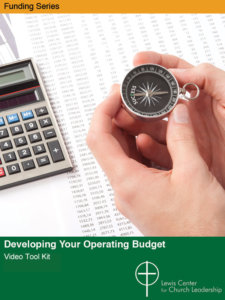
- Developing Your Operating Budget, a Lewis Center video tool kit resource
- Adding New Income Lines to Your Church Budget by Grace Pomroy
f you would like to share this article in your newsletter or other publication, please review our reprint guidelines.