

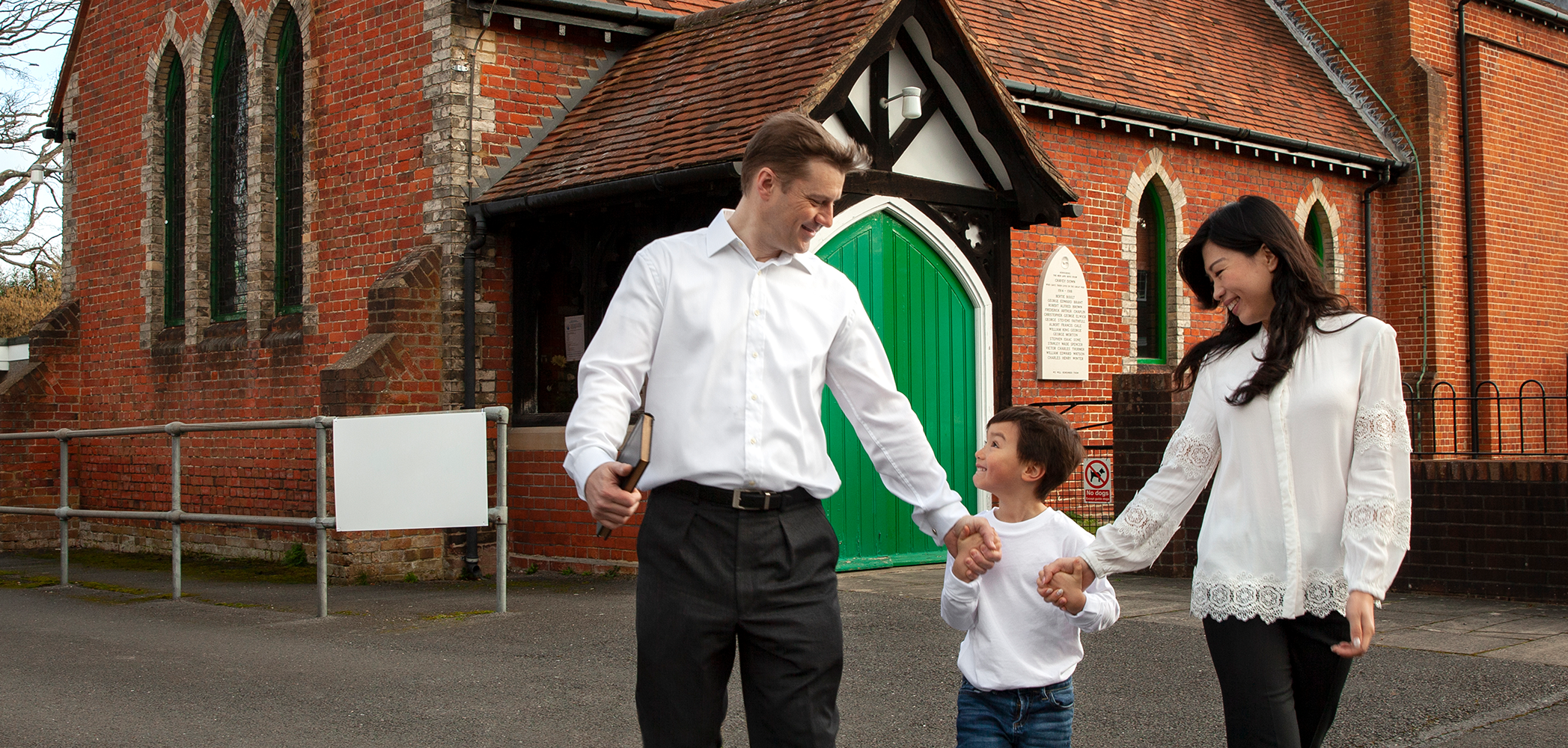
Laura Heikes reflects on two decades’ worth of lessons learned from raising pastor’s kids while serving in ministry. Healthy ministry families, she writes, are nurtured when churches allow children to be fully human, respect family boundaries, and help kids discover meaningful ways to belong and serve.
Pastor’s kids have a reputation. I have three, and between them they’ve joyfully lived into much of the stereotype: gobbling leftover communion bread, running down church aisles, showing up to worship in all manner of attire, and never fearing a microphone or audience.
In one community, our neighbors admitted they had been nervous about living across from “the pastor’s family.” Then they laughed and said, “But your kids are just normal. They throw fits, get in arguments, and disobey. And you are not perfect parents either.”
It was an unflattering, but important, observation.
Pastor’s kids often live under unusual pressure. Churches can unintentionally expect them to behave better, volunteer more, and always represent the family well. But one of the healthiest things pastors and congregations can do is allow pastor’s kids to be fully human.
As parents, we are imperfect, normal, and flawed. Along this journey, I have sought advice from seasoned pastors, grown PKs (Pastor’s kids), and my own kiddos. Here is what they say about how to help these special kids grow up healthy, grounded, and connected to both family and faith.
Have a few “secret signs.”
One small thing that helped our family was having a secret code. We had a simple hand signal that I only used when it was truly time to leave and someone was not getting the message. It became a fun family secret. When the kids saw me make the sign, they knew it was time to go, and they had permission to whine a little to get me to leave.
Our youngest son is hearing impaired, and through him I have learned a few signs in ASL, such as “stop,” “ready?” and “okay?” Those signs give me a way to quietly redirect or check in with him without embarrassment. I’d highly recommend learning a few to use with your children even if you’re not a church leader, as they make discipline gentler and more private. And if someone recognizes the signs, you have a new friend in the hearing-impaired community.
Make family a priority.
When serving as an associate pastor, I had one senior pastor comment that it seemed like I put my children first and my job second. He clearly saw that as a problem and assumed I would want to correct it. I did not.
My husband and children are my first calling. They are the people God placed directly into my care. That does not mean ministry is unimportant. Every church I have served has grown in number and vitality. I work hard, and when emergencies happen, I respond. But I also learned that healthy boundaries are essential not only for my kids and me, but for the health and example set for my congregations.
I turned off email notifications on my phone. I put my phone away during dinner and evenings. When I take vacation, I prepare ahead, arrange coverage, and trust others to lead. I have found this not only protects family time but also fuels shared ministry and leans into the priesthood of all believers.
I learned to consolidate meetings into one evening whenever possible and to treat two or three work nights a week as a soft limit. With intentional planning and support from church leadership, this can help everyone thrive. Time is one of our most precious resources. Streamlining meetings benefits not only clergy families, but laypeople, giving them more time for family, rest, service, and community.
When someone called during family time for a non-urgent matter, I learned to gently teach people new expectations: “I’m with my family right now. Can we circle back tomorrow?” Most responded well. Often, congregations simply need permission to recognize that pastors have families and boundaries, too.
Let kids choose their own involvement.
One of the healthiest decisions we made was allowing our children some agency in how they participated in church life. Our consistent expectation was Sunday morning worship. Beyond that, most of their involvement was up to them. Youth group, mission trips, service projects, choir, children’s ministry, sound booth, ushering—we invited, but did not force.
What mattered most was helping them discover places where they genuinely enjoyed participating and could use their gifts naturally. One daughter loved leading children’s church because she enjoyed working with younger kids. Another loved running the sound board and quickly formed friendships with the volunteers in the tech booth. Our youngest has found joy in serving as an usher and helping collect the offering each week. Many young people, including pastor’s kids, connect with God through service. Serving gives them relationships, purpose, and ownership and can be a great way to connect to God and their church family.
Highlight the good.
There are real challenges that come with being a pastor’s kid. You often live in a fishbowl and expectations can be sky-high. Your parent works nights, weekends, and holidays when other families are off. Because of these stressors, I seek to intentionally and regularly highlight the good parts of church life.
I point out the love: the church members who adore them, remember their birthdays, and slip them cookies when we’re not looking.
I highlight the community: the broad network of people who care for them and later helped them connect in new places. As our daughters moved away for college, pastors and church members helped them get plugged into new communities, find internships, and even job connections.
I name the generosity: Over the years, people shared gift cards, boat rides, vacation homes, meals, and encouragement. Every time someone showed kindness, I made sure the kids recognized it. I wanted them to see that ministry was not only demanding, but also filled with generosity, gratitude, and love.
Children learn how to interpret church life by listening to the way adults talk about it. I wanted our children to hear gratitude more often than resentment.
Let them be normal kids.
What a gift it can be to raise children surrounded by a community of faith. Yes, there are challenges. Pastor’s kids will occasionally embarrass us. Churches will sometimes place unrealistic expectations on ministry families. Boundaries will need to be taught and protected. But when churches allow pastor’s kids to be normal children, and pastors allow themselves to be normal parents, ministry can become a joyful community in which families grow together in faith, love, and belonging.
We love to hear from our readers! If you have any comments, suggestions, or questions about this article, please leave a voice message directly from your computer, tablet, or smartphone via Speakpipe. You may also email lewiscenter@wesleyseminary.edu or leave a comment on Facebook, Instagram, YouTube, and Bluesky.
Related Resources
- How Parents Pass Religious Faith to their Children featuring Christian Smith and Ann A. Michel — Watch the Leading Ideas Talks podcast video | Listen to the podcast audio version | Read the in-depth interview
- Coffee, Kids, and Chaos by Jessica L. Anschutz
- 50 Ways to Strengthen Ministry With Children, a free Lewis Center resource
- Does Your Church Truly Embrace Children or Merely Tolerate Them? by Sam Rainer
If you would like to share this article in your newsletter or other publication, please review our reprint guidelines.