


What happens when you look at the American church from the outside? In this episode we sit down with missiologist Taylor Walters Denyer to explore what the U.S. church can learn from its global siblings. From community-based discipleship practices in the Democratic Republic of the Congo to re-centering mission as the foundation of leadership formation, Denyer offers a compelling call to consider how we lead, serve, and participate in God’s work.
Listen on Apple Podcasts | YouTube Music | Spotify
Watch on YouTube
- Transcript—Click or Tap to Read
-
Announcer: Leading Ideas Talks is brought to you by the Lewis Center for Leadership of Wesley Theological Seminary in Washington, DC. Subscribe free to our weekly e-newsletter, Leading Ideas, at churchleadership.com/leadingideas.
Leading Ideas Talks is also brought to you by LPLI, a confidential, online, 360º leadership assessment inventory designed to help those working in the church identify individual strengths and weaknesses to improve their ministry effectiveness. LPLI is available in Pastor and Staff Versions. Learn more at lpli.org.
What happens when you look at the American church from the outside? In this episode we sit down with missiologist Taylor Walters Denyer to explore what the U.S. church can learn from its global siblings. From community-based discipleship practices in the Democratic Republic of the Congo to re-centering mission as the foundation of leadership formation, Denyer offers a compelling call to consider how we lead, serve, and participate in God’s work.
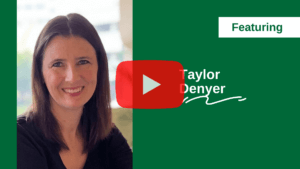
Jonathan Page: Hey there, and welcome to another episode of the Leading Ideas Talks podcast. My name is Jonathan Page. I’m the director of the Lewis Center for Church Leadership at Wesley Theological Seminary, and today I am delighted to be joined by Taylor Walters Denyer. Taylor is a missiologist, a pastor, a global nomad. Taylor’s passionate about being able to name the toxic beliefs in unhealed traumas that undermine the development of healthy communities and boundary-crossing relationships. Taylor is a Wesley alum, she lives in Cairo, Egypt, with her husband and daughter. She’s an elder in the United Methodist Church and has served in so many different places all over the world.
Taylor, it is so good to be with you. Welcome to the Leading Ideas Talks podcast.
Taylor Denyer: Thanks for inviting me. It’s an honor to be invited back home.
Jonathan Page: Yeah. Yeah. Taylor’s background, just so y’all know Taylor has a long CV She’s an alum of American University and Wesley Theological Seminary. Her doctorate in missiology focused on decolonizing missional partnerships and is from the University of South Africa. Taylor currently is teaching at the Methodist Theological School in Ohio. She’s doing all sorts of things. She was recently named the United Methodist Judicial Council.
Taylor, I feel like I’ve skirted over your bio. What, what all for folks who are tuning in, today we’re gonna talk a lot about leadership from the perspective of a missiologist, from the perspective of somebody who’s really, globally itinerant. Is there anything from your bio that you would say like, “Hey you should know this about me before we get into today’s conversation.”
Taylor Denyer: Well, let’s see here. I think I—I’m not sure if— I can’t remember if you named it: my membership is in the United Methodist Church’s North Katanga Annual Conference.
Jonathan Page: Thank you. That’s right.
Taylor Denyer: And my official primary appointment is the executive assistant to Bishop Mande Muyombo. And so that includes … I’m sort of his “gal Friday, wing-woman extraordinaire” for all things anglophone, relations as well as coaching our missionaries and working on a number of issues in Tanzania, in North Katanga, and a brand-new Annual Conference as a 2025, the Upemba Annual Conference. So that was formed when we—when North Katanga had grown so large that we split it in two.
Jonathan Page: That’s amazing. That’s really amazing and I, I just, one of the things that strikes me about you, Taylor, is you truly are globally itinerant. You’ve served in India, Slovenia, Algeria, Djibouti, Zambia, Chile, the United States, the Democratic Republic of the Congo. I guess as you think about all of those different settings, and of course now your current setting where you are in this role, the thing that comes to my mind is sort of, John Wesley had this line, “The world is my parish.” I guess I wonder how have your various experiences around the world shaped who you are as a leader?
Taylor Denyer: Well, very much so. I have two branches on that, so pin one. Especially with my life, I often hear folks quote “The world is my parish.” But I do wanna say that that quote’s taken a bit out of context when we use it, when we talk about around the world. And I wanna highlight that because, as a missiologist—as a missiologist, this really matters because what John Wesley was saying in that moment was that … that his calling isn’t limited to the boundaries of the church property. That it’s out there in the communities, out there in the field. And so that’s very important no matter where we are in the world to understand our calling. That is not—that doesn’t have geographic boundaries even in our own community.
But in terms of my traveling around the world, it does help you see the forest for the trees, I think, and see how things are different. And so, I can see the patterns. I can look at the U.S. in particular, our churches in the U.S. and I’m looking at it from the outside. And so, I do think it gives me a perspective that’s harder to have when you’re there in the middle of the trees in a local appointment. And so, I am able to start to see the patterns when you step back. And so that, that does help me.
Jonathan Page: I think that’s really great, Taylor, and I appreciate that, that contextual reminder and that idea of patterning. I guess a follow up to that is there something that we do in leadership in the American church that you would say is challenged or critiqued by the experience of the global church? Something that, that you would say, “Hey, here’s something that I see happening in the U.S. church that, based on my international experience, we might say ‘Whoa, why are we doing it that way?’”
Taylor Denyer: Oh, so many things. You know, speaking about my home conference of North Katanga, there are a lot of really great Wesleyan practices that North Katanga continues to use, and use it in a way that’s building up communities and building up the church that the U.S. has … has forgotten about or considers it no longer practical. Things like, and part of it is some of the challenges of life in the U.S., but for example, the congregation where I attended when I was living in Kamina.
The area around the congregation is divvied up in sort of a grid pattern, geographic blocks. And so, every member of that congregation is assigned to a block based on where they live, and those blocks then meet weekly in someone’s home and they have their regular block meetings, their own small group, follow up, all of that.
And not only do they meet as study groups as a block, they’ll get, they get assignments as a block. So, the announcement in church that week might be, you know, “This week block 82 is in charge of the sweeping of the building.” So, blocks might get assigned janitorial duties that week. Or for example, when there is the birth of a child or a death in the congregation, or someone’s hospitalized—seriously hospitalized—when they announce it in the congregation, they don’t just announce it, they give folks their marching orders. And so, they’ll say, “This choir and this block is assigned to go to this hospital after church today to visit with these people. And this choir,” (cause there’s always multiple choirs), “and this block is assigned to go to this home to give condolences to this family.” I’ve never seen that happen in the U.S. One of many examples.
Another great example that my, my late father highlighted in one of the books he wrote, in North Katanga when we have the signage on a United Methodist church, the big letters are always, well, not in English but translated, The United Methodist Church. And then underneath is the name of the congregation. So, it’s: The United Methodist Church Lubudi Branch. Whereas in the U.S. you’ll see the big name and then in small letters, oftentimes, sometimes in tiny letters, the, you’ll see the UMC branding. And that’s not just a marketing difference. That’s a theological statement.
Jonathan Page: Absolutely. It makes me think of my, my parents are both from North Mississippi and there was a United Methodist church that has since disaffiliated in north Mississippi. And just like you said it had just in, it was like size 120 font, name church, and then in like size three font, United Methodist underneath. And it was almost like the need to brand the local space over the theological grounding of that space is a, it’s a fascinating choice.
Taylor Denyer: So, in North Katanga, when someone joins United Methodist Church, it’s really understood as “I’m joining The United Methodist Church. I’m becoming a United Methodist, and this is the local branch that I attend, but I’m joining something much bigger than that.”
They even send the old the letters of, if you move to a new town then the pastor will write a letter to present to the new pastor saying like, “Here’s a member of our congregation. They’re moving to your town. They’re your flock now.”
Jonathan Page: Wow. One of the things we’ve been talking about in the Lewis Center in this calendar year is really how the trend for 2026 in the American church is likely to be more team-based and community focused. And that speaks to that, right? The need to say, “How are we … how are we seeing the work of the church being through multiple people, not just the pastor or not just a key lay leader? And how are we focused on building community and not being in competition as much as we are in collaboration?” I think that’s a beautiful expression of all of that.
Taylor, I’m curious. So, you have so many hats, right? You’re the executive assistant to the bishop, you’re a faculty member, but—and so many other things—but maybe most amongst those—or maybe most principal—is that you are a missiologist. Real quickly, what I would ask is, could you define what a missiologist is just for us, and then as you’re defining that, how do you think the theology of mission is something that can really shape church leaders?
Taylor Denyer: So, missiology, I did not invent the term. So, I mean, breaking it down in simple terms, it’s the study of mission. But in, in sort of bigger terms, it is in the way that philosophy asks a lot of, of why questions, missiology starts with the question, “What is God doing? What is the mission of God?” And depending on how we answer that question, then it sort of splits into different sections, “But then what is God inviting us to do? What are, how are we being invited to participate in that mission?”
And so again, in the way philosophy has lots of different branches, missiology has lots of different branches that don’t always agree with one another. But for me yeah, it is one of my primary identifiers is as a missiologist. And repeat the other question, the part two?
Jonathan Page: Yeah, sure. So as a missiologist, as somebody who’s deep in this space of really having a nuanced theology of mission, how do you think that sort of development in any leader, whether it’s a clergy person or a lay person, how does the development of that sort of theology and perspective of mission influence somebody’s leadership in their local church setting?
Taylor Denyer: I think it’s crucial. And to be honest in the U.S. context, I think the lack of a healthy, fully integrated theology of mission is what has been at the root of so many problems the church has faced. So many problems. That, and you know I get a bit on my soapbox, if I may, mission in the church—and I’m not just picking on the United Methodist Church ’cause it goes well beyond the denomination—mission in the U.S. context tends to be treated as an extracurricular. It’s this afterschool bonus activity.
I’m being descriptive, not prescriptive. Its primary function in most churches is to help the members feel better about themselves. The things that get labeled “mission” and church in U.S.-based churches today tend to be activities that help members feel less guilty about their place in … in the world, and the privileges they receive from an oppressive system.
Yeah, you have to take my whole course to hear my whole stock on that. But so, I’ll put a pin in that. But I would say if, if I had my way, if I had the power to wave a magic wand and completely overhaul the curriculum in all seminaries, I would start by putting the mission program at the foundation.
When mission classes are offered in seminaries, who takes it? Who signs up? Well, the United Methodists have to, because their BOOM requires them to, and maybe a few other folks who are considering a … a calling that takes them overseas, that’s who signs up for the classes.
If I had my way, the mission the mission class would be front and center. It would be the, at the core of the curriculum. Because what is mission? Mission is the conversation of, “Who is this God that we worship? What is this God’s purpose? What does God want? What is God doing, and what does God invite us to do?” When we start with those questions, then everything else falls into place and everything gets seen through the lens of mission.
If the class you are taking in seminary is not building your capacity for participating in the mission of God, why is it being taught? Everything is mission. So, I’ll, that’s again, I have a lot longer version of that, but that’s how I see it. And I feel that, again, so much of the problems we face in the church is because we send our clergy out into the world with extremely flimsy, unintegrated understandings of mission.
Jonathan Page: Yeah. And I think, Taylor, I appreciate that so much. I could argue it’s not just mission that we do that with. I’ve been thinking a lot. I had a conversation with a buddy of mine recently who said that he was no longer attending the church that he had been a part of for a while. And I said, “So, what’s up with that?” And he said, “Well, I wasn’t getting anything out of it anymore.”
And it’s this whole mentality, like this is a very uniquely American thing, I think, that like the church doesn’t exist to satisfy individuals. It exists to glorify God. And the more that we are leaning into that—not as—we are not the subject of the sentence, right? God is the subject of the sentence. We’re participants in God’s work in the world. And from your perspective I love that idea that mission can ground that if we allow it to, instead of allowing—that line about it being a soothing of our own guilt is a, I think that’s brilliant and really wise and a good diagnosis of some of the challenges that the church faces.
I’m curious, Taylor I’m gonna pivot us just a little bit. You were elected in at the 2024 General Conference as an alternate to the United Methodist Judicial Council. And now that, that alternative has become reality and you were fully a part of the judicial council. Could you describe what the Judicial Council is and why people would be interested in that, maybe? And then, envision, this is kind of looking into a crystal ball, so forgive me for that, but how do you envision serving on that as a part of that work might influence your leadership perspective?
Taylor Denyer: Sure. So, ooh. How to describe what the Judicial Council is in a paragraph without making any—any hiccups?
Jonathan Page: I’m sorry, I’m putting you on the spot.
 LPLI Staff Version Provides Better Feedback for Staff Development
For Christian Educators, Program Directors, Youth Directors, Children’s Ministry Directors, Church Administrators, Music Directors, Mission Coordinators, and moreLPLI is a confidential, online, 360º leadership assessment inventory designed to help those working in the church identify individual strengths and weaknesses in order to improve their ministry effectiveness. LPLI: Staff Version provides better feedback for staff development and includes a free guidebook, Making the Most of LPLI, designed to lead a staff member through a process of analyzing their results, discussing their results with others, and formulating an action plan to improve their effectiveness. Learn more about LPLI Staff Version.
Taylor Denyer: No, no, no. Okay. First of all, we do have a website. So, I encourage folks to go to the website to get the full the full page on the Judicial Council, and you can even find the past decisions as well as current dockets.
So, the Judicial Council is … is a group of nine individuals who have been elected at the General Conference of the United Methodist Church to serve in a capacity that is similar to but not the same as the Supreme Court. It’s an imperfect comparison, but in many ways, we are the denomination’s Supreme Court. And so, when questions come to the Judicial Council, the questions it’s—the Judicial Council is never making a, making decisions in terms of whether or not someone did a good or bad thing or guilt or were innocent, those aren’t Judicial Council questions. The questions are, was a decision made in keeping with our church’s laws? Is it a … does it fit with our constitution?
And so, the good old Book of Discipline. And so, similar to the problems the U.S. legal system faces, that our Book of Discipline gets revised every four years, (at least in theory, when there’s not a pandemic). And we have a constitution that’s locked in, but extremely difficult to change parts of—some of it’s totally locked in, that’s a whole other side topic—and sometimes as we make these big decisions in groups, we pass laws and rulings and things that don’t quite mesh up. And so, when things come up, they come to the Judicial Council and then we have to decide how to interpret that.
And it’s a group decision and it’s a great group. We have folks from multiple continents and a huge range of experience, a number of lawyers. We even have a Supreme Court Justice from Zimbabwe on our team, we have folks of, you know, folks with deep expertise in the Book of Discipline, decades of experience. It’s really an extraordinary team.
Jonathan Page: That’s really neat and a really just such an important work, especially for those who are listening who are United Methodist. This is a pretty—this is the real deal—is what I would say in terms of folks who are helping to guide the direction of how the church can move within the ways that it is set for itself that it is called to move. And so, Taylor, as you think about all of that and that, that’s a big responsibility, I’m sure, and a lot of—a lot goes into it. And just as you’re anticipating stepping into that space, how do you anticipate that might shape your own leadership perspective?
Taylor Denyer: Ooh. Well, it’s still very early in the process for me, so it’s too soon to say. I will say that part of the mystique behind the Judicial Council is folks wanting to find out “what’s behind the curtain,” and you know how the, the proverbial “sausages get made.” I’ve been involved in denominational polity and committees and things since I was a teenager in the nineties. And I’ve also been I’ve also been the fly on, in the wall, on the wall of a whole lot more than I think folks, especially my American counterparts are aware of. So, I already know “how the sausage gets made,” I think. I might learn more, but I’m looking forward to it, as the geeky part of me. And also, since I teach United Methodist polity at MTSO, I am, I’m sure this will really force me to up my game in my deep knowledge of the Book of Discipline and so I’m excited about.
Jonathan Page: Nice. Nice. That’s great. Taylor, part of your, part of who you are, and you’re very open about part of your being, being a diagnosis as neurodivergent. I’m curious just how have you how do you sense that diagnosis has impacted, if at all, your leadership in the church?
Taylor Denyer: Thanks for asking that. So first I would say I’m not crazy about using the term diagnosis. I know that there are, there’s some political and practical reasons why sometimes it’s necessary, but I feel for the most part it does a disservice to the neurodivergent community. So, I tend to use the language of being assessed or just saying I’m neurodivergent.
I, a few years ago I finally pieced it together. I’m part of what they call the “Lost Generation,” there was a whole bunch of us that all figured it out a few years ago where we’re folks who, who had the capacity to mask well enough that we didn’t get caught. Nobody picked up on it in the eighties. Girls especially tend to not get recognized. But so specifically I, I am autistic. Again, I’d love to use a different word there, but we’re not there yet. And I’m also ADHD, again, love to replace that word. There’s some, there are some good alternatives out there, but they’ve not gone mainstream yet. So those are the terms that, that most of folks listening to this would know. And I did this fall decide that because I’ve become so passionate about neurodivergence, particularly in the monotropic family awareness, and become extremely interested in neuroqueer liberation theology and want to start writing on it academically.
And so, I said “I’m gonna get pushed back by people who don’t understand these things, who are gonna say, ‘self-diagnosed, self-diagnosis doesn’t count.’” So, I went ahead this fall, and I went and went through with an official assessor and who said, “Yes, you’re definitely autistic. And yeah, as you suspected there’s ADHD in the mix.” So, I’m auDHD. I joke, I’m the, I’ve got the trifecta of monotropism so, autism, ADHD, and “giftedness.” So, it’s, you get me talking on anything, I’m going at full speed. I would say, so circling back to the actual question it’s actually helped me tremendously.
It’s like I cracked the code, and It’s been transformative for me and my ability to connect with people. So, step one was taking off the mask. And so, that and—now I have the privilege to do that. Not everybody has the privilege to drop their mask, to stop pretending. But I leveraged those privileges and because of that, I can connect with people.
But one of the gifts that’s given me is particularly as an autistic person who spent years studying human psychology and trying to understand. I say I break the fourth wall. I live outside of that wall. And again, it’s kind of like with all my moving around, I get to observe things through a different vantage point, and I can—and so when I see people interact, when I watch things going on, if I observe a group, or even if I’m in a pastoral situation, I’m able to psychologically, mentally take a step back and observe the dynamics that are going on, and observe, you know, whose nervous system is dysregulated. Like ah, okay, their nervous system is dysregulated. Ah, they’re wearing a mask today. The mask, like the mask is slipping, it’s not working.
And so, I don’t … I don’t just hear what’s being said. I see it. It’s like the old Matrix film where suddenly you see all the ones and zeros. That’s what the experience has been like for me that now when I go into group situations and interact with people, I am, I’m having a neo-moment where I see the ones and zeros and so now I can, I can weave through situations like I couldn’t before and I can help people in ways that I couldn’t before. Because I can see what’s going on beyond all the masks we wear.
Jonathan Page: Absolutely. That’s a wow. What an incredible, really incredible perspective and thank you for helping to shape my language around neurodivergence and helping our audience as well to understand a little bit more about how to speak around this space. And thank you for your openness to this.
Taylor, you know, a lot of folks who listen to this podcast have some sort of connection to Wesley Theological Seminary. You’re an alum of Wesley and American, our next-door neighbor. So, I’m still new to, to Wesley and the D.C. community. I wonder for somebody like me, how would you—what about Wesley have you carried with you into your leadership life and what should I be excited about being a part of this community?
Taylor Denyer: Oh gosh. Things I loved about Wesley and still do. Wesley attracts a special kind of folks and it particularly pulls in people who care about social justice issues, people who see things on a larger scale. I, yeah, I made so many great friendships there at Wesley that I cherish. And I very much appreciated the courses I took there, the theology, the grounding and some of the most important lessons I took away from Wesley weren’t the kind of things that you would find on an exam.
One in particular, some of the best advice I got at while at Wesley that I frequently tell—give—pass on to other people for clergy is the importance of Sabbath and the importance of carving up time for yourself. And so, taking your schedule, this is … I was taught there and I keep to it, to take your schedule and to block out times, block out times for rest, block out times for reading, block out times for going out and connecting with God in nature. Block out times for spending time with the family, for spending time with friends. Block it all out, put it on your calendar, put it in ink, and then whenever somebody asks you if you’re available for a meeting or whatever, during those times you just say, “I’m sorry, I have something else on my schedule,” and you’re not lying. You really do have something else on your schedule, and you don’t have to tell them that’s something else on your schedule is binge watching Netflix. It’s on your schedule.
But yeah, I loved my time at Wesley, and I love my time at American University. I did the international development program there, and obviously that also has helped me as I’ve bounced around the world. It’s where I met myself. We were in the same program. So yeah, Wesley was a great experience. It’s awesome.
Jonathan Page: Wow. I know I’m excited to be a part of this community and excited for just the great network of folks who make Wesley what it is and and help us at the Lewis Center to do what we do. Taylor, this has been such a rich conversation, and you’ve taken us in a lot of places, and I know I speak for our whole audience when I say thank you for doing that. I’m curious, one of the things we like to do is give you the last word. As we’re wrapping up is there a last word or thought that you’d wanna share with with folks who are listening to this?
Taylor Denyer: Ooh, goodness. I’m not sure what day this podcast will be going out. I think all of us have current events heavy on our hearts, and so I guess I would leave with a couple words of wisdom on that. One is to take care of your nervous system. Take care of your needs. On airplanes, they say, you know “Put your oxygen mask on first.” But in times of crisis, for all those who are church leaders, people are gonna be understandably afraid and upset. And one of the best things you can offer them is a regulated nervous system. To be that calm.
Which is also something I, I learned at Wesley when it was taught to me as the pastor as the non-anxious presence. But for me, it translates better as I’ve learned on in trauma therapy and that kind of thing. Regulated nervous system. So, don’t underestimate the power of a regulated nervous system.
The other thing I would say is don’t underestimate the power of being with. That is really—that has become the core of my missiology. The deep solidarity, the “being with.” I know right now we all want to fix things. We wanna know what is it that we can do to stop and fix, and obviously that’s very important, but don’t forget that it’s also very important to just be with people. Be with people in their fear, be with people in their grief. Just be with them. Be with them, be the regulated nervous system. And sometimes that’s all we can do. And that’s okay because sometimes that’s the most important thing we can do. So those are my words of wisdom in, in times such as these.
Jonathan Page: Wow well, I feel like you just gave a pretty great benediction there, preacher. That was that was really, really great and really, so, so wise. And so much of what leadership is in 2026 in the church, like you say, it’s incarnational and the more that we’re able to be fully present in those spaces the better off not only we will be, but our communities, our churches, and the world will be. I think that’s really brilliant.
Taylor, this was such a gift to be able to spend some time with you today, and on behalf of our whole audience, I wanna thank you for for all that you’re doing and for taking this time today. And I just encourage if you are interested in more about Taylor, she’s got a website, taylorwaltersdenyer.com. We’ll put that, we’ll promote that in the in the show notes along with the Judicial Council website that she mentioned earlier. And you can learn more about her there.
Taylor, thank you so much for being on.
Taylor Denyer: And I’m launching a Substack!
Jonathan Page: Oh, on Substack.
Taylor Denyer: Early stages but I joined the 21st Century and now I’m on Substack.
Jonathan Page: Amazing. Amazing. Well, we’ll look for you there, Taylor. Thank you for your time and thanks for being on the Leading Ideas Talks podcast.
Taylor Denyer: Thank you.
Announcer: Don’t forget to subscribe to our free weekly e-newsletter, Leading Ideas, to be notified when new episodes are published. Visit churchleadership.com/leadingideas.
Related Resources
- taylorwaltersdenyer.com
- United Methodist Church Judicial Council
- Moving from Ministry FOR the People to Ministry WITH the People by Doug Powe
- How to Stay Focused on Your Mission by Barry Winders
- Discipleship and Mission in the Micro Church Movement in Australia features Bree Mills
— Watch the Leading Ideas Talks podcast video | Listen to the podcast audio version | Read the in-depth interview
If you would like to share this article in your newsletter or other publication, please review our reprint guidelines.