

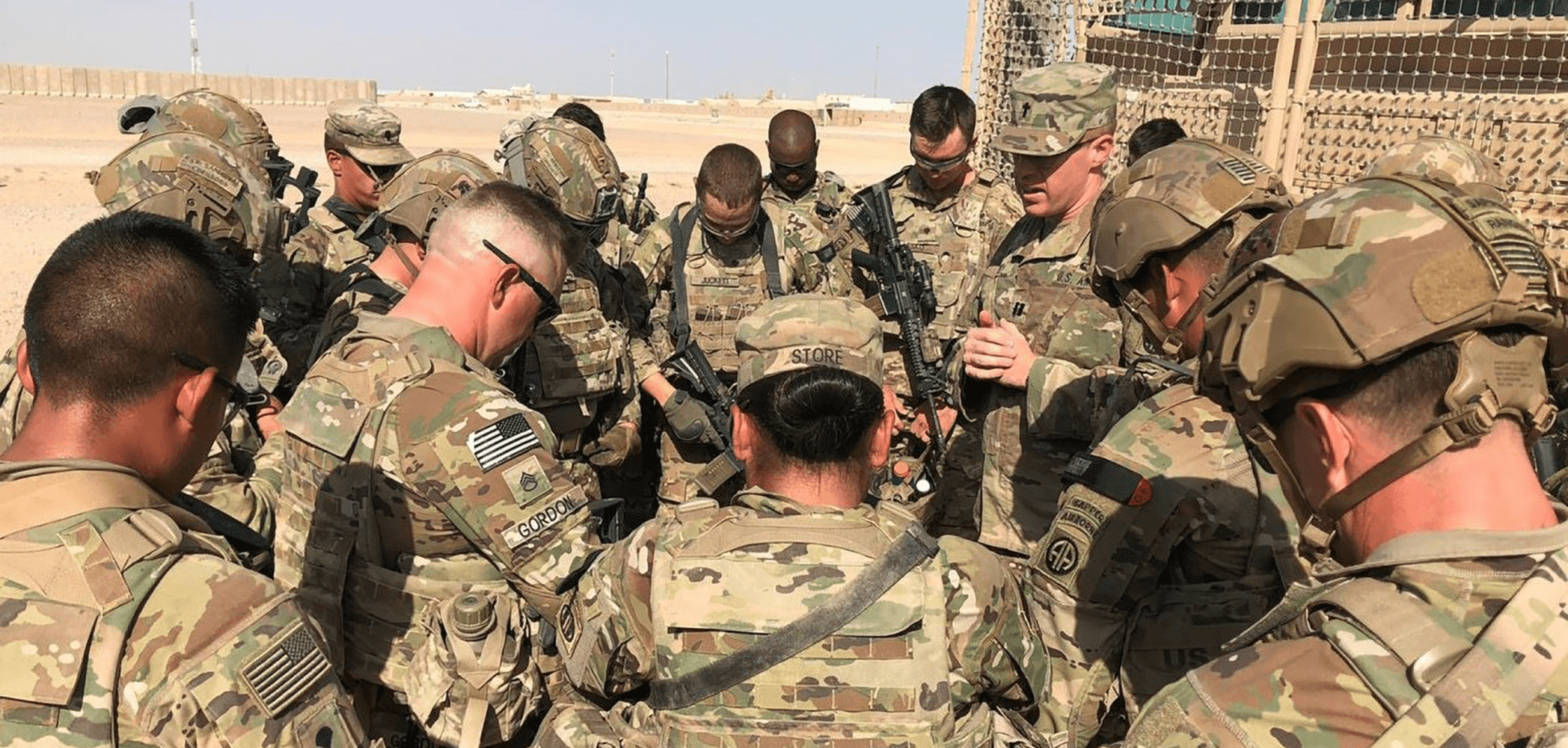
Leadership often begins before we feel ready, and its responsibilities extend far beyond the job description. Drawing on his years as a U.S. Army chaplain, Jonathan Fisher shares three lessons about preparation, navigating competing responsibilities, and remaining faithful to the people we lead.
I spent my career as a U.S. Army chaplain. I went in thinking I would learn how to be a pastor to soldiers, and I did. But I also learned how to lead, often before I felt ready and usually in places where there was no one else to hand the job to. Three lessons have stayed with me, and I am finding that they matter as much in civilian ministry as they did in uniform.
1. Leadership starts on day one.
The first day I reported to my unit as a first lieutenant, I was expected to know my role, my responsibilities, and my craft. I didn’t. But I was expected to. I was twenty-five years old and fresh out of seminary, and the soldiers in front of me didn’t have another chaplain. They had me. So, I grew up fast.
There is no probationary period for leadership. The people you serve do not wait for you to feel ready, and their crisis can arrive on your first day as easily as your hundredth. That doesn’t mean a leader has to know everything. It means a leader owes people the work of preparation. I learned that it is my duty to arrive ready, and when I am not, to close the gap as quickly and as honestly as I can.
2. Hold the tension instead of resolving it.
A chaplain lives between two loyalties: to the individual soldier and to the institution. In Iraq, that meant holding grief and mission at the same time. Twelve soldiers from my battalion died on that deployment. I stood on a dark tarmac for ramp ceremonies, praying as soldiers carried flag-draped cases onto the plane. Then we put our gear back on, got back in our vehicles, and went back to war.
Neither the grief nor the mission could be set aside. Leadership meant honoring both.
I am learning the same lesson as a civilian pastor. The church has a mission, and the people in the pews have needs that don’t always fit neatly inside it. It is tempting to choose one: to become a manager of programs or a caretaker of individuals. Good leadership refuses that false choice. It holds the mission of the community and the care of the person in the same hands, and it lets the tension keep both honest.
3. Leadership does not end when the job ends.
Not long ago, I attended the twentieth reunion of my battalion’s return from Iraq. I stood in a room with men and women I hadn’t seen in two decades. Twenty years had passed, but the bonds formed under that kind of weight had not loosened, and neither had my sense of responsibility for them.
Titles expire. Assignments end. Retirement comes. But the people you led remember how you led them, and some of them are still carrying what happened under your care. A leader’s responsibility outlives the position: to stay reachable, to keep faith with your people, and to keep telling the truth about what you shared.
For veterans, this may be the most important lesson of all. The skills and the burdens you carried in uniform don’t stay at the gate. They come home with you, into your families, your workplaces, your congregations, and your communities. Leadership doesn’t stop when you take off the uniform. It changes shape.
Arrive ready. Hold the tension. Keep faith.
The Army taught me these things the hard way. I am still learning them, and I suspect most of you are too.
We love to hear from our readers! If you have any comments, suggestions, or questions about this article, please leave a voice message directly from your computer, tablet, or smartphone via Speakpipe. You may also email lewiscenter@wesleyseminary.edu or leave a comment on Facebook, Instagram, YouTube, and Bluesky.
Related Resources
- Remembering 9/11: Leadership During a Disaster featuring Terry Bradfield — Watch the Leading Ideas Talks podcast video | Listen to the podcast audio version | Read the in-depth interview
- Doctor of Ministry Chaplaincy Track from Wesley Theological Seminary
- 5 Leadership Lessons That Shaped My Ministry by Lovett H. Weems Jr.
- 10 Leadership Lessons from Nehemiah by Lovett H. Weems Jr.
If you would like to share this article in your newsletter or other publication, please review our reprint guidelines.
Photo credit: Chaplain (Capt.) Joseph Newby, 3rd Brigade Combat Team, 82nd Airborne Division, prays with paratroopers before a mission. Chaplains regularly serve alongside paratroopers, wherever they may be, to provide spiritual support. Photo courtesy U.S. Army.